
Python via Java でプレゼンテーション情報を取得および更新
概要
Aspose.Slides はプレゼンテーションの形式を判別し、完全なプレゼンテーションオブジェクトモデルを作成せずにドキュメント メタデータを読み取ることができます。これは、ファイルの分類、インベントリの作成、またはコンテンツをロードして処理するかどうかを判断する前にプロパティを調べる必要がある場合に便利です。
この例は Aspose.Slides for Python via Java と互換性のある Java ランタイムを必要とします。各例は JVM が起動していない場合に起動します。例で使用されているパスに既存のプレゼンテーション ファイルを配置してください。
この記事では、PresentationFactory と PresentationInfo を使用した軽量な検査と、DocumentProperties を使用した対象的な更新方法を示します。
プレゼンテーション形式の確認
すでにプレゼンテーションをロードしている場合は、ロード後の検出とレガシー PPT、PPS、POT ストリームの制限については Determine the Original Presentation Format を参照してください。
PresentationFactory.getPresentationInfo を使用すると、Presentation インスタンスを作成せずにファイルを検査できます。PresentationInfo.getLoadFormat メソッドは、PPTX、PPT、ODP など検出された形式を報告します。
import jpype
import asposeslides

if not jpype.isJVMStarted():
    jpype.startJVM()

from asposeslides.api import LoadFormat, PresentationFactory

file_names = ["pres.pptx", "pres.ppt", "pres.odp"]

for file_name in file_names:
    presentation_info = PresentationFactory.getInstance().getPresentationInfo(file_name)
    load_format = presentation_info.getLoadFormat()
    format_name = f"Other ({load_format})"

    if load_format == LoadFormat.Pptx:
        format_name = "PPTX"
    elif load_format == LoadFormat.Ppt:
        format_name = "PPT"
    elif load_format == LoadFormat.Odp:
        format_name = "ODP"

    print(f"{file_name}: {format_name}")
軽量プレゼンテーションインベントリの構築
多数のプレゼンテーション ファイルを処理する場合、検証、インデックス作成、または文書管理システム向けのコンパクトなインベントリが必要になることがあります。このシナリオでは、PresentationFactory.getPresentationInfo で PresentationInfo オブジェクトを取得し、PresentationInfo.readDocumentProperties を呼び出してドキュメント メタデータを読み取ります。このアプローチは Presentation インスタンスを作成せず、完全なプレゼンテーション オブジェクトモデルを走査する必要もありません。
DocumentProperties が提供する拡張プロパティは、次のインベントリ値を取得できます。
| メソッド | インベントリ値 |
|---|---|
| getSlides | スライド総数 |
| getHiddenSlides | 非表示スライドの数 |
| getNotes | ノートを含むスライドの数 |
| getParagraphs | 利用可能な場合の段落総数 |
| getWords | 単語総数 |
| getMultimediaClips | オーディオおよびビデオ クリップ総数 |
以下の例は、Presentation オブジェクトを作成せずにこれらの値を読み取り、コンパクトなインベントリを出力します。また、getHeadingPairs と getTitlesOfParts を組み合わせて、フォント、テーマ、スライド タイトルなどのコンテンツ グループを表示します。
import jpype
import asposeslides

if not jpype.isJVMStarted():
    jpype.startJVM()

from pathlib import Path
from asposeslides.api import LoadFormat, PresentationFactory

file_path = "sample.pptx"
presentation_info = PresentationFactory.getInstance().getPresentationInfo(file_path)
document_properties = presentation_info.readDocumentProperties()

load_format = presentation_info.getLoadFormat()
format_name = f"Other ({load_format})"

if load_format == LoadFormat.Pptx:
    format_name = "PPTX"
elif load_format == LoadFormat.Ppt:
    format_name = "PPT"
elif load_format == LoadFormat.Odp:
    format_name = "ODP"

print(f"File: {Path(file_path).name}")
print(f"Format: {format_name}")
print(f"Title: {document_properties.getTitle()}")
print(f"Author: {document_properties.getAuthor()}")
print("Statistics:")
print(f"  Slides: {document_properties.getSlides()}")
print(f"  Hidden slides: {document_properties.getHiddenSlides()}")
print(f"  Slides with notes: {document_properties.getNotes()}")
print(f"  Paragraphs: {document_properties.getParagraphs()}")
print(f"  Words: {document_properties.getWords()}")
print(f"  Multimedia clips: {document_properties.getMultimediaClips()}")

heading_pairs = document_properties.getHeadingPairs()
titles_of_parts = document_properties.getTitlesOfParts()
heading_pairs = heading_pairs if heading_pairs is not None else []
titles_of_parts = titles_of_parts if titles_of_parts is not None else []
part_index = 0

if len(heading_pairs) == 0 or len(titles_of_parts) == 0:
    print("Content groups: not available")
else:
    print("Content groups:")

    for heading_pair in heading_pairs:
        print(f"  {heading_pair.getName()} ({heading_pair.getCount()})")

        for part_offset in range(heading_pair.getCount()):
            if part_index >= len(titles_of_parts):
                break
            print(f"    - {titles_of_parts[part_index]}")
            part_index += 1

    if part_index < len(titles_of_parts):
        print("  Other parts:")

        while part_index < len(titles_of_parts):
            print(f"    - {titles_of_parts[part_index]}")
            part_index += 1
各 HeadingPair はグループ名とそのグループ内の項目数を提供します。DocumentProperties.getTitlesOfParts はフラットで順序付けられた配列を返すため、各見出しペアで指定された連続タイトル数だけを消費します。
保存されたメタデータと形式の制限
PresentationInfo.readDocumentProperties が返すインベントリ プロパティは、ソース ドキュメントに存在するメタデータを反映します。Aspose.Slides はこの呼び出しのためにプレゼンテーション オブジェクトモデルをロードして走査せず、値を再計算しません。欠落しているプロパティは既定値で表され、最後に保存したアプリケーションがプロパティを更新していない場合、保存された値は古い可能性があります。
- PPTX: スライド、ノート、非表示スライド、段落、単語、マルチメディアのカウント、および見出しペアとパート タイトルの拡張ドキュメント プロパティが提供されます。利用可能性はドキュメント作成者が書き込んだプロパティに依存します。
- PPT: バイナリ形式は対応するドキュメント サマリ プロパティを格納できます。プロパティが存在しない、または作成者によって更新されていない場合、Aspose.Slides はスライドから計算せずに保存済みまたは既定の値を返します。
- ODP: OpenDocument メタデータはページ、段落、単語数などの一般的な統計情報を提供しますが、これらの値は PowerPoint 固有の拡張プロパティすべてにマッピングされません。非表示スライド、ノートスライド、マルチメディア、見出しペア、パート タイトルのメタデータは利用できないことがあり、インベントリ プロパティは既定値を返す場合があります。ゼロ値や空配列を、該当コンテンツが存在しないという決定的な証拠として扱わないでください。
インベントリや事前チェックには軽量メタデータ アプローチを使用し、結果がメモリ内の変更を反映する必要がある場合や実際のプレゼンテーション コンテンツを検証する必要がある場合はプレゼンテーションをロードしてライブ オブジェクトモデルを検査してください。
プレゼンテーションプロパティの更新
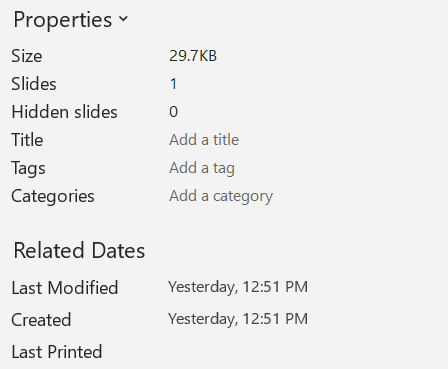
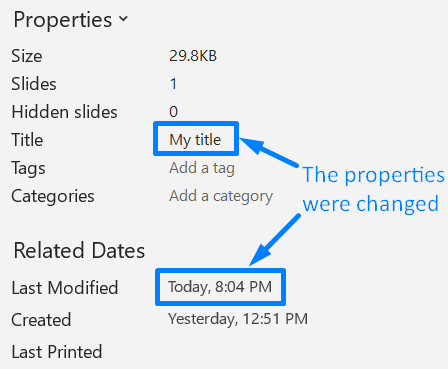
PresentationInfo.readDocumentProperties が返すプロパティは、Presentation インスタンスを作成せずに変更できます。変更は PresentationInfo.updateDocumentProperties で適用し、PresentationInfo.writeBindedPresentation でバインドされたプレゼンテーションを書き出します。
以下の画像は元のドキュメント プロパティを示しています。
以下の例はタイトルと最終保存時刻を変更し、結果を新しいファイルに書き出します。
import jpype
import asposeslides

if not jpype.isJVMStarted():
    jpype.startJVM()

from asposeslides.api import PresentationFactory
from java.io import FileOutputStream
from java.util import Date

source_file = "sample.pptx"
output_file = "sample_with_updated_properties.pptx"
presentation_info = PresentationFactory.getInstance().getPresentationInfo(source_file)
document_properties = presentation_info.readDocumentProperties()

document_properties.setTitle("Quarterly sales report")
last_saved_time = Date()
document_properties.setLastSavedTime(last_saved_time)

presentation_info.updateDocumentProperties(document_properties)
output_stream = FileOutputStream(output_file)
try:
    presentation_info.writeBindedPresentation(output_stream)
finally:
    output_stream.close()
以下の画像は更新されたドキュメント プロパティを示しています。
便利なリンク
関連するセキュリティチェックや保護設定については、次の記事をご覧ください。
FAQ
フォントが埋め込まれているか、どのフォントが埋め込まれているかを確認する方法は?
プレゼンテーションをロードし、Presentation.getFontsManager を使用します。FontsManager.getEmbeddedFonts で埋め込みフォントを取得し、FontsManager.getFonts でプレゼンテーションで使用されているフォントを取得します。両方の結果を比較して、描画に必要だが埋め込まれていないフォントを特定します。
ファイルに非表示スライドがあるかどうか、またその数をすばやく確認する方法は?
保存されたドキュメント メタデータが十分な場合、PresentationFactory.getPresentationInfo と PresentationInfo.readDocumentProperties を通じて DocumentProperties.getHiddenSlides を読み取ります。これは軽量インベントリに適しています。メモリ内でプレゼンテーションが変更されている可能性がある場合、またはライブ値を検証する必要がある場合は、Presentation.getSlides を反復し、各スライドの Slide.getHidden メソッドを調べてください。
カスタム スライド サイズと方向が使用されているか、デフォルトと異なるかを検出できるか?
はい。プレゼンテーションをロードし、Presentation.getSlideSize を呼び出します。SlideSize.getType、SlideSize.getSize、SlideSize.getOrientation を使用して現在の設定を期待されるプリセットや寸法と比較します。
チャートが外部データ ソースを参照しているかどうかをすばやく確認する方法は?
はい。各 Chart を見つけ、ChartData.getDataSourceType を呼び出します。外部ブックの場合は ChartData.getExternalWorkbookPath を呼び出します。データ ソースのタイプとパスで外部参照が判別できますが、対象が利用可能かどうかは別途リソース チェックが必要です。
レンダリングや PDF 出力を遅くする「重い」スライドを評価する方法は?
単一の複雑度プロパティはありません。Presentation.getSlides と各スライドの BaseSlide.getShapes コレクションを走査します。シェイプ数や大きな画像、エフェクト、アニメーション、マルチメディアの有無をスクリーニング信号として使用し、代表的なレンダリングまたはエクスポートを測定したうえで、スライドを確実なパフォーマンス ボトルネックとして扱うか判断してください。