
使用 .NET 在演示文稿中创建 3D 效果
概述
Aspose.Slides for .NET 可以创建、编辑、保留并呈现类似 PowerPoint 的形状和文本的 3D 格式化。本文涵盖了旋转、挤压、斜角、照明、材质、渐变或图片填充以及 3D 文本等 3D 效果。
Note
本文讨论的是 PowerPoint 形状和文本的 3D 格式化效果。它不涉及插入或编辑独立的 3D 模型文件。当您将幻灯片导出为图像、PDF 或 HTML 时,Aspose.Slides 会将这些 3D 效果渲染到导出的 2D 输出中。3D 格式化概念
使用 IShape.ThreeDFormat 属性为形状应用 3D 格式化。该属性公开 IThreeDFormat,用于控制该形状的 3D 场景。
对于文本,使用 ITextFrameFormat.ThreeDFormat 属性。这会将 3D 格式化应用于文本框,而不是形状主体。
最重要的属性如下:
| 属性 | 控制内容 | 何时使用 |
|---|---|---|
| Camera | 视点、预设相机类型、旋转、缩放和透视。 | 在 3D 空间中旋转对象或匹配 PowerPoint 的 3D 旋转预设。 |
| LightRig | 光照预设、方向和光线旋转。 | 更改 3D 表面上高光和阴影的显示方式。 |
| Material | 表面材质,如平面、哑光、塑料或金属。 | 使相同的几何体呈现更平坦、柔和、光亮或金属感。 |
| ExtrusionHeight | 形状从正面向后延伸的距离。 | 将平面形状转换为可视的厚度 3D 对象。 |
| ExtrusionColor | 挤压侧面的颜色。 | 显示深度或使侧面颜色与正面填充协调。 |
| Depth | PowerPoint 3D 格式化使用的附加深度。 | 对形状或文本进行微调,尤其是在使用斜角和材质设置时。 |
| BevelTop 和 BevelBottom | 正面和背面的凸起或圆角边缘。 | 添加柔化或模塑的边缘,而不是锐利的平面。 |
| ContourColor 和 ContourWidth | 3D 对象的轮廓线。 | 在渲染输出中强调对象边界。 |
创建 3D 形状
形状通常需要四类设置才能呈现出可信的 3D 效果:
- 相机设置,因为默认的正视图可能会隐藏挤压效果。
- 光照设置,因为光线使各面和侧面可辨识。
- 材质设置,因为表面材质影响光线的渲染方式。
- 挤压或深度设置,因为平面形状需要厚度。
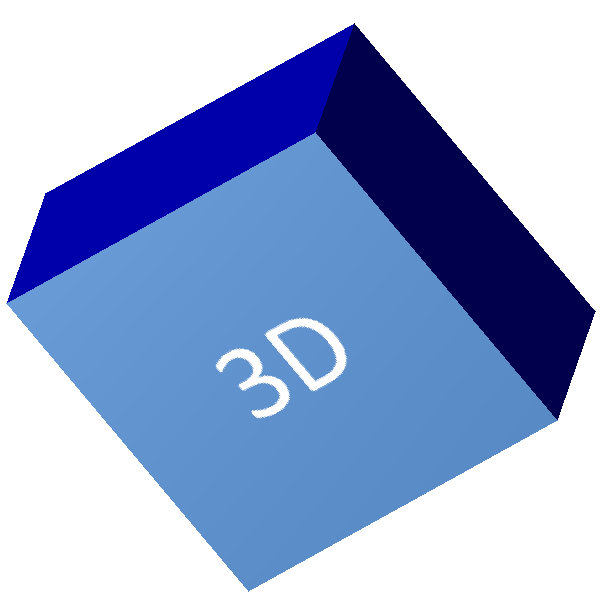
下面的示例创建一个矩形,在其正面添加文本,并应用 3D 格式化。相机旋转值以度为单位,挤压高度为 100 点。示例将幻灯片渲染为 PNG 图像(尺寸为默认的两倍),并将演示文稿保存为 PPTX。
using System.Drawing;
using Aspose.Slides;
using Aspose.Slides.Export;

const float imageScale = 2;

using var presentation = new Presentation();
var slide = presentation.Slides[0];

var shape = slide.Shapes.AddAutoShape(ShapeType.Rectangle, 200, 150, 200, 200);
shape.TextFrame.Text = "3D";
shape.TextFrame.Paragraphs[0].ParagraphFormat.DefaultPortionFormat.FontHeight = 64;

shape.FillFormat.FillType = FillType.Solid;
shape.FillFormat.SolidFillColor.Color = Color.CornflowerBlue;

shape.ThreeDFormat.Camera.CameraType = CameraPresetType.OrthographicFront;
shape.ThreeDFormat.Camera.SetRotation(20, 30, 40);
shape.ThreeDFormat.LightRig.LightType = LightRigPresetType.Flat;
shape.ThreeDFormat.LightRig.Direction = LightingDirection.Top;
shape.ThreeDFormat.Material = MaterialPresetType.Flat;
shape.ThreeDFormat.ExtrusionHeight = 100;
shape.ThreeDFormat.ExtrusionColor.Color = Color.Blue;

using var thumbnail = slide.GetImage(imageScale, imageScale);
thumbnail.Save("shape_3d.png");

presentation.Save("shape_3d.pptx", SaveFormat.Pptx);
渲染后的幻灯片图像显示矩形为一个厚实的 3D 块:
使用相机旋转形状
在 PowerPoint 中,3D 旋转在“3‑D 旋转”窗格中配置。X、Y、Z 旋转值对应通过相机 API 设置的旋转。
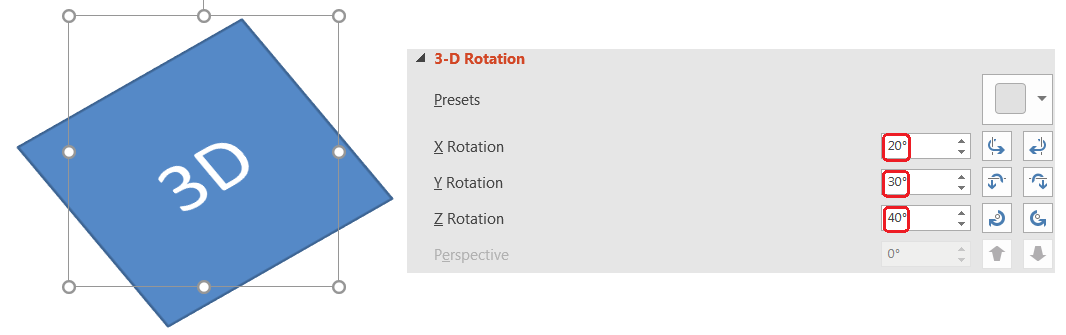
在 Aspose.Slides 中,通过 IThreeDFormat.Camera 访问相机。此示例创建一个矩形,选择正交正面视图,并将其 X、Y、Z 旋转分别设置为 20、30、40 度。它在内存中配置形状,而不保存文件:
using Aspose.Slides;

using var presentation = new Presentation();
var slide = presentation.Slides[0];

var shape = slide.Shapes.AddAutoShape(ShapeType.Rectangle, 200, 150, 200, 200);

shape.ThreeDFormat.Camera.CameraType = CameraPresetType.OrthographicFront;
shape.ThreeDFormat.Camera.SetRotation(20, 30, 40);
需要改变观察者看到对象方式时使用相机。它不改变幻灯片上 2D 形状的几何结构,只改变 PowerPoint 和 Aspose.Slides 渲染时使用的 3D 视点。
添加挤压和深度
挤压通过在正面后方延伸来使形状看起来更厚。在 PowerPoint 中,深度控件设置此可见厚度,颜色控件设置侧面的颜色。
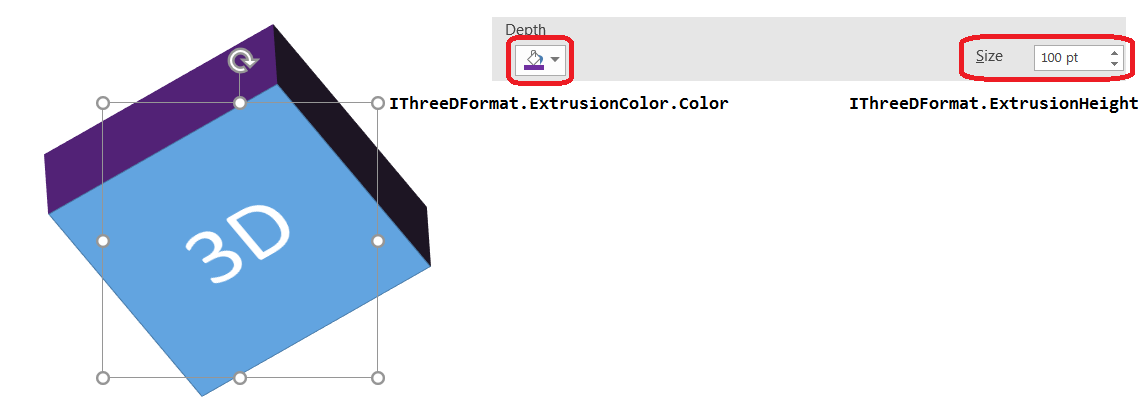
使用 IThreeDFormat.ExtrusionHeight 设置厚度,使用 IThreeDFormat.ExtrusionColor 设置侧面颜色。此示例为矩形设置 100 点的紫色侧面挤压,并旋转相机以展示其厚度。它在内存中配置形状,而不保存文件:
using System.Drawing;
using Aspose.Slides;

using var presentation = new Presentation();
var slide = presentation.Slides[0];

var shape = slide.Shapes.AddAutoShape(ShapeType.Rectangle, 200, 150, 200, 200);

shape.ThreeDFormat.Camera.CameraType = CameraPresetType.OrthographicFront;
shape.ThreeDFormat.Camera.SetRotation(20, 30, 40);
shape.ThreeDFormat.LightRig.LightType = LightRigPresetType.Flat;
shape.ThreeDFormat.LightRig.Direction = LightingDirection.Top;
shape.ThreeDFormat.Material = MaterialPresetType.Flat;
shape.ThreeDFormat.ExtrusionHeight = 100;
shape.ThreeDFormat.ExtrusionColor.Color = Color.Purple;
IThreeDFormat.Depth 属性设置 3D 形状的深度。ExtrusionHeight 属性控制挤压效果的高度,如本示例所示。
在 3D 效果中使用渐变或图片填充
3D 格式化独立于形状填充。您可以对正面使用纯色、渐变、图案或图片填充,同时仍使用相同的相机、光照、材质和挤压设置。
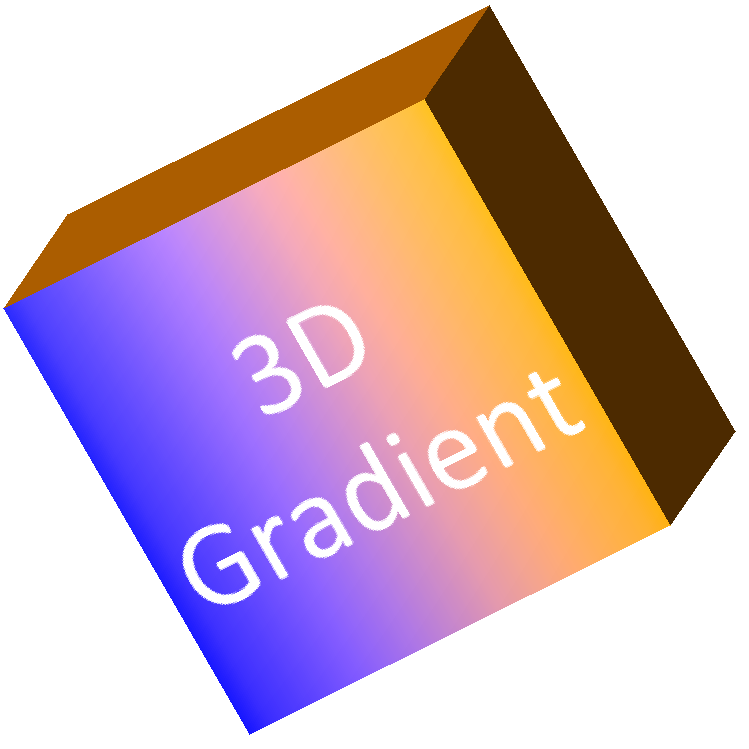
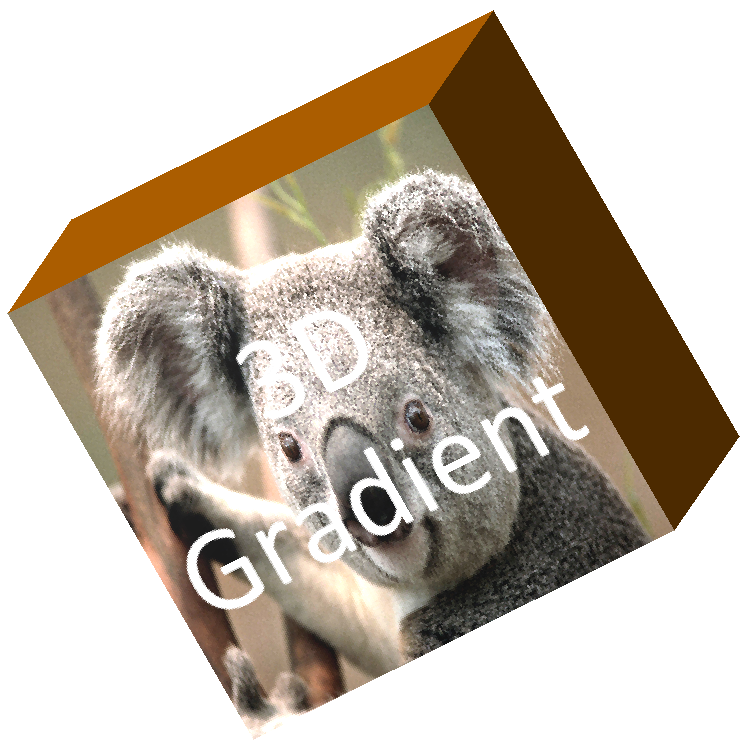
此示例对正面应用蓝到橙的渐变,对 150 点的挤压使用深橙颜色。渐变停止点 0 与 100 标记渐变的起始和结束。相机旋转值以度为单位。幻灯片渲染为 PNG 图像(尺寸为默认的两倍):
using System.Drawing;
using Aspose.Slides;

const float imageScale = 2;

using var presentation = new Presentation();
var slide = presentation.Slides[0];

var shape = slide.Shapes.AddAutoShape(ShapeType.Rectangle, 200, 150, 250, 250);
shape.TextFrame.Text = "3D Gradient";
shape.TextFrame.Paragraphs[0].ParagraphFormat.DefaultPortionFormat.FontHeight = 64;

shape.FillFormat.FillType = FillType.Gradient;
shape.FillFormat.GradientFormat.GradientStops.Add(0, Color.Blue);
shape.FillFormat.GradientFormat.GradientStops.Add(100, Color.Orange);

shape.ThreeDFormat.Camera.CameraType = CameraPresetType.OrthographicFront;
shape.ThreeDFormat.Camera.SetRotation(10, 20, 30);
shape.ThreeDFormat.LightRig.LightType = LightRigPresetType.Flat;
shape.ThreeDFormat.LightRig.Direction = LightingDirection.Top;
shape.ThreeDFormat.Material = MaterialPresetType.Flat;
shape.ThreeDFormat.ExtrusionHeight = 150;
shape.ThreeDFormat.ExtrusionColor.Color = Color.DarkOrange;

using var thumbnail = slide.GetImage(imageScale, imageScale);
thumbnail.Save("gradient_3d.png");
渲染输出保留正面的渐变,并单独渲染挤压侧面:
若使用图片填充,请将图片添加到演示文稿并分配给形状填充。此示例要求工作目录中已有名为 “image.jpg” 的文件。它将图片拉伸填满矩形,应用 150 点挤压,并以度为单位设置相机旋转。它在内存中配置形状,而不保存或渲染文件:
using System.Drawing;
using System.IO;
using Aspose.Slides;

using var presentation = new Presentation();
var slide = presentation.Slides[0];

var shape = slide.Shapes.AddAutoShape(ShapeType.Rectangle, 200, 150, 250, 250);

var imageData = File.ReadAllBytes("image.jpg");
var image = presentation.Images.AddImage(imageData);

shape.FillFormat.FillType = FillType.Picture;
shape.FillFormat.PictureFillFormat.Picture.Image = image;
shape.FillFormat.PictureFillFormat.PictureFillMode = PictureFillMode.Stretch;

shape.ThreeDFormat.Camera.CameraType = CameraPresetType.OrthographicFront;
shape.ThreeDFormat.Camera.SetRotation(10, 20, 30);
shape.ThreeDFormat.LightRig.LightType = LightRigPresetType.Flat;
shape.ThreeDFormat.LightRig.Direction = LightingDirection.Top;
shape.ThreeDFormat.Material = MaterialPresetType.Flat;
shape.ThreeDFormat.ExtrusionHeight = 150;
shape.ThreeDFormat.ExtrusionColor.Color = Color.DarkOrange;
图片渲染在正面,挤压则渲染为 3D 侧面表面:
对文本应用 3D 格式化
形状的 3D 格式化影响形状主体。文本的 3D 格式化影响文本框。这对于需要挤压、材质、照明和相机设置的 WordArt 类效果非常有用。
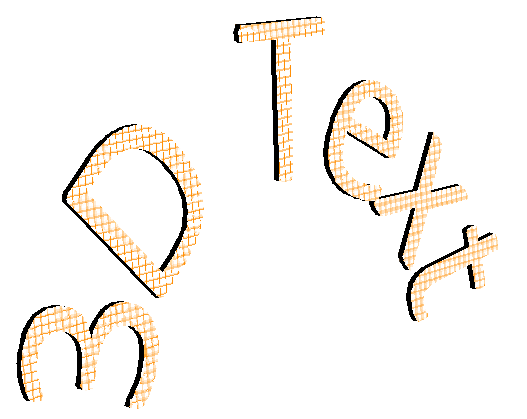
下面的示例创建带有橙白网格图案的文本,应用向上弧形,并通过 ITextFrameFormat.ThreeDFormat 配置 3D 设置。挤压高度和深度以点为单位,光线旋转以度为单位。形状填充和轮廓被隐藏,仅显示文本。示例将 PNG 图像渲染为默认幻灯片尺寸的两倍,并将演示文稿保存为 PPTX:
using System.Drawing;
using Aspose.Slides;
using Aspose.Slides.Export;

const float imageScale = 2;

using var presentation = new Presentation();
var slide = presentation.Slides[0];

var shape = slide.Shapes.AddAutoShape(ShapeType.Rectangle, 200, 150, 250, 250);
shape.FillFormat.FillType = FillType.NoFill;
shape.LineFormat.FillFormat.FillType = FillType.NoFill;
shape.TextFrame.Text = "3D Text";

var portion = shape.TextFrame.Paragraphs[0].Portions[0];
portion.PortionFormat.FillFormat.FillType = FillType.Pattern;
portion.PortionFormat.FillFormat.PatternFormat.ForeColor.Color = Color.DarkOrange;
portion.PortionFormat.FillFormat.PatternFormat.BackColor.Color = Color.White;
portion.PortionFormat.FillFormat.PatternFormat.PatternStyle = PatternStyle.LargeGrid;

shape.TextFrame.Paragraphs[0].ParagraphFormat.DefaultPortionFormat.FontHeight = 128;

var textFrameFormat = shape.TextFrame.TextFrameFormat;
textFrameFormat.Transform = TextShapeType.ArchUp;
textFrameFormat.ThreeDFormat.ExtrusionHeight = 3.5f;
textFrameFormat.ThreeDFormat.Depth = 3;
textFrameFormat.ThreeDFormat.Material = MaterialPresetType.Plastic;
textFrameFormat.ThreeDFormat.LightRig.Direction = LightingDirection.Top;
textFrameFormat.ThreeDFormat.LightRig.LightType = LightRigPresetType.Balanced;
textFrameFormat.ThreeDFormat.LightRig.SetRotation(0, 0, 40);
textFrameFormat.ThreeDFormat.Camera.CameraType = CameraPresetType.PerspectiveContrastingRightFacing;

using var thumbnail = slide.GetImage(imageScale, imageScale);
thumbnail.Save("text_3d.png");

presentation.Save("text_3d.pptx", SaveFormat.Pptx);
文本被渲染为弯曲、挤压的 3D 字体:
在 3D 形状上保持文本平面
若要在保持形状的 3D 外观的同时保持文本可读,请通过 ITextFrame.TextFrameFormat 的 ITextFrameFormat.KeepTextFlat 设置。当值为 true 时,文本保持在 3D 场景之外;当为 false 时,文本参与场景并遵循其 3D 方向。
此设置不会移除形状的 3D 格式化:其相机、照明、材质和挤压仍通过 IShape.ThreeDFormat 配置。它也不同于普通旋转。IShape.Rotation 在幻灯片平面内旋转形状,而 ITextFrameFormat.RotationAngle 控制文本在其边界框内的自定义旋转。保持文本不进入 3D 场景不会重置上述任一角度。
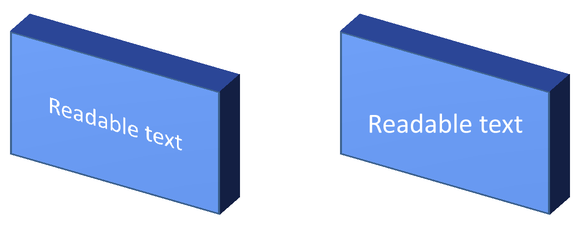
下面的独立示例创建一个带文本的蓝色矩形,并在原始矩形旁边克隆它。两个形状具有相同的 3D 格式化;仅文本设置不同:左侧为 false,右侧为 true。相机角度以度为单位,挤压高度为 40 点。示例将演示文稿保存为 PPTX,并将比较幻灯片渲染为 PNG(尺寸为默认的两倍)。
using System.Drawing;
using Aspose.Slides;
using Aspose.Slides.Export;

using var presentation = new Presentation();
var slide = presentation.Slides[0];

var shape = slide.Shapes.AddAutoShape(ShapeType.Rectangle, 70, 160, 240, 140);

shape.TextFrame.Text = "Readable text";
shape.TextFrame.Paragraphs[0].ParagraphFormat.DefaultPortionFormat.FontHeight = 28;
shape.TextFrame.Paragraphs[0].ParagraphFormat.Alignment = TextAlignment.Center;
shape.TextFrame.TextFrameFormat.AnchoringType = TextAnchorType.Center;
shape.FillFormat.FillType = FillType.Solid;
shape.FillFormat.SolidFillColor.Color = Color.CornflowerBlue;

shape.ThreeDFormat.Camera.CameraType = CameraPresetType.OrthographicFront;
shape.ThreeDFormat.Camera.SetRotation(30, 30, 0);
shape.ThreeDFormat.LightRig.LightType = LightRigPresetType.Flat;
shape.ThreeDFormat.LightRig.Direction = LightingDirection.Top;
shape.ThreeDFormat.Material = MaterialPresetType.Flat;
shape.ThreeDFormat.ExtrusionHeight = 40;
shape.ThreeDFormat.ExtrusionColor.Color = Color.RoyalBlue;
shape.TextFrame.TextFrameFormat.KeepTextFlat = false;

var flatTextShape = (IAutoShape)slide.Shapes.AddClone(shape, 400, 160);
flatTextShape.TextFrame.TextFrameFormat.KeepTextFlat = true;

presentation.Save("keep_text_flat.pptx", SaveFormat.Pptx);
using var image = slide.GetImage(2, 2);
image.Save("keep_text_flat.png");
左侧的文本遵循 3D 方向;右侧的文本保持平面,更易阅读。两个矩形保留相同的可见挤压和 3D 方向。
导出和渲染行为
Aspose.Slides 在保存为 PPTX 等 PowerPoint 格式时会保留 3D 格式化。渲染或导出为固定布局格式时,3D 场景会光栅化或绘制为 2D 结果。这适用于将幻灯片渲染为 PNG、导出为 PDF、导出为 HTML,或为 视频转换 生成帧。
请注意以下要点:
- 导出的图像和 PDF 为静态的,导出后对象无法被观看者旋转。
- 最终外观取决于相机、光照、材质、挤压、填充和幻灯片缩放的组合。
- 若需检查继承或主题基的格式化值,请读取 effective shape properties。
- 某些输出格式无法存储可编辑的 PowerPoint 3D 格式化。在这些格式中,视觉结果会被渲染,而不是以可编辑的 3D 设置保存。
常见问答
Aspose.Slides 能创建交互式 3D 演示文稿吗?
Aspose.Slides 创建并渲染 PowerPoint 形状和文本的 3D 效果。它不会使导出的图像、PDF 或 HTML 页面成为可交互的 3D 场景,供观看者旋转。在 PPTX 中,3D 格式化在 PowerPoint 中仍保持可编辑(前提是格式支持)。
3D 模型和 3D 效果有什么区别?
3D 模型是插入演示文稿的独立 3D 对象。3D 效果是对普通 PowerPoint 形状或文本应用的格式化,如旋转、挤压、斜角、照明和材质。本文关注的是 3D 效果。
可见的 3D 形状需要哪些设置?
至少需要设置相机旋转以及挤压或深度。实际使用中,通常还会设置光照和材质,以便渲染出的面有明显的高光和阴影。
我可以同时对形状和文本应用 3D 效果吗?
可以。对形状主体使用 IShape.ThreeDFormat,对文本使用 ITextFrameFormat.ThreeDFormat。
导出为图像、PDF、HTML 或视频帧时会出现 3D 效果吗?
会。Aspose.Slides 在生成幻灯片图像、PDF、HTML 以及用于视频转换的帧时会渲染 3D 效果。导出的输出包含渲染后的外观,而不是可编辑的 3D 对象。
我能在继承和主题设置应用后读取最终的 3D 值吗?
可以。使用文档中描述的有效格式化 API(Shape Effective Properties)读取最终的相机、光照、斜角以及相关的 3D 值。