
Python을 사용한 프레젠테이션 정보 검색 및 업데이트
개요
Aspose.Slides는 프레젠테이션의 형식을 식별하고 전체 프레젠테이션 객체 모델을 생성하지 않고도 문서 메타데이터를 읽을 수 있습니다. 파일을 분류하거나 인벤토리를 구축하거나 프레젠테이션 내용을 로드하고 처리할지 결정하기 전에 속성을 검사해야 할 때 유용합니다.
이 문서에서는 PresentationFactory와 PresentationInfo를 사용한 가벼운 검사와 DocumentProperties를 통한 대상 업데이트 방법을 보여줍니다.
프레젠테이션 형식 확인
이미 로드된 프레젠테이션이 있는 경우 로드 후 형식 감지를 위해 Determine the Original Presentation Format을 확인하고 레거시 PPT, PPS, POT 스트림의 제한 사항을 참고하십시오.
PresentationFactory.get_presentation_info를 사용하면 Presentation 인스턴스를 생성하지 않고 파일을 검사할 수 있습니다. PresentationInfo.load_format 속성은 PPTX, PPT 또는 ODP와 같은 감지된 형식을 보고합니다.
import aspose.slides as slides

file_names = ["pres.pptx", "pres.ppt", "pres.odp"]

for file_name in file_names:
    presentation_info = slides.PresentationFactory.instance.get_presentation_info(file_name)
    print(f"{file_name}: {presentation_info.load_format}")
가벼운 프레젠테이션 인벤토리 구축
많은 프레젠테이션 파일을 처리할 때 검증, 인덱싱 또는 문서 관리 시스템을 위한 간결한 인벤토리가 필요할 수 있습니다. 이 경우 PresentationFactory.get_presentation_info를 사용하여 PresentationInfo 객체를 얻은 다음 PresentationInfo.read_document_properties을 호출하여 문서 메타데이터를 읽습니다. 이 방법은 Presentation 인스턴스를 생성하지 않으며 전체 프레젠테이션 객체 모델을 탐색할 필요도 없습니다.
DocumentProperties가 노출하는 확장 속성은 다음과 같은 인벤토리 값을 제공합니다.
| 속성 | 인벤토리 값 |
|---|---|
| slides | 총 슬라이드 수. |
| hidden_slides | 숨김 슬라이드 수. |
| notes | 노트가 포함된 슬라이드 수. |
| paragraphs | 사용할 수 있는 경우 전체 단락 수. |
| words | 전체 단어 수. |
| multimedia_clips | 오디오 및 비디오 클립 총 수. |
다음 예제는 Presentation 객체를 생성하지 않고 이러한 값을 읽어 간결한 인벤토리를 출력합니다. 또한 heading_pairs와 titles_of_parts를 결합하여 글꼴, 테마, 슬라이드 제목과 같은 콘텐츠 그룹을 표시합니다.
import os
import aspose.slides as slides

file_path = "sample.pptx"
presentation_info = slides.PresentationFactory.instance.get_presentation_info(file_path)
document_properties = presentation_info.read_document_properties()

print(f"File: {os.path.basename(file_path)}")
print(f"Format: {presentation_info.load_format}")
print(f"Title: {document_properties.title}")
print(f"Author: {document_properties.author}")
print("Statistics:")
print(f"  Slides: {document_properties.slides}")
print(f"  Hidden slides: {document_properties.hidden_slides}")
print(f"  Slides with notes: {document_properties.notes}")
print(f"  Paragraphs: {document_properties.paragraphs}")
print(f"  Words: {document_properties.words}")
print(f"  Multimedia clips: {document_properties.multimedia_clips}")

heading_pairs = document_properties.heading_pairs or []
titles_of_parts = document_properties.titles_of_parts or []
part_index = 0

if not heading_pairs or not titles_of_parts:
    print("Content groups: not available")
else:
    print("Content groups:")

    for heading_pair in heading_pairs:
        print(f"  {heading_pair.name} ({heading_pair.count})")

        for _ in range(heading_pair.count):
            if part_index >= len(titles_of_parts):
                break

            print(f"    - {titles_of_parts[part_index]}")
            part_index += 1

    if part_index < len(titles_of_parts):
        print("  Other parts:")

        while part_index < len(titles_of_parts):
            print(f"    - {titles_of_parts[part_index]}")
            part_index += 1
각 HeadingPair은 그룹 이름과 해당 그룹의 항목 수를 제공합니다. DocumentProperties.titles_of_parts는 평면이며 순서가 지정된 컬렉션이므로 각 heading pair에 의해 지정된 연속된 제목 수만큼 사용합니다.
저장된 메타데이터 및 형식 제한
PresentationInfo.read_document_properties가 반환하는 인벤토리 속성은 원본 문서에 존재하는 메타데이터를 반영합니다. Aspose.Slides는 이 호출을 위해 프레젠테이션 객체 모델을 로드하거나 탐색하여 값을 재계산하지 않습니다. 누락된 속성은 기본값으로 표시되며, 마지막으로 파일을 저장한 애플리케이션이 문서 속성을 업데이트하지 않은 경우 저장된 값이 오래될 수 있습니다.
- PPTX: 이 형식은 슬라이드, 노트, 숨김 슬라이드, 단락, 단어 및 멀티미디어 개수에 대한 확장 문서 속성뿐 아니라 heading pair 및 part title을 제공합니다. 사용 가능 여부는 문서 작성자가 어떤 속성을 기록했는지에 따라 다합니다.
- PPT: 이 바이너리 형식은 해당 문서 요약 속성을 저장할 수 있습니다. 속성이 없거나 문서 작성자가 새로 고치지 않은 경우, Aspose.Slides는 슬라이드에서 계산하지 않고 저장된 값 또는 기본값을 반환합니다.
- ODP: OpenDocument 메타데이터는 페이지, 단락, 단어 수와 같은 일반 문서 통계를 제공하지만 이러한 값은 모든 PowerPoint 고유 확장 속성에 매핑되지 않습니다. 숨김 슬라이드, 노트 슬라이드, 멀티미디어, heading-pair 및 part-title 메타데이터가 없을 수 있으며, 인벤토리 속성은 기본값을 반환할 수 있습니다. 값이 0이거나 컬렉션이 비어 있다고 해서 해당 콘텐츠가 없다고 단정하지 마십시오.
인벤토리와 사전 검증에는 가벼운 메타데이터 방식을 사용하십시오. 결과가 메모리 내 변경을 반영해야 하거나 실제 프레젠테이션 내용을 확인해야 할 경우 프레젠테이션을 로드하고 실시간 객체 모델을 검사하십시오.
프레젠테이션 속성 업데이트
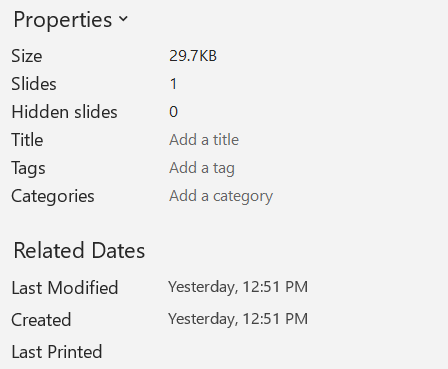
PresentationInfo.read_document_properties가 반환하는 속성은 Presentation 인스턴스를 만들지 않고도 변경할 수 있습니다. 변경 사항은 PresentationInfo.update_document_properties로 적용하고, 이후 PresentationInfo.write_binded_presentation을 사용하여 바인드된 프레젠테이션을 기록합니다.
다음 이미지는 원본 문서 속성을 보여줍니다.
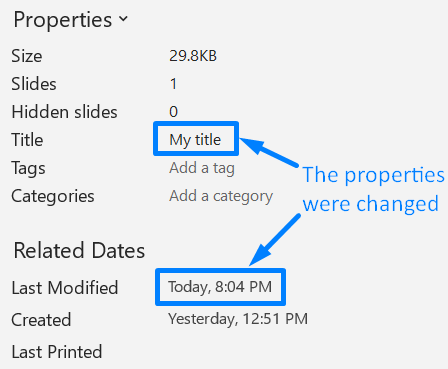
다음 예제는 제목과 마지막 저장 시간을 변경하고 결과를 새 파일에 기록합니다:
import datetime
import aspose.slides as slides

source_file = "sample.pptx"
output_file = "sample_with_updated_properties.pptx"
presentation_info = slides.PresentationFactory.instance.get_presentation_info(source_file)
document_properties = presentation_info.read_document_properties()

document_properties.title = "Quarterly sales report"
document_properties.last_saved_time = datetime.datetime.now(datetime.timezone.utc)

presentation_info.update_document_properties(document_properties)

with open(output_file, "wb") as output_stream:
    presentation_info.write_binded_presentation(output_stream)
다음 이미지는 업데이트된 문서 속성을 보여줍니다.
유용한 링크
관련 보안 검사 및 보호 설정에 대해서는 다음 문서를 참조하십시오.
FAQ
폰트가 포함되어 있는지 및 어떤 폰트인지 어떻게 확인할 수 있나요?
프레젠테이션을 로드하고 Presentation.fonts_manager를 사용하십시오. FontsManager.get_embedded_fonts을 호출하여 포함된 폰트를 얻고, FontsManager.get_fonts을 호출하여 프레젠테이션에서 사용되는 폰트를 얻습니다. 두 결과를 비교하여 렌더링에 필요하지만 포함되지 않은 폰트를 찾으십시오.
파일에 숨김 슬라이드가 있는지 및 그 수를 어떻게 빠르게 확인할 수 있나요?
저장된 문서 메타데이터가 충분하면 PresentationFactory.get_presentation_info와 PresentationInfo.read_document_properties를 통해 DocumentProperties.hidden_slides를 읽습니다. 이는 가벼운 인벤토리에 적합합니다. 프레젠테이션이 메모리에서 수정된 경우 저장된 메타데이터가 없거나 오래됐을 수 있으며, 실시간 값을 확인해야 하는 경우 Presentation.slides를 반복하고 각 슬라이드의 Slide.hidden 속성을 검사하십시오.
사용자 지정 슬라이드 크기와 방향이 사용되는지, 그리고 기본값과 다른지 감지할 수 있나요?
예. 프레젠테이션을 로드하고 Presentation.slide_size를 읽습니다. 현재 설정을 기대되는 사전 설정 및 치수와 비교하려면 SlideSize.type, SlideSize.size, SlideSize.orientation을 확인하십시오.
차트가 외부 데이터 소스를 참조하는지 빠르게 확인하는 방법이 있나요?
예. 각 Chart를 찾아 ChartData.data_source_type을 검사합니다. 외부 워크북인 경우 ChartData.external_workbook_path를 읽습니다. 데이터 소스 유형 및 경로는 외부 참조를 식별하지만, 대상이 사용 가능한지 확인하려면 별도의 리소스 검사가 필요합니다.
렌더링이나 PDF 내보내기를 느리게 할 수 있는 ‘무거운’ 슬라이드를 어떻게 평가할 수 있나요?
단일 복잡도 속성은 없습니다. Presentation.slides와 각 슬라이드의 BaseSlide.shapes 컬렉션을 순회하십시오. 도형 수와 큰 이미지, 효과, 애니메이션 또는 멀티미디어 존재 여부를 평가 신호로 사용하고, 슬라이드를 확정적인 성능 병목으로 판단하기 전에 대표적인 렌더링이나 내보내기를 측정하십시오.