
Gestire le caselle di testo nelle presentazioni usando Java
Introduzione
In Aspose.Slides per Java, il testo delle diapositive è memorizzato nei frame di testo che appartengono alle forme. L’interfaccia IAutoShape rappresenta la forma più comune contenente testo e espone il suo testo tramite il metodo IAutoShape.getTextFrame .
Nota
Ogni auto forma implementa IShape, ma non tutte le forme sono auto forme o supportano un frame di testo. Quando si elabora una presentazione esistente, verificare che una forma implementi IAutoShape prima di accedere al suo testo.Crea una casella di testo su una diapositiva
Per creare una casella di testo, aggiungere un’auto forma a una diapositiva, aggiungere testo al suo frame di testo e salvare la presentazione. L’esempio seguente crea una casella di testo rettangolare:
import com.aspose.slides.*;

Presentation presentation = new Presentation();
try {
    ISlide slide = presentation.getSlides().get_Item(0);
    IAutoShape textBox = slide.getShapes().addAutoShape(ShapeType.Rectangle, 150, 75, 300, 50);
    textBox.addTextFrame("Aspose TextBox");

    presentation.save("TextBox.pptx", SaveFormat.Pptx);
} finally {
    presentation.dispose();
}
Le coordinate e le dimensioni passate a IShapeCollection.addAutoShape sono misurate in punti. IAutoShape.addTextFrame inizializza il frame di testo con il testo fornito.
Verifica la presenza di una forma casella di testo
Utilizzare il metodo IAutoShape.isTextBox per determinare se un’auto forma è trattata come una casella di testo. Questo è utile quando una presentazione contiene sia auto forme con testo sia auto forme puramente grafiche.
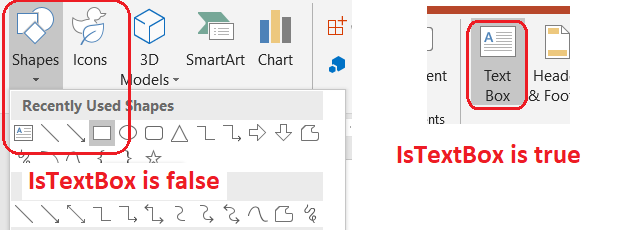
L’esempio seguente esamina ogni auto forma in una presentazione:
import com.aspose.slides.*;

Presentation presentation = new Presentation();
try {
    ISlide slide = presentation.getSlides().get_Item(0);
    IAutoShape textBox = slide.getShapes().addAutoShape(ShapeType.Rectangle, 10, 10, 120, 40);
    textBox.addTextFrame("Text box");
    slide.getShapes().addAutoShape(ShapeType.Ellipse, 150, 10, 40, 40);

    for (ISlide currentSlide : presentation.getSlides()) {
        for (IShape shape : currentSlide.getShapes()) {
            if (shape instanceof IAutoShape) {
                IAutoShape autoShape = (IAutoShape) shape;
                System.out.println(autoShape.isTextBox() ? "The shape is a text box." : "The shape is not a text box.");
            }
        }
    }
} finally {
    presentation.dispose();
}
Una auto forma appena aggiunta non è considerata una casella di testo finché non contiene testo non vuoto. È possibile fornire quel testo tramite IAutoShape.addTextFrame o ITextFrame.setText. Aggiungere o assegnare una stringa vuota fa sì che IAutoShape.isTextBox restituisca false:
import com.aspose.slides.*;

Presentation presentation = new Presentation();
try {
    ISlide slide = presentation.getSlides().get_Item(0);

    IAutoShape shape1 = slide.getShapes().addAutoShape(ShapeType.Rectangle, 10, 10, 100, 40);
    shape1.addTextFrame("Shape 1");
    System.out.println(shape1.isTextBox());

    IAutoShape shape2 = slide.getShapes().addAutoShape(ShapeType.Rectangle, 10, 70, 100, 40);
    shape2.getTextFrame().setText("Shape 2");
    System.out.println(shape2.isTextBox());

    IAutoShape shape3 = slide.getShapes().addAutoShape(ShapeType.Rectangle, 10, 130, 100, 40);
    shape3.addTextFrame("");
    System.out.println(shape3.isTextBox());

    IAutoShape shape4 = slide.getShapes().addAutoShape(ShapeType.Rectangle, 10, 190, 100, 40);
    shape4.getTextFrame().setText("");
    System.out.println(shape4.isTextBox());
} finally {
    presentation.dispose();
}
Le prime due chiamate stampano true; le ultime due stampano false.
Trova la forma che possiede un frame di testo
Il codice generico di elaborazione testo può ricevere un ITextFrame senza sapere quale oggetto della presentazione lo contiene. Utilizzare il metodo di sola lettura ITextFrame.getParentShape per tornare alla sua forma proprietaria IShape.
Per un frame di testo posseduto da un’auto forma o da un’altra forma con testo, ITextFrame.getParentShape restituisce il proprietario e ITextFrame.getParentCell restituisce null. Verificare il valore restituito prima di accedervi. Per identificare sia i proprietari di forma sia quelli di cella di tabella, incluse le forme associate a nodi SmartArt, vedere Search and Replace Text.
Aggiungi colonne a una casella di testo
Il metodo ITextFrameFormat.setColumnCount divide il frame di testo in colonne, mentre ITextFrameFormat.setColumnSpacing imposta lo spazio tra le colonne in punti. Entrambe le impostazioni appartengono a ITextFrameFormat e possono essere modificate tramite il frame di testo di una casella di testo esistente. Il testo viene ridistribuito tra le colonne all’interno della stessa forma; non continua in un’altra forma.
L’esempio seguente crea una casella di testo a tre colonne con 10 punti tra le colonne, salva la presentazione e legge le impostazioni memorizzate dal file di output:
import com.aspose.slides.*;

Presentation presentation = new Presentation();
try {
    ISlide slide = presentation.getSlides().get_Item(0);
    IAutoShape textBox = slide.getShapes().addAutoShape(ShapeType.Rectangle, 100, 100, 300, 200);
    textBox.addTextFrame("This text is distributed automatically across all columns in the text box.");

    ITextFrameFormat textFrameFormat = textBox.getTextFrame().getTextFrameFormat();
    textFrameFormat.setColumnCount(3);
    textFrameFormat.setColumnSpacing(10);

    presentation.save("TextBoxColumns.pptx", SaveFormat.Pptx);

    Presentation savedPresentation = new Presentation("TextBoxColumns.pptx");
    try {
        IAutoShape savedTextBox = (IAutoShape) savedPresentation.getSlides().get_Item(0).getShapes().get_Item(0);
        ITextFrameFormat savedFormat = savedTextBox.getTextFrame().getTextFrameFormat();
        System.out.println("Columns: " + savedFormat.getColumnCount() + "; spacing: " + savedFormat.getColumnSpacing() + " points");
    } finally {
        savedPresentation.dispose();
    }
} finally {
    presentation.dispose();
}
Estrai il testo da colonne individuali
Usare ITextFrame.splitTextByColumns per recuperare il testo assegnato a ciascuna colonna visiva in un frame di testo esistente. Il metodo restituisce una stringa per ogni colonna, nell’ordine di lettura basato sulle colonne. Un frame di testo a colonna singola produce un array con un elemento, e una colonna vuota è rappresentata da una stringa vuota. Le stringhe contengono solo testo semplice; la formattazione a livello di porzione non è preservata.
Questo è utile quando è necessario:
- Estrarre il testo preservando il suo ordine di lettura basato sulle colonne.
- Indicizzare o confrontare il contenuto delle diapositive a più colonne.
- Esportare ogni colonna in un file separato, campo di database o altra destinazione.
- Ispezionare come il testo viene ridistribuito dopo aver modificato il numero di colonne con ITextFrameFormat.setColumnCount, la spaziatura con ITextFrameFormat.setColumnSpacing, il carattere o la dimensione del frame di testo.
Il metodo riporta il testo distribuito all’interno dell’attuale ITextFrame; non fa scorrere automaticamente il testo tra forme o caselle di testo separate. La distribuzione delle colonne può dipendere dai caratteri disponibili e da altre impostazioni di layout del testo, quindi assicurarsi che i caratteri richiesti siano disponibili quando è importante ottenere risultati coerenti.
L’esempio seguente carica una presentazione, trova la prima auto forma a più colonne con un frame di testo, legge il conteggio di colonne configurato e scrive il testo di ogni colonna in un file separato. Le forme che non forniscono un frame di testo vengono ignorate.
import com.aspose.slides.*;
import java.io.IOException;
import java.nio.charset.StandardCharsets;
import java.nio.file.Files;
import java.nio.file.Path;
import java.nio.file.Paths;

Presentation presentation = new Presentation("MultiColumnText.pptx");
try {
    IAutoShape textBox = null;
    for (IShape shape : presentation.getSlides().get_Item(0).getShapes()) {
        if (shape instanceof IAutoShape) {
            IAutoShape autoShape = (IAutoShape) shape;
            if (autoShape.getTextFrame() != null) {
                int columnCount = autoShape.getTextFrame().getTextFrameFormat().getColumnCount();
                if (columnCount > 1) {
                    textBox = autoShape;
                    break;
                }
            }
        }
    }

    if (textBox == null) {
        System.out.println("No multi-column text frame was found.");
    } else {
        ITextFrame textFrame = textBox.getTextFrame();
        int configuredColumnCount = textFrame.getTextFrameFormat().getColumnCount();
        String[] columnTexts = textFrame.splitTextByColumns();

        System.out.println("Configured columns: " + configuredColumnCount);

        for (int columnIndex = 0; columnIndex < columnTexts.length; columnIndex++) {
            int columnNumber = columnIndex + 1;
            String columnText = columnTexts[columnIndex];
            System.out.println("Column " + columnNumber + ": " + columnText);
            Path outputPath = Paths.get("Column-" + columnNumber + ".txt");
            byte[] textBytes = columnText.getBytes(StandardCharsets.UTF_8);
            try {
                Files.write(outputPath, textBytes);
            } catch (IOException exception) {
                System.out.println("Could not write column " + columnNumber + ": " + exception.getMessage());
            }
        }
    }
} finally {
    presentation.dispose();
}
Aggiorna il testo
Per aggiornare il testo in tutta la presentazione, iterare le diapositive e le forme, selezionare le auto forme e quindi modificare le loro porzioni di testo. Lavorare a livello di porzione permette di modificare sia il testo sia la formattazione dei caratteri.
L’esempio seguente sostituisce ogni occorrenza di years con months nel testo delle auto forme e rende grassetto ogni porzione interessata:
import com.aspose.slides.*;

Presentation presentation = new Presentation("Text.pptx");
try {
    for (ISlide slide : presentation.getSlides()) {
        for (IShape shape : slide.getShapes()) {
            if (!(shape instanceof IAutoShape)) {
                continue;
            }

            IAutoShape autoShape = (IAutoShape) shape;
            ITextFrame textFrame = autoShape.getTextFrame();
            if (textFrame == null) {
                continue;
            }

            for (IParagraph paragraph : textFrame.getParagraphs()) {
                for (IPortion portion : paragraph.getPortions()) {
                    String text = portion.getText();
                    if (text != null && text.contains("years")) {
                        portion.setText(text.replace("years", "months"));
                        portion.getPortionFormat().setFontBold(NullableBool.True);
                    }
                }
            }
        }
    }

    presentation.save("TextChanged.pptx", SaveFormat.Pptx);
} finally {
    presentation.dispose();
}
Questo attraversamento aggiorna il testo solo nelle auto forme. Il testo memorizzato in tabelle, grafici, SmartArt o forme raggruppate richiede l’attraversamento delle collezioni proprie di quegli oggetti.
Aggiungi una casella di testo con un collegamento ipertestuale
Un collegamento ipertestuale può essere assegnato a una specifica porzione di testo, così solo quel testo funge da collegamento cliccabile. Utilizzare IHyperlinkManager.setExternalHyperlinkClick per associare la porzione a un URL esterno.
L’esempio seguente crea testo collegato e lo salva in una presentazione:
import com.aspose.slides.*;

Presentation presentation = new Presentation();
try {
    ISlide slide = presentation.getSlides().get_Item(0);
    IAutoShape textBox = slide.getShapes().addAutoShape(ShapeType.Rectangle, 150, 150, 200, 50);
    textBox.addTextFrame("Aspose.Slides");

    IPortion textPortion = textBox.getTextFrame().getParagraphs().get_Item(0).getPortions().get_Item(0);
    textPortion.getPortionFormat().getHyperlinkManager().setExternalHyperlinkClick("https://www.aspose.com/");

    presentation.save("Hyperlink.pptx", SaveFormat.Pptx);
} finally {
    presentation.dispose();
}
FAQ
Qual è la differenza tra una casella di testo e un segnaposto di testo su una diapositiva master o layout?
Un placeholder può ereditare posizione e formattazione da una master slide o da una layout slide. Una casella di testo normale è una forma indipendente sulla diapositiva in cui è stata creata e non acquisisce il comportamento di segnaposto quando il layout cambia.
Come posso sostituire il testo senza modificare il testo in diagrammi, tabelle o SmartArt?
Limitare l’attraversamento alle forme che implementano IAutoShape, come mostrato nell’esempio Aggiorna il testo. Diagrammi, tabelle e SmartArt memorizzano il testo nei loro modelli di oggetti, quindi non vengono modificati da quel ciclo.