
C++ 프레젠테이션에서 글머리표 및 번호 매기기 목록 관리
개요
Aspose.Slides for C++를 사용하면 PowerPoint 및 OpenDocument 프레젠테이션에서 글머리표 및 번호 매기기 목록을 만들고 서식 지정할 수 있습니다. 목록 항목은 글머리표 설정이 해당 단락 서식을 통해 제어되는 단락입니다.
Use the IParagraph::get_ParagraphFormat method to access paragraph-level list settings. The main entry point is IParagraphFormat::get_Bullet, which returns an IBulletFormat object. With this object, you can set the bullet type, symbol, picture, color, size, numbering style, and starting number.
This article shows how to:
- 사용자 정의 기호로 글머리표 목록 만들기
- 이미지 글머리표 만들기
- 단락 깊이를 설정하여 다중 레벨 목록 만들기
- 번호 매기기 목록 만들기
- 기존 프레젠테이션에서 목록 서식 검사 및 변경
글머리표 목록 만들기
To create a bulleted list, add Paragraph objects to an ITextFrame and set IBulletFormat::set_Type to BulletType::Symbol. You can then set IBulletFormat::set_Char, IBulletFormat::get_Color, and IBulletFormat::set_Height to control the bullet appearance.
The following C++ code demonstrates how to create a bulleted list in a slide:
auto createParagraph = [](System::String text)
{
    auto paragraph = System::MakeObject<Paragraph>();
    auto paragraphFormat = paragraph->get_ParagraphFormat();
    auto bulletFormat = paragraphFormat->get_Bullet();

    bulletFormat->set_Type(BulletType::Symbol);
    bulletFormat->set_Char(u'*');
    paragraphFormat->set_Indent(15);
    bulletFormat->set_IsBulletHardColor(NullableBool::True);
    bulletFormat->get_Color()->set_Color(System::Drawing::Color::get_IndianRed());
    bulletFormat->set_Height(100);
    paragraph->set_Text(text);

    return paragraph;
};

auto presentation = System::MakeObject<Presentation>();
auto slide = presentation->get_Slide(0);
auto autoShape = slide->get_Shapes()->AddAutoShape(ShapeType::Rectangle, 20, 20, 200, 50);

auto textFrame = autoShape->get_TextFrame();
textFrame->get_Paragraphs()->Clear();

auto paragraph1 = createParagraph(u"The first paragraph");
textFrame->get_Paragraphs()->Add(paragraph1);

auto paragraph2 = createParagraph(u"The second paragraph");
textFrame->get_Paragraphs()->Add(paragraph2);

presentation->Save(u"symbol_bullets.pptx", SaveFormat::Pptx);
presentation->Dispose();
The result:

번호 매기기 목록 만들기
Use numbered lists when the order of items matters. Set IBulletFormat::set_Type to BulletType::Numbered. You can also choose a numbering format with IBulletFormat::set_NumberedBulletStyle or set IBulletFormat::set_NumberedBulletStartWith when the list should start from a value other than 1.
The following C++ code shows how to create a numbered list in a slide:
auto presentation = System::MakeObject<Presentation>();
auto slide = presentation->get_Slide(0);
auto autoShape = slide->get_Shapes()->AddAutoShape(ShapeType::Rectangle, 20, 20, 90, 80);

auto textFrame = autoShape->get_TextFrame();
textFrame->get_Paragraphs()->Clear();

auto paragraph1 = System::MakeObject<Paragraph>();
paragraph1->get_ParagraphFormat()->get_Bullet()->set_Type(BulletType::Numbered);
paragraph1->set_Text(u"Apple");
textFrame->get_Paragraphs()->Add(paragraph1);

auto paragraph2 = System::MakeObject<Paragraph>();
paragraph2->get_ParagraphFormat()->get_Bullet()->set_Type(BulletType::Numbered);
paragraph2->set_Text(u"Orange");
textFrame->get_Paragraphs()->Add(paragraph2);

auto paragraph3 = System::MakeObject<Paragraph>();
paragraph3->get_ParagraphFormat()->get_Bullet()->set_Type(BulletType::Numbered);
paragraph3->set_Text(u"Banana");
textFrame->get_Paragraphs()->Add(paragraph3);

presentation->Save(u"numbered_bullets.pptx", SaveFormat::Pptx);
presentation->Dispose();
The result:
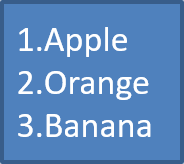
그림 글머리표 만들기
Aspose.Slides allows you to replace a regular bullet symbol with an image. Picture bullets work best with simple images that remain readable at a small size, such as icons or small transparent PNG files.
이상적으로, 일반 글머리표 기호를 이미지로 교체하려는 경우 투명한 배경을 가진 간단한 그래픽을 선택하는 것이 가장 좋습니다. 이러한 이미지는 사용자 정의 글머리표 기호로 적합합니다.
이미지는 매우 작은 크기로 축소됩니다. 따라서 리스트에서 글머리표로 사용할 때도 선명하고 시각적으로 효과적인 이미지를 선택할 것을 강력히 권장합니다.
To create a picture bullet, add an image to IPresentation::get_Images and assign the returned IPPImage object to IBulletFormat::get_Picture. Set IBulletFormat::set_Type to BulletType::Picture before assigning the image.
예를 들어 “image.png” 파일이 있다고 가정해 보겠습니다:

The following C++ code shows how to create picture bullets in a slide:
auto createParagraph = [](System::String text, System::SharedPtr<IPPImage> image)
{
    auto paragraph = System::MakeObject<Paragraph>();
    auto paragraphFormat = paragraph->get_ParagraphFormat();
    auto bulletFormat = paragraphFormat->get_Bullet();

    bulletFormat->set_Type(BulletType::Picture);
    bulletFormat->get_Picture()->set_Image(image);
    paragraphFormat->set_Indent(15);
    bulletFormat->set_Height(100);
    paragraph->set_Text(text);

    return paragraph;
};

auto presentation = System::MakeObject<Presentation>();
auto slide = presentation->get_Slide(0);
auto autoShape = slide->get_Shapes()->AddAutoShape(ShapeType::Rectangle, 20, 20, 200, 50);

auto textFrame = autoShape->get_TextFrame();
textFrame->get_Paragraphs()->Clear();

auto sourceImage = Images::FromFile(u"image.png");
auto bulletImage = presentation->get_Images()->AddImage(sourceImage);
sourceImage->Dispose();

auto paragraph1 = createParagraph(u"The first paragraph", bulletImage);
textFrame->get_Paragraphs()->Add(paragraph1);

auto paragraph2 = createParagraph(u"The second paragraph", bulletImage);
textFrame->get_Paragraphs()->Add(paragraph2);

presentation->Save(u"picture_bullets.pptx", SaveFormat::Pptx);
presentation->Dispose();
The result:

다중 레벨 목록 만들기
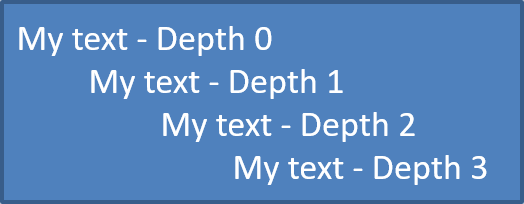
Use IParagraphFormat::set_Depth to place list items on different levels. Level 0 is the top level, level 1 is nested below it, and so on.
The following C++ code shows how to create a multilevel bulleted list:
auto presentation = System::MakeObject<Presentation>();
auto slide = presentation->get_Slide(0);
auto autoShape = slide->get_Shapes()->AddAutoShape(ShapeType::Rectangle, 20, 20, 260, 110);

auto textFrame = autoShape->get_TextFrame();
textFrame->get_Paragraphs()->Clear();

auto paragraph1 = System::MakeObject<Paragraph>();
paragraph1->get_ParagraphFormat()->set_Depth(0);
paragraph1->set_Text(u"My text - Depth 0");
textFrame->get_Paragraphs()->Add(paragraph1);

auto paragraph2 = System::MakeObject<Paragraph>();
paragraph2->get_ParagraphFormat()->set_Depth(1);
paragraph2->set_Text(u"My text - Depth 1");
textFrame->get_Paragraphs()->Add(paragraph2);

auto paragraph3 = System::MakeObject<Paragraph>();
paragraph3->get_ParagraphFormat()->set_Depth(2);
paragraph3->set_Text(u"My text - Depth 2");
textFrame->get_Paragraphs()->Add(paragraph3);

auto paragraph4 = System::MakeObject<Paragraph>();
paragraph4->get_ParagraphFormat()->set_Depth(3);
paragraph4->set_Text(u"My text - Depth 3");
textFrame->get_Paragraphs()->Add(paragraph4);

presentation->Save(u"multilevel_bullets.pptx", SaveFormat::Pptx);
presentation->Dispose();
The result:
기존 목록 변경
To change list formatting in an existing presentation, access the target paragraph and update its IParagraphFormat::get_Bullet settings. The same properties used to create lists can be used to inspect or modify lists loaded from a PPT, PPTX, or ODP file.
The following C++ code changes the first paragraph in a text frame to use a numbered list style:
auto presentation = System::MakeObject<Presentation>(u"input.pptx");
auto slide = presentation->get_Slide(0);
auto autoShape = System::ExplicitCast<IAutoShape>(slide->get_Shape(0));
auto paragraph = autoShape->get_TextFrame()->get_Paragraph(0);

auto paragraphFormat = paragraph->get_ParagraphFormat();
auto bulletFormat = paragraphFormat->get_Bullet();

bulletFormat->set_Type(BulletType::Numbered);
bulletFormat->set_NumberedBulletStyle(NumberedBulletStyle::BulletRomanUCPeriod);
bulletFormat->set_NumberedBulletStartWith(1);
paragraphFormat->set_MarginLeft(30);
paragraphFormat->set_Indent(-20);

presentation->Save(u"updated_list.pptx", SaveFormat::Pptx);
presentation->Dispose();
FAQ
글머리표 및 번호 매기기 목록을 PDF 또는 이미지로 내보낼 수 있나요?
Yes. Aspose.Slides preserves list formatting when the target format supports the corresponding text layout and bullet features.
기존 프레젠테이션에서 목록을 편집할 수 있나요?
Yes. Load the presentation, access the target paragraph, inspect or update its IParagraphFormat::get_Bullet settings, and save the presentation.
목록에 비라틴 텍스트를 포함할 수 있나요?
Yes. List item text can contain Unicode characters, so you can create lists in multilingual presentations. Make sure the fonts used in the presentation support the characters you need.