
Formatowanie tekstu prezentacji w C++
Przegląd
Ten artykuł pokazuje, jak formatować tekst w prezentacjach PowerPoint i OpenDocument przy użyciu Aspose.Slides dla C++. Obejmuje kolory tła, przezroczystość, odstępy między znakami, właściwości czcionek, obrót, odstępy akapitów, zachowanie autofit, kotwiczenie tekstu, tabulatory i ustawienia języka.
O ile nie podano inaczej, przykłady używają sample.pptx. Pierwszy kształt na pierwszym slajdzie jest polem tekstowym, a jego pierwszy akapit zawiera tekst pokazany poniżej. Indeksy slajdów i kształtów są zerowe. Przykłady wybierające pogrubione fragmenty używają efektywnego formatowania, w tym dziedziczonego pogrubienia:

Aby znaleźć i podświetlić dosłowny tekst lub dopasowania wyrażeń regularnych, zobacz Wyszukiwanie i zamiana tekstu.
Ustaw kolor tła tekstu
Użyj IParagraphFormat::get_DefaultPortionFormat, aby ustawić domyślny kolor podświetlenia dla akapitu, lub użyj IBasePortionFormat::get_HighlightColor, aby ustawić go dla poszczególnych fragmentów tekstu.
Poniższy przykład ustawia światło szare podświetlenie jako domyślne dla pierwszego akapitu. Jawne kolory podświetlenia w poszczególnych fragmentach mają priorytet nad tym domyślnym:
#include <DOM/IAutoShape.h>
#include <DOM/IColorFormat.h>
#include <DOM/IParagraph.h>
#include <DOM/IParagraphFormat.h>
#include <DOM/IPortionFormat.h>
#include <DOM/ISlide.h>
#include <DOM/ITextFrame.h>
#include <DOM/Presentation.h>
#include <Export/SaveFormat.h>
#include <drawing/color.h>

using namespace Aspose::Slides;
using namespace Aspose::Slides::Export;

auto presentation = System::MakeObject<Presentation>(u"sample.pptx");
auto firstShape = presentation->get_Slide(0)->get_Shape(0);

auto autoShape = System::ExplicitCast<IAutoShape>(firstShape);

auto paragraph = autoShape->get_TextFrame()->get_Paragraph(0);
auto defaultPortionFormat = paragraph->get_ParagraphFormat()->get_DefaultPortionFormat();
auto highlightColor = System::Drawing::Color::get_LightGray();

// Set the highlight color for the entire paragraph.
defaultPortionFormat->get_HighlightColor()->set_Color(highlightColor);

presentation->Save(u"gray_paragraph.pptx", SaveFormat::Pptx);
presentation->Dispose();
Wynik:

Poniższy przykład kodu pokazuje, jak ustawić kolor tła dla fragmentów tekstu z pogrubioną czcionką:
#include <DOM/IAutoShape.h>
#include <DOM/IColorFormat.h>
#include <DOM/IParagraph.h>
#include <DOM/IPortion.h>
#include <DOM/IPortionCollection.h>
#include <DOM/IPortionFormat.h>
#include <DOM/IPortionFormatEffectiveData.h>
#include <DOM/ISlide.h>
#include <DOM/ITextFrame.h>
#include <DOM/Presentation.h>
#include <Export/SaveFormat.h>
#include <drawing/color.h>

using namespace Aspose::Slides;
using namespace Aspose::Slides::Export;

auto presentation = System::MakeObject<Presentation>(u"sample.pptx");
auto firstShape = presentation->get_Slide(0)->get_Shape(0);

auto autoShape = System::ExplicitCast<IAutoShape>(firstShape);

auto paragraph = autoShape->get_TextFrame()->get_Paragraph(0);
auto portions = paragraph->get_Portions();
int portionCount = portions->get_Count();
auto highlightColor = System::Drawing::Color::get_LightGray();

for (int portionIndex = 0; portionIndex < portionCount; portionIndex++)
{
    auto portion = paragraph->get_Portion(portionIndex);
    auto portionFormat = portion->get_PortionFormat();
    if (portionFormat->GetEffective()->get_FontBold())
    {
        // Ustaw kolor podświetlenia dla fragmentu tekstu.
        portionFormat->get_HighlightColor()->set_Color(highlightColor);
    }
}

presentation->Save(u"gray_text_portions.pptx", SaveFormat::Pptx);
presentation->Dispose();
Wynik:

Wyrównaj akapity tekstu
Użyj IParagraphFormat::set_Alignment, aby ustawić wyrównanie akapitu w ramach pola tekstowego. Wartość może być wyśrodkowana, wyrównana do lewej, do prawej, justowana itd.
Poniższy przykład kodu pokazuje, jak wyrównać akapit do środka:
#include <DOM/IAutoShape.h>
#include <DOM/IParagraph.h>
#include <DOM/IParagraphFormat.h>
#include <DOM/ISlide.h>
#include <DOM/ITextFrame.h>
#include <DOM/Presentation.h>
#include <DOM/TextAlignment.h>
#include <Export/SaveFormat.h>

using namespace Aspose::Slides;
using namespace Aspose::Slides::Export;

auto presentation = System::MakeObject<Presentation>(u"sample.pptx");
auto firstShape = presentation->get_Slide(0)->get_Shape(0);

auto autoShape = System::ExplicitCast<IAutoShape>(firstShape);
auto paragraph = autoShape->get_TextFrame()->get_Paragraph(0);
// Ustaw wyrównanie akapitu na środek.
paragraph->get_ParagraphFormat()->set_Alignment(TextAlignment::Center);

presentation->Save(u"aligned_paragraph.pptx", SaveFormat::Pptx);
presentation->Dispose();
Wynik:

Wyrównaj czcionki w linii
Użyj IParagraphFormat::set_FontAlignment, aby pionowo wyrównać fragmenty tekstu o różnych rozmiarach czcionki w jednej linii. To ustawienie dotyczy całego akapitu i kontroluje wyrównanie w każdej z jego linii.
Poniższy samodzielny przykład tworzy cztery oznaczone pola tekstowe na jednym slajdzie. Każdy akapit zawiera ten sam tekst w rozmiarach 18, 36 i 54 punktów, z innym wyrównaniem czcionki. Używa Arial, wyłącza autofit i zawijanie oraz utrzymuje ramki tekstowe wystarczająco duże dla jednej linii.
#include <DOM/FontAlignment.h>
#include <DOM/Fonts/FontData.h>
#include <DOM/IAutoShape.h>
#include <DOM/IColorFormat.h>
#include <DOM/IFillFormat.h>
#include <DOM/ILineFormat.h>
#include <DOM/IParagraph.h>
#include <DOM/IParagraphCollection.h>
#include <DOM/IParagraphFormat.h>
#include <DOM/IPortionCollection.h>
#include <DOM/IPortionFormat.h>
#include <DOM/IShapeCollection.h>
#include <DOM/ISlide.h>
#include <DOM/ITextFrame.h>
#include <DOM/ITextFrameFormat.h>
#include <DOM/FillType.h>
#include <DOM/NullableBool.h>
#include <DOM/Paragraph.h>
#include <DOM/Portion.h>
#include <DOM/Presentation.h>
#include <DOM/ShapeType.h>
#include <DOM/TextAlignment.h>
#include <DOM/TextAnchorType.h>
#include <DOM/TextAutofitType.h>
#include <Export/SaveFormat.h>
#include <drawing/color.h>

using namespace Aspose::Slides;
using namespace Aspose::Slides::Export;
using namespace System;
using namespace System::Drawing;

auto presentation = MakeObject<Presentation>();
auto slide = presentation->get_Slide(0);

FontAlignment alignments[] = { FontAlignment::Baseline, FontAlignment::Top, FontAlignment::Center, FontAlignment::Bottom };
String labels[] = { u"Baseline", u"Top", u"Center", u"Bottom" };
float fontSizes[] = { 18.0f, 36.0f, 54.0f };
auto font = MakeObject<FontData>(u"Arial");

for (auto i = 0; i < 4; i++)
{
    auto shape = slide->get_Shapes()->AddAutoShape(ShapeType::Rectangle, 30, 20 + i * 130, 660, 120);
    shape->get_FillFormat()->set_FillType(FillType::NoFill);
    shape->get_LineFormat()->get_FillFormat()->set_FillType(FillType::NoFill);

    auto textFrame = shape->get_TextFrame();
    textFrame->get_TextFrameFormat()->set_AnchoringType(TextAnchorType::Top);
    textFrame->get_TextFrameFormat()->set_AutofitType(TextAutofitType::None);
    textFrame->get_TextFrameFormat()->set_WrapText(NullableBool::False);

    auto label = textFrame->get_Paragraph(0);
    label->set_Text(labels[i]);
    label->get_ParagraphFormat()->set_Alignment(TextAlignment::Left);
    auto labelFormat = label->get_ParagraphFormat()->get_DefaultPortionFormat();
    labelFormat->set_FontHeight(14);
    labelFormat->set_LatinFont(font);
    labelFormat->get_FillFormat()->set_FillType(FillType::Solid);
    labelFormat->get_FillFormat()->get_SolidFillColor()->set_Color(Color::get_Gray());

    auto paragraph = MakeObject<Paragraph>();
    paragraph->get_ParagraphFormat()->set_FontAlignment(alignments[i]);
    paragraph->get_ParagraphFormat()->set_Alignment(TextAlignment::Left);
    auto portionFormat = paragraph->get_ParagraphFormat()->get_DefaultPortionFormat();
    portionFormat->set_LatinFont(font);
    portionFormat->get_FillFormat()->set_FillType(FillType::Solid);
    portionFormat->get_FillFormat()->get_SolidFillColor()->set_Color(Color::get_Black());

    for (auto fontSize : fontSizes)
    {
        auto portion = MakeObject<Portion>(u"Ag ");
        portion->get_PortionFormat()->set_FontHeight(fontSize);
        paragraph->get_Portions()->Add(portion);
    }

    textFrame->get_Paragraphs()->Add(paragraph);
}

presentation->Save(u"font_alignment.pptx", SaveFormat::Pptx);
presentation->Dispose();
Wynik:
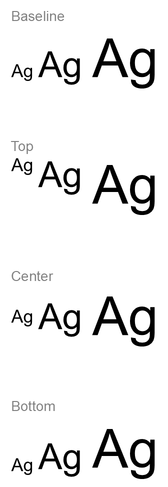
Wyrównanie czcionki wykorzystuje metryki czcionki, więc widoczne krawędzie poszczególnych liter nie zawsze pokrywają się idealnie. Przykład zawiera zarówno wielką literę, jak i obniżoną, aby pokazać różnicę między wyrównaniem do linii bazowej a do dołu. Dostępność i podstawianie czcionek, użyte znaki oraz różnica w rozmiarach czcionek wpływają na wynik. Wymiary ramki, marginesy, odstęp wierszy, zawijanie i autofit również wpływają na układ; przy porównywaniu trybów używaj tych samych czcionek i ustawień układu.
To ustawienie różni się od IParagraphFormat::set_Alignment, które kontroluje poziome wyrównanie akapitu, oraz od ITextFrameFormat::set_AnchoringType, które pozycjonuje blok tekstu pionowo w obrębie kształtu. Formatowanie indeksu górnego i dolnego za pomocą IBasePortionFormat::set_Escapement przesuwa poszczególne fragmenty względem linii bazowej zamiast ustawiać wyrównanie czcionki dla linii akapitu.
Ustaw przezroczystość tekstu
Przezroczystość tekstu jest kontrolowana przez komponent alfa koloru przypisanego przez IBasePortionFormat::get_FillFormat. W przykładach poniżej alpha = 50 jest wartością kanału alfa ARGB w skali 0–255, a nie procentem przezroczystości.
Poniższy przykład kodu pokazuje, jak zastosować przezroczystość do całego akapitu:
#include <DOM/FillType.h>
#include <DOM/IAutoShape.h>
#include <DOM/IColorFormat.h>
#include <DOM/IFillFormat.h>
#include <DOM/IParagraph.h>
#include <DOM/IParagraphFormat.h>
#include <DOM/IPortionFormat.h>
#include <DOM/ISlide.h>
#include <DOM/ITextFrame.h>
#include <DOM/Presentation.h>
#include <Export/SaveFormat.h>
#include <drawing/color.h>

using namespace Aspose::Slides;
using namespace Aspose::Slides::Export;

int alpha = 50;

auto presentation = System::MakeObject<Presentation>(u"sample.pptx");
auto firstShape = presentation->get_Slide(0)->get_Shape(0);

auto autoShape = System::ExplicitCast<IAutoShape>(firstShape);

auto paragraph = autoShape->get_TextFrame()->get_Paragraph(0);
auto defaultPortionFormat = paragraph->get_ParagraphFormat()->get_DefaultPortionFormat();

// Ustaw kolor wypełnienia tekstu na kolor przezroczysty.
defaultPortionFormat->get_FillFormat()->set_FillType(FillType::Solid);
auto baseColor = System::Drawing::Color::get_Black();
auto transparentColor = System::Drawing::Color::FromArgb(alpha, baseColor);
defaultPortionFormat->get_FillFormat()->get_SolidFillColor()->set_Color(transparentColor);

presentation->Save(u"transparent_paragraph.pptx", SaveFormat::Pptx);
presentation->Dispose();
Wynik:

Poniższy przykład kodu pokazuje, jak zastosować przezroczystość do fragmentów tekstu z pogrubioną czcionką:
#include <DOM/FillType.h>
#include <DOM/IAutoShape.h>
#include <DOM/IColorFormat.h>
#include <DOM/IFillFormat.h>
#include <DOM/IParagraph.h>
#include <DOM/IPortion.h>
#include <DOM/IPortionCollection.h>
#include <DOM/IPortionFormat.h>
#include <DOM/IPortionFormatEffectiveData.h>
#include <DOM/ISlide.h>
#include <DOM/ITextFrame.h>
#include <DOM/Presentation.h>
#include <Export/SaveFormat.h>
#include <drawing/color.h>

using namespace Aspose::Slides;
using namespace Aspose::Slides::Export;

int alpha = 50;

auto presentation = System::MakeObject<Presentation>(u"sample.pptx");
auto firstShape = presentation->get_Slide(0)->get_Shape(0);

auto autoShape = System::ExplicitCast<IAutoShape>(firstShape);

auto paragraph = autoShape->get_TextFrame()->get_Paragraph(0);
auto portions = paragraph->get_Portions();
int portionCount = portions->get_Count();

for (int portionIndex = 0; portionIndex < portionCount; portionIndex++)
{
    auto portion = paragraph->get_Portion(portionIndex);
    auto portionFormat = portion->get_PortionFormat();
    if (portionFormat->GetEffective()->get_FontBold())
    {
        // Ustaw przezroczystość fragmentu tekstu.
        portionFormat->get_FillFormat()->set_FillType(FillType::Solid);
        auto baseColor = System::Drawing::Color::get_Black();
        auto transparentColor = System::Drawing::Color::FromArgb(alpha, baseColor);
        portionFormat->get_FillFormat()->get_SolidFillColor()->set_Color(transparentColor);
    }
}

presentation->Save(u"transparent_text_portions.pptx", SaveFormat::Pptx);
presentation->Dispose();
Wynik:

Ustaw odstępy znaków w tekście
Użyj IBasePortionFormat::set_Spacing, aby rozszerzyć lub skondensować odstępy między znakami w polu tekstowym. Przykłady dodają 3 punkty odstępu; wartości ujemne skondensowują tekst.
Poniższy kod C++ pokazuje, jak rozszerzyć odstępy znaków w całym akapicie:
#include <DOM/IAutoShape.h>
#include <DOM/IParagraph.h>
#include <DOM/IParagraphFormat.h>
#include <DOM/IPortionFormat.h>
#include <DOM/ISlide.h>
#include <DOM/ITextFrame.h>
#include <DOM/Presentation.h>
#include <Export/SaveFormat.h>

using namespace Aspose::Slides;
using namespace Aspose::Slides::Export;

auto presentation = System::MakeObject<Presentation>(u"sample.pptx");
auto firstShape = presentation->get_Slide(0)->get_Shape(0);

auto autoShape = System::ExplicitCast<IAutoShape>(firstShape);
auto paragraph = autoShape->get_TextFrame()->get_Paragraph(0);

// Uwaga: użyj wartości ujemnych, aby skompresować odstępy znaków.
paragraph->get_ParagraphFormat()->get_DefaultPortionFormat()->set_Spacing(3.0f); // Rozszerz odstępy znaków.

presentation->Save(u"character_spacing_in_paragraph.pptx", SaveFormat::Pptx);
presentation->Dispose();
Wynik:

Poniższy przykład kodu pokazuje, jak rozszerzyć odstępy znaków w fragmentach tekstu z pogrubioną czcionką:
#include <DOM/IAutoShape.h>
#include <DOM/IParagraph.h>
#include <DOM/IPortion.h>
#include <DOM/IPortionCollection.h>
#include <DOM/IPortionFormat.h>
#include <DOM/IPortionFormatEffectiveData.h>
#include <DOM/ISlide.h>
#include <DOM/ITextFrame.h>
#include <DOM/Presentation.h>
#include <Export/SaveFormat.h>

using namespace Aspose::Slides;
using namespace Aspose::Slides::Export;

auto presentation = System::MakeObject<Presentation>(u"sample.pptx");
auto firstShape = presentation->get_Slide(0)->get_Shape(0);

auto autoShape = System::ExplicitCast<IAutoShape>(firstShape);

auto paragraph = autoShape->get_TextFrame()->get_Paragraph(0);
auto portions = paragraph->get_Portions();
int portionCount = portions->get_Count();

for (int portionIndex = 0; portionIndex < portionCount; portionIndex++)
{
    auto portion = paragraph->get_Portion(portionIndex);
    auto portionFormat = portion->get_PortionFormat();
    if (portionFormat->GetEffective()->get_FontBold())
    {
        // Uwaga: użyj wartości ujemnych, aby skompresować odstępy znaków.
        portionFormat->set_Spacing(3.0f); // Rozszerz odstępy znaków.
    }
}

presentation->Save(u"character_spacing_in_text_portions.pptx", SaveFormat::Pptx);
presentation->Dispose();
Wynik:

Wyłącz kerning dla określonych czcionek
W niektórych przypadkach tekst renderowany przez Aspose.Slides może wyglądać nieco ściślej niż ten sam tekst wyświetlany w PowerPoint. Może się tak zdarzyć, ponieważ PowerPoint może ignorować dane kerningu dla niektórych czcionek, nawet gdy czcionka zawiera prawidłowe informacje o kerningu i kerning jest włączony w ustawieniach PowerPoint.
Aby w takich przypadkach uzyskać wynik bliższy PowerPoint, możesz wyłączyć kerning dla fragmentów tekstu używających danej czcionki. Użyj IBasePortionFormat::set_KerningMinimalSize, aby ustawić wartość większą niż rzeczywisty rozmiar czcionki. Przykład wymaga pliku “presentation.pptx” z polem tekstowym jako pierwszym kształtem na pierwszym slajdzie. Sprawdza skuteczne nazwy czcionek, w tym dziedziczone, i ustawia próg 100 punktów dla fragmentów używających czcionki Roboto. To wyłącza kerning dla dopasowanych fragmentów o rozmiarze czcionki poniżej 100 punktów:
#include <DOM/IAutoShape.h>
#include <DOM/IFontData.h>
#include <DOM/IPortionFormatEffectiveData.h>
#include <DOM/IParagraph.h>
#include <DOM/IParagraphCollection.h>
#include <DOM/IPortion.h>
#include <DOM/IPortionCollection.h>
#include <DOM/IPortionFormat.h>
#include <DOM/ISlide.h>
#include <DOM/ITextFrame.h>
#include <DOM/Presentation.h>
#include <Export/SaveFormat.h>

using namespace Aspose::Slides;
using namespace Aspose::Slides::Export;

auto presentation = System::MakeObject<Presentation>(u"presentation.pptx");
auto firstShape = presentation->get_Slide(0)->get_Shape(0);

auto autoShape = System::ExplicitCast<IAutoShape>(firstShape);
System::String targetFont = u"Roboto";
auto textFrame = autoShape->get_TextFrame();
auto paragraphs = textFrame->get_Paragraphs();
int paragraphCount = paragraphs->get_Count();

for (int paragraphIndex = 0; paragraphIndex < paragraphCount; paragraphIndex++)
{
    auto paragraph = textFrame->get_Paragraph(paragraphIndex);
    auto portions = paragraph->get_Portions();
    int portionCount = portions->get_Count();

    for (int portionIndex = 0; portionIndex < portionCount; portionIndex++)
    {
        auto portion = paragraph->get_Portion(portionIndex);
        auto portionFormat = portion->get_PortionFormat();
        auto textFormat = portionFormat->GetEffective();
        auto latinFont = textFormat->get_LatinFont();
        auto eastAsianFont = textFormat->get_EastAsianFont();
        auto complexScriptFont = textFormat->get_ComplexScriptFont();

        bool isLatinFont = latinFont != nullptr && latinFont->get_FontName() == targetFont;
        bool isEastAsianFont = eastAsianFont != nullptr && eastAsianFont->get_FontName() == targetFont;
        bool isComplexScriptFont = complexScriptFont != nullptr && complexScriptFont->get_FontName() == targetFont;

        if (isLatinFont || isEastAsianFont || isComplexScriptFont)
        {
            portionFormat->set_KerningMinimalSize(100.0f);
        }
    }
}

presentation->Save(u"output.pptx", SaveFormat::Pptx);
presentation->Dispose();
Dla pasującego tekstu poniżej progu ustawienie to zapobiega kerningowi i może pomóc wyrównać renderowanie Aspose.Slides z wizualnym wynikiem PowerPoint dla czcionek objętych tym specyficznym zachowaniem PowerPoint.
Zarządzaj właściwościami czcionki tekstu
Właściwości czcionki można ustawić na poziomie akapitu za pomocą IParagraphFormat::get_DefaultPortionFormat lub na poszczególnych fragmentach za pomocą IPortionFormat.
Poniższy przykład ustawia domyślną czcionkę pierwszego akapitu na 12‑punktowy Times New Roman z pogrubieniem, pochyleniem i kropkowanym podkreśleniem. Jawne formatowanie poszczególnych fragmentów ma priorytet nad tymi domyślnymi:
#include <DOM/Fonts/FontData.h>
#include <DOM/IAutoShape.h>
#include <DOM/IParagraph.h>
#include <DOM/IParagraphFormat.h>
#include <DOM/IPortionFormat.h>
#include <DOM/ISlide.h>
#include <DOM/ITextFrame.h>
#include <DOM/NullableBool.h>
#include <DOM/Presentation.h>
#include <DOM/TextUnderlineType.h>
#include <Export/SaveFormat.h>

using namespace Aspose::Slides;
using namespace Aspose::Slides::Export;

auto presentation = System::MakeObject<Presentation>(u"sample.pptx");
auto firstShape = presentation->get_Slide(0)->get_Shape(0);

auto autoShape = System::ExplicitCast<IAutoShape>(firstShape);
auto paragraph = autoShape->get_TextFrame()->get_Paragraph(0);
auto defaultPortionFormat = paragraph->get_ParagraphFormat()->get_DefaultPortionFormat();

// Ustaw właściwości czcionki dla akapitu.
defaultPortionFormat->set_FontHeight(12.0f);
defaultPortionFormat->set_FontBold(NullableBool::True);
defaultPortionFormat->set_FontItalic(NullableBool::True);
defaultPortionFormat->set_FontUnderline(TextUnderlineType::Dotted);
auto font = System::MakeObject<FontData>(u"Times New Roman");
defaultPortionFormat->set_LatinFont(font);

presentation->Save(u"font_properties_for_paragraph.pptx", SaveFormat::Pptx);
presentation->Dispose();
Wynik:

Poniższy przykład stosuje 13‑punktowy Times New Roman, pochylenie i kropkowane podkreślenie do fragmentów, których efektywne formatowanie ma pogrubienie:
#include <DOM/Fonts/FontData.h>
#include <DOM/IAutoShape.h>
#include <DOM/IParagraph.h>
#include <DOM/IPortion.h>
#include <DOM/IPortionCollection.h>
#include <DOM/IPortionFormat.h>
#include <DOM/IPortionFormatEffectiveData.h>
#include <DOM/ISlide.h>
#include <DOM/ITextFrame.h>
#include <DOM/NullableBool.h>
#include <DOM/Presentation.h>
#include <DOM/TextUnderlineType.h>
#include <Export/SaveFormat.h>

using namespace Aspose::Slides;
using namespace Aspose::Slides::Export;

auto presentation = System::MakeObject<Presentation>(u"sample.pptx");
auto firstShape = presentation->get_Slide(0)->get_Shape(0);

auto autoShape = System::ExplicitCast<IAutoShape>(firstShape);
auto paragraph = autoShape->get_TextFrame()->get_Paragraph(0);
auto portions = paragraph->get_Portions();
int portionCount = portions->get_Count();
auto font = System::MakeObject<FontData>(u"Times New Roman");

for (int portionIndex = 0; portionIndex < portionCount; portionIndex++)
{
    auto portion = paragraph->get_Portion(portionIndex);
    auto portionFormat = portion->get_PortionFormat();
    if (portionFormat->GetEffective()->get_FontBold())
    {
        // Ustaw właściwości czcionki dla fragmentu tekstu.
        portionFormat->set_FontHeight(13.0f);
        portionFormat->set_FontItalic(NullableBool::True);
        portionFormat->set_FontUnderline(TextUnderlineType::Dotted);
        portionFormat->set_LatinFont(font);
    }
}

presentation->Save(u"font_properties_for_text_portions.pptx", SaveFormat::Pptx);
presentation->Dispose();
Wynik:

Ustaw obrót tekstu
Użyj ITextFrameFormat::set_TextVerticalType, aby ustawić wstępnie zdefiniowaną orientację tekstu w ramach kształtu.
Poniższy przykład kodu ustawia orientację tekstu w kształcie na TextVerticalType::Vertical270, co obraca tekst o 90 stopni przeciwnie do ruchu wskazówek zegara:
#include <DOM/IAutoShape.h>
#include <DOM/ISlide.h>
#include <DOM/ITextFrame.h>
#include <DOM/ITextFrameFormat.h>
#include <DOM/Presentation.h>
#include <DOM/TextVerticalType.h>
#include <Export/SaveFormat.h>

using namespace Aspose::Slides;
using namespace Aspose::Slides::Export;

auto presentation = System::MakeObject<Presentation>(u"sample.pptx");
auto firstShape = presentation->get_Slide(0)->get_Shape(0);

auto autoShape = System::ExplicitCast<IAutoShape>(firstShape);
autoShape->get_TextFrame()->get_TextFrameFormat()->set_TextVerticalType(TextVerticalType::Vertical270);

presentation->Save(u"text_rotation.pptx", SaveFormat::Pptx);
presentation->Dispose();
Wynik:

Ustaw niestandardowy obrót dla ramek tekstu
Użyj ITextFrameFormat::set_RotationAngle, aby ustawić własny kąt obrotu dla ITextFrame.
Poniższy przykład kodu obraca ramkę tekstową o 3 stopnie zgodnie z ruchem wskazówek zegara w obrębie kształtu:
#include <DOM/IAutoShape.h>
#include <DOM/ISlide.h>
#include <DOM/ITextFrame.h>
#include <DOM/ITextFrameFormat.h>
#include <DOM/Presentation.h>
#include <Export/SaveFormat.h>

using namespace Aspose::Slides;
using namespace Aspose::Slides::Export;

auto presentation = System::MakeObject<Presentation>(u"sample.pptx");
auto firstShape = presentation->get_Slide(0)->get_Shape(0);

auto autoShape = System::ExplicitCast<IAutoShape>(firstShape);
autoShape->get_TextFrame()->get_TextFrameFormat()->set_RotationAngle(3.0f);

presentation->Save(u"custom_text_rotation.pptx", SaveFormat::Pptx);
presentation->Dispose();
Wynik:

Ustaw odstęp wierszy w akapitach
Aspose.Slides udostępnia IParagraphFormat::set_SpaceAfter, IParagraphFormat::set_SpaceBefore, oraz IParagraphFormat::set_SpaceWithin, aby kontrolować odstępy akapitu. Metody te używa się w następujący sposób:
- Użyj wartości dodatniej, aby określić odstęp linii jako procent wysokości linii.
- Użyj wartości ujemnej, aby określić odstęp linii w punktach.
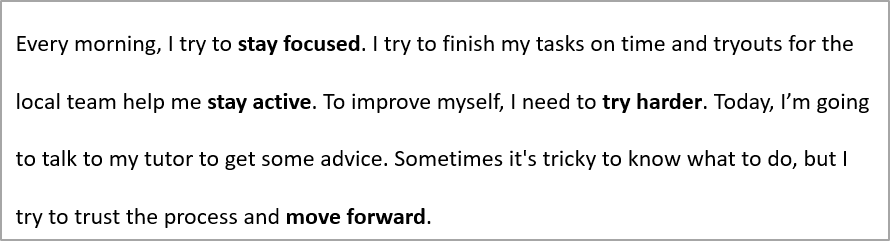
Poniższy przykład ustawia odstęp wewnątrz pierwszego akapitu na 200 % wysokości linii (podwójny odstęp):
#include <DOM/IAutoShape.h>
#include <DOM/IParagraph.h>
#include <DOM/IParagraphFormat.h>
#include <DOM/ISlide.h>
#include <DOM/ITextFrame.h>
#include <DOM/Presentation.h>
#include <Export/SaveFormat.h>

using namespace Aspose::Slides;
using namespace Aspose::Slides::Export;

auto presentation = System::MakeObject<Presentation>(u"sample.pptx");
auto firstShape = presentation->get_Slide(0)->get_Shape(0);

auto autoShape = System::ExplicitCast<IAutoShape>(firstShape);

auto paragraph = autoShape->get_TextFrame()->get_Paragraph(0);
paragraph->get_ParagraphFormat()->set_SpaceWithin(200.0f);

presentation->Save(u"line_spacing.pptx", SaveFormat::Pptx);
presentation->Dispose();
Wynik:
Kontroluj łamanie linii
Zasady łamania linii w akapicie są przydatne w wąskich blokach tekstowych oraz w prezentacjach, które mieszają tekst łaciński i wschodnioazjatycki. Poniższe metody należą do IParagraphFormat, więc mają zastosowanie do całego akapitu:
- IParagraphFormat::set_LatinLineBreak kontroluje zasady łamania linii w alfabecie łacińskim. W tekście mieszanym zmiana może również wpływać na to, gdzie są łamane sąsiadujące znaki wschodnioazjatyckie i interpunkcja.
- IParagraphFormat::set_EastAsianLineBreak kontroluje zasady łamania linii w językach wschodnioazjatyckich, w tym ograniczenia dotyczące znaków na początku i końcu linii.
Te zasady nie zastępują ITextFrameFormat::set_WrapText, które włącza automatyczne zawijanie w obrębie ramki tekstowej. Wpływają na układ podczas zawijania; nie wstawiają znaków końca linii. Jawne wymuszenie przełamania wstawia nową linię w akapicie niezależnie od dostępnej szerokości.
Poniższy samodzielny przykład tworzy wąski blok tekstowy zawierający chiński i łaciński tekst. Ustawia obie zasady łamania linii explicite i zapisuje plik “line_breaking.pptx”. Aby eksperymentować z którąkolwiek zasadą, zmień wartość przekazywaną do jej settera, pozostawiając pozostałe ustawienia niezmienione. Przykład używa 24‑punktowego Arial i SimSun przy szerokości ramki 160 punktów i zerowych poziomych marginesów ramki tekstowej. ITextFrameFormat::set_AutofitType jest wywoływany z TextAutofitType::None, aby rozmiar tekstu i wymiary ramki pozostały stałe.
#include <DOM/Fonts/FontData.h>
#include <DOM/IAutoShape.h>
#include <DOM/IColorFormat.h>
#include <DOM/IFillFormat.h>
#include <DOM/IParagraph.h>
#include <DOM/IParagraphFormat.h>
#include <DOM/IPortionFormat.h>
#include <DOM/IShapeCollection.h>
#include <DOM/ISlide.h>
#include <DOM/ITextFrame.h>
#include <DOM/ITextFrameFormat.h>
#include <DOM/FillType.h>
#include <DOM/NullableBool.h>
#include <DOM/Presentation.h>
#include <DOM/ShapeType.h>
#include <DOM/TextAlignment.h>
#include <DOM/TextAutofitType.h>
#include <Export/SaveFormat.h>
#include <drawing/color.h>

using namespace Aspose::Slides;
using namespace Aspose::Slides::Export;

auto presentation = System::MakeObject<Presentation>();
auto slide = presentation->get_Slide(0);

auto shape = slide->get_Shapes()->AddAutoShape(ShapeType::Rectangle, 50.0f, 50.0f, 160.0f, 300.0f);
shape->get_FillFormat()->set_FillType(FillType::NoFill);

auto textFrame = shape->get_TextFrame();
textFrame->get_TextFrameFormat()->set_WrapText(NullableBool::True);
textFrame->get_TextFrameFormat()->set_AutofitType(TextAutofitType::None);
textFrame->get_TextFrameFormat()->set_MarginLeft(0);
textFrame->get_TextFrameFormat()->set_MarginRight(0);

auto paragraph = textFrame->get_Paragraph(0);
paragraph->set_Text(u"中文排版测试,PowerPoint 中文演示。");

auto format = paragraph->get_ParagraphFormat();
format->set_Alignment(TextAlignment::Left);
auto portionFormat = format->get_DefaultPortionFormat();
portionFormat->set_FontHeight(24.0f);
auto latinFont = System::MakeObject<FontData>(u"Arial");
portionFormat->set_LatinFont(latinFont);
auto eastAsianFont = System::MakeObject<FontData>(u"SimSun");
portionFormat->set_EastAsianFont(eastAsianFont);
portionFormat->get_FillFormat()->set_FillType(FillType::Solid);
portionFormat->get_FillFormat()->get_SolidFillColor()->set_Color(System::Drawing::Color::get_Black());
format->set_LatinLineBreak(NullableBool::False);
format->set_EastAsianLineBreak(NullableBool::True);

presentation->Save(u"line_breaking.pptx", SaveFormat::Pptx);
presentation->Dispose();
Kontroluj wiszącą interpunkcję
IParagraphFormat::set_HangingPunctuation pozwala dopuszczalnej interpunkcji wystawać poza prawą krawędź linii tekstu zamiast zajmować następną linię. Działa to na cały akapit i różni się od wcięcia wiszącego.
Poniższy samodzielny przykład włącza wiszącą interpunkcję w ramce tekstowej o szerokości 100 punktów i zapisuje plik “hanging_punctuation.pptx”. Przy 24‑punktowym Arial i zerowych poziomych marginesach ramki, ostatnia kropka pozostaje po słowie „sentence” i wystaje poza prawą krawędź tekstu. Przekaż NullableBool::False do settera, aby porównać: przy tych ustawieniach kropka zajmuje osobną linię. Zawijanie jest włączone, a autofit wyłączony, aby zachować stałą dostępną szerokość.
#include <DOM/Fonts/FontData.h>
#include <DOM/IAutoShape.h>
#include <DOM/IColorFormat.h>
#include <DOM/IFillFormat.h>
#include <DOM/IParagraph.h>
#include <DOM/IParagraphFormat.h>
#include <DOM/IPortionFormat.h>
#include <DOM/IShapeCollection.h>
#include <DOM/ISlide.h>
#include <DOM/ITextFrame.h>
#include <DOM/ITextFrameFormat.h>
#include <DOM/FillType.h>
#include <DOM/NullableBool.h>
#include <DOM/Presentation.h>
#include <DOM/ShapeType.h>
#include <DOM/TextAlignment.h>
#include <DOM/TextAutofitType.h>
#include <Export/SaveFormat.h>
#include <drawing/color.h>

using namespace Aspose::Slides;
using namespace Aspose::Slides::Export;

auto presentation = System::MakeObject<Presentation>();
auto slide = presentation->get_Slide(0);

auto shape = slide->get_Shapes()->AddAutoShape(ShapeType::Rectangle, 50.0f, 50.0f, 100.0f, 200.0f);
shape->get_FillFormat()->set_FillType(FillType::NoFill);

auto textFrame = shape->get_TextFrame();
textFrame->get_TextFrameFormat()->set_WrapText(NullableBool::True);
textFrame->get_TextFrameFormat()->set_AutofitType(TextAutofitType::None);
textFrame->get_TextFrameFormat()->set_MarginLeft(0);
textFrame->get_TextFrameFormat()->set_MarginRight(0);

auto paragraph = textFrame->get_Paragraph(0);
paragraph->set_Text(u"Simple text, next sentence.");

auto format = paragraph->get_ParagraphFormat();
format->set_Alignment(TextAlignment::Left);
auto portionFormat = format->get_DefaultPortionFormat();
portionFormat->set_FontHeight(24.0f);
auto latinFont = System::MakeObject<FontData>(u"Arial");
portionFormat->set_LatinFont(latinFont);
portionFormat->get_FillFormat()->set_FillType(FillType::Solid);
portionFormat->get_FillFormat()->get_SolidFillColor()->set_Color(System::Drawing::Color::get_Black());
format->set_HangingPunctuation(NullableBool::True);

presentation->Save(u"hanging_punctuation.pptx", SaveFormat::Pptx);
presentation->Dispose();
Nie każda znak interpunkcyjny może wisieć. Warunki czcionki i układu opisane powyżej mają również zastosowanie do tego porównania: zmiana czcionki, dostępnej szerokości, marginesów lub ustawień autofitu może usunąć widoczną różnicę.
Ustaw typ autofitu dla ramek tekstu
ITextFrameFormat::set_AutofitType określa, jak tekst zachowuje się, gdy przekracza granice swojego pojemnika. Użyj go, aby kontrolować, czy tekst się kurczy, przelewa czy automatycznie zmienia rozmiar kształtu. Poniższy przykład konfiguruje kształt tak, aby zmieniał rozmiar w zależności od tekstu i zapisuje wynik w pliku “autofit_type.pptx”.
#include <DOM/IAutoShape.h>
#include <DOM/ISlide.h>
#include <DOM/ITextFrame.h>
#include <DOM/ITextFrameFormat.h>
#include <DOM/Presentation.h>
#include <DOM/TextAutofitType.h>
#include <Export/SaveFormat.h>

using namespace Aspose::Slides;
using namespace Aspose::Slides::Export;

auto presentation = System::MakeObject<Presentation>(u"sample.pptx");
auto firstShape = presentation->get_Slide(0)->get_Shape(0);

auto autoShape = System::ExplicitCast<IAutoShape>(firstShape);
autoShape->get_TextFrame()->get_TextFrameFormat()->set_AutofitType(TextAutofitType::Shape);

presentation->Save(u"autofit_type.pptx", SaveFormat::Pptx);
presentation->Dispose();
Aby policzyć linie po automatycznym zawijaniu i zobaczyć, jak zmiana szerokości tekstu lub kształtu wpływa na wynik, zobacz Policz renderowane linie. Liczba linii sama w sobie nie wskazuje, czy tekst przelewa się poza pojemnik.
Ustaw kotwicę ramek tekstu
ITextFrameFormat::set_AnchoringType definiuje, jak tekst jest pozycjonowany pionowo wewnątrz kształtu, np. u góry, w środku lub u dołu. Poniższy przykład kotwiczy tekst u dołu pierwszego kształtu i zapisuje wynik w pliku “text_anchor.pptx”.
#include <DOM/IAutoShape.h>
#include <DOM/ISlide.h>
#include <DOM/ITextFrame.h>
#include <DOM/ITextFrameFormat.h>
#include <DOM/Presentation.h>
#include <DOM/TextAnchorType.h>
#include <Export/SaveFormat.h>

using namespace Aspose::Slides;
using namespace Aspose::Slides::Export;

auto presentation = System::MakeObject<Presentation>(u"sample.pptx");
auto firstShape = presentation->get_Slide(0)->get_Shape(0);

auto autoShape = System::ExplicitCast<IAutoShape>(firstShape);
autoShape->get_TextFrame()->get_TextFrameFormat()->set_AnchoringType(TextAnchorType::Bottom);

presentation->Save(u"text_anchor.pptx", SaveFormat::Pptx);
presentation->Dispose();
Ustaw tabulację tekstu
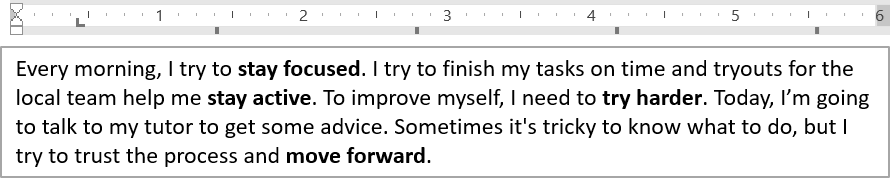
Użyj IParagraphFormat::set_DefaultTabSize i IParagraphFormat::get_Tabs, aby skonfigurować tabulatory w akapicie. Poniższy przykład ustawia domyślny odstęp tabulacji na 100 punktów i dodaje lewostronny tabulator w 30 punktach. Ustawienia te wpływają na tekst zawierający znaki tabulacji.
#include <DOM/IAutoShape.h>
#include <DOM/IParagraph.h>
#include <DOM/IParagraphFormat.h>
#include <DOM/ISlide.h>
#include <DOM/ITabCollection.h>
#include <DOM/ITextFrame.h>
#include <DOM/Presentation.h>
#include <DOM/TabAlignment.h>
#include <Export/SaveFormat.h>

using namespace Aspose::Slides;
using namespace Aspose::Slides::Export;

auto presentation = System::MakeObject<Presentation>(u"sample.pptx");
auto firstShape = presentation->get_Slide(0)->get_Shape(0);

auto autoShape = System::ExplicitCast<IAutoShape>(firstShape);

auto paragraph = autoShape->get_TextFrame()->get_Paragraph(0);
paragraph->get_ParagraphFormat()->set_DefaultTabSize(100.0f);
paragraph->get_ParagraphFormat()->get_Tabs()->Add(30.0f, TabAlignment::Left);

presentation->Save(u"paragraph_tabs.pptx", SaveFormat::Pptx);
presentation->Dispose();
Wynik:
Ustaw język korekty
Aspose.Slides udostępnia IBasePortionFormat::set_LanguageId, które pozwala ustawić język korekty dla fragmentu tekstu. Język korekty określa język używany do sprawdzania pisowni i gramatyki w PowerPoint.
Poniższy przykład wymaga pliku “presentation.pptx” z polem tekstowym jako pierwszym kształtem na pierwszym slajdzie i przynajmniej jednym akapicie. Zastępuje zawartość pierwszego akapitu tekstem “1。”, ustawia SimSun jako czcionkę i przypisuje uproszczony chiński język korekty (zh-CN). Zapisuje wynik w pliku “proofing_language.pptx”:
#include <DOM/Fonts/FontData.h>
#include <DOM/IAutoShape.h>
#include <DOM/IParagraph.h>
#include <DOM/IPortionCollection.h>
#include <DOM/IPortionFormat.h>
#include <DOM/ISlide.h>
#include <DOM/ITextFrame.h>
#include <DOM/Portion.h>
#include <DOM/Presentation.h>
#include <Export/SaveFormat.h>

using namespace Aspose::Slides;
using namespace Aspose::Slides::Export;

auto presentation = System::MakeObject<Presentation>(u"presentation.pptx");
auto firstShape = presentation->get_Slide(0)->get_Shape(0);

auto autoShape = System::ExplicitCast<IAutoShape>(firstShape);

auto paragraph = autoShape->get_TextFrame()->get_Paragraph(0);
paragraph->get_Portions()->Clear();

auto font = System::MakeObject<FontData>(u"SimSun");

auto textPortion = System::MakeObject<Portion>();
auto portionFormat = textPortion->get_PortionFormat();
portionFormat->set_ComplexScriptFont(font);
portionFormat->set_EastAsianFont(font);
portionFormat->set_LatinFont(font);

// Ustaw język korekty na chiński uproszczony.
portionFormat->set_LanguageId(u"zh-CN");

textPortion->set_Text(u"1。");
paragraph->get_Portions()->Add(textPortion);

presentation->Save(u"proofing_language.pptx", SaveFormat::Pptx);
presentation->Dispose();
Ustaw język domyślny
Użyj LoadOptions::set_DefaultTextLanguage, aby zdefiniować domyślny język dla tekstu tworzonego podczas ładowania lub tworzenia prezentacji. Poniższy przykład tworzy prezentację z językiem tekstu ustawionym na amerykański angielski, dodaje pole tekstowe i wypisuje en-US dla jego pierwszego fragmentu tekstu.
#include <DOM/IAutoShape.h>
#include <DOM/IParagraph.h>
#include <DOM/IPortion.h>
#include <DOM/IPortionFormat.h>
#include <DOM/IShapeCollection.h>
#include <DOM/ISlide.h>
#include <DOM/ITextFrame.h>
#include <DOM/LoadOptions.h>
#include <DOM/Presentation.h>
#include <DOM/ShapeType.h>
#include <system/console.h>

using namespace Aspose::Slides;

auto loadOptions = System::MakeObject<LoadOptions>();
loadOptions->set_DefaultTextLanguage(u"en-US");

auto presentation = System::MakeObject<Presentation>(loadOptions);
auto slide = presentation->get_Slide(0);

// Dodaj nowy prostokątny kształt z tekstem.
auto shape = slide->get_Shapes()->AddAutoShape(ShapeType::Rectangle, 20.0f, 20.0f, 150.0f, 50.0f);
shape->get_TextFrame()->set_Text(u"Sample text");

// Sprawdź język pierwszego fragmentu.
auto portion = shape->get_TextFrame()->get_Paragraph(0)->get_Portion(0);
auto languageId = portion->get_PortionFormat()->get_LanguageId();
System::Console::WriteLine(languageId);

presentation->Dispose();
Ustaw domyślny styl tekstu
Aby zastosować domyślne formatowanie tekstu na poziomie prezentacji, użyj IPresentation::get_DefaultTextStyle.
Poniższy przykład ustawia 14‑punktową pogrubioną czcionkę jako domyślną dla akapitów najwyższego poziomu w nowej prezentacji i zapisuje ją w pliku “default_text_style.pptx”. Tekst może dziedziczyć te domyślne ustawienia, chyba że bardziej szczegółowe formatowanie je nadpisze.
#include <DOM/IParagraphFormat.h>
#include <DOM/IPortionFormat.h>
#include <DOM/ITextStyle.h>
#include <DOM/NullableBool.h>
#include <DOM/Presentation.h>
#include <Export/SaveFormat.h>

using namespace Aspose::Slides;
using namespace Aspose::Slides::Export;

auto presentation = System::MakeObject<Presentation>();

// Pobierz format akapitu najwyższego poziomu.
auto paragraphFormat = presentation->get_DefaultTextStyle()->GetLevel(0);

if (paragraphFormat != nullptr)
{
    auto defaultPortionFormat = paragraphFormat->get_DefaultPortionFormat();
    defaultPortionFormat->set_FontHeight(14.0f);
    defaultPortionFormat->set_FontBold(NullableBool::True);
}

presentation->Save(u"default_text_style.pptx", SaveFormat::Pptx);
presentation->Dispose();
Wyodrębnij tekst z efektem wielkich liter
W PowerPoint zastosowanie efektu All Caps powoduje, że tekst wyświetlany jest wielkimi literami na slajdzie, nawet jeśli został wpisany małymi. Pobierając taki fragment tekstu za pomocą Aspose.Slides, biblioteka zwraca dokładnie wpisany tekst. Aby dopasować go do wyświetlanego, sprawdź TextCapType i przekształć zwrócony łańcuch na wielkie litery, gdy wartość to TextCapType::All.
Przykład wymaga pliku “sample2.pptx” z polem tekstowym jako pierwszym kształtem na pierwszym slajdzie. Pierwszy fragment pierwszego akapitu zawiera “Hello, Aspose!” z zastosowanym efektem All Caps, jak pokazano poniżej.

Poniższy przykład kodu pokazuje, jak wyodrębnić tekst z zastosowanym efektem All Caps:
#include <DOM/IAutoShape.h>
#include <DOM/IParagraph.h>
#include <DOM/IPortion.h>
#include <DOM/IPortionFormat.h>
#include <DOM/IPortionFormatEffectiveData.h>
#include <DOM/ISlide.h>
#include <DOM/ITextFrame.h>
#include <DOM/Presentation.h>
#include <DOM/TextCapType.h>
#include <system/console.h>

using namespace Aspose::Slides;

auto presentation = System::MakeObject<Presentation>(u"sample2.pptx");
auto firstShape = presentation->get_Slide(0)->get_Shape(0);

auto autoShape = System::ExplicitCast<IAutoShape>(firstShape);
auto textPortion = autoShape->get_TextFrame()->get_Paragraph(0)->get_Portion(0);

auto originalText = textPortion->get_Text();
System::Console::WriteLine(u"Original text: " + originalText);

auto textFormat = textPortion->get_PortionFormat()->GetEffective();
if (textFormat->get_TextCapType() == TextCapType::All)
{
    auto uppercaseText = originalText.ToUpper();
    System::Console::WriteLine(u"All-Caps effect: " + uppercaseText);
}

presentation->Dispose();
Wynik:
Original text: Hello, Aspose!
All-Caps effect: HELLO, ASPOSE!
FAQ
Jak zmodyfikować tekst w tabeli na slajdzie?
Aby zmodyfikować tekst w tabeli na slajdzie, użyj ITable. Przejdź przez komórki i zaktualizuj każdą komórkę za pomocą ICell::get_TextFrame oraz formatowanie akapitu za pomocą IParagraph::get_ParagraphFormat.
Jak zastosować gradientowy kolor do tekstu na slajdzie PowerPoint?
Aby zastosować gradientowy kolor do tekstu, użyj IBasePortionFormat::get_FillFormat. Ustaw IFillFormat::set_FillType na FillType::Gradient i skonfiguruj punkty gradientu, kierunek oraz przezroczystość.