
Adicionar equações matemáticas a apresentações PowerPoint em C++
Visão geral
O PowerPoint armazena equações como Office Math Markup Language (OMML). Com Aspose.Slides para C++, você pode criar o mesmo tipo de conteúdo matemático programaticamente: frações, radicais, funções, limites, operadores N-ário, matrizes, arrays e blocos de matemática formatados.
No PowerPoint, os usuários normalmente adicionam equações em Inserir > Equação:
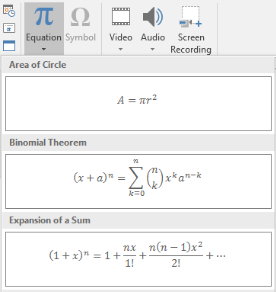
O resultado é texto matemático editável no slide:

Aspose.Slides gera esse texto matemático por meio de três objetos principais:
- Uma forma matemática, criada com AddMathShape, que contém a equação.
- MathPortion armazena o conteúdo matemático dentro da caixa de texto da forma.
- MathParagraph contém um ou mais objetos MathBlock.
A maioria dos exemplos abaixo usa MathematicalText e os métodos fluentes de IMathElement para manter o código curto e legível.
Para cenários de exportação MathML, consulte Export Math Equations from Presentations in C++.
Criar uma equação
Este exemplo cria uma forma matemática e adiciona o teorema de Pitágoras:
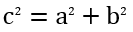
auto presentation = System::MakeObject<Presentation>();
auto slide = presentation->get_Slide(0);

auto mathShape = slide->get_Shapes()->AddMathShape(20.0f, 20.0f, 700.0f, 120.0f);
auto mathPortion = System::ExplicitCast<MathPortion>(mathShape->get_TextFrame()->get_Paragraph(0)->get_Portion(0));
auto mathParagraph = mathPortion->get_MathParagraph();

auto equation = System::MakeObject<MathematicalText>(u"c")
        - >SetSuperscript(u"2")
        - >Join(u"=")
        - >Join(System::MakeObject<MathematicalText>(u"a")->SetSuperscript(u"2"))
        - >Join(u"+")
        - >Join(System::MakeObject<MathematicalText>(u"b")->SetSuperscript(u"2"));

mathParagraph->Add(equation);

presentation->Save(u"pythagorean-theorem.pptx", SaveFormat::Pptx);
presentation->Dispose();
AddMathShape cria uma forma que já contém um parágrafo matemático. Acesse o primeiro MathPortion, obtenha seu MathParagraph e adicione blocos ou elementos matemáticos a ele.
Adicionar frações
Use Divide para criar uma fração. Você pode escolher um estilo de fração com MathFractionTypes.

auto presentation = System::MakeObject<Presentation>();
auto slide = presentation->get_Slide(0);

auto mathShape = slide->get_Shapes()->AddMathShape(20.0f, 20.0f, 700.0f, 100.0f);
auto mathPortion = System::ExplicitCast<MathPortion>(mathShape->get_TextFrame()->get_Paragraph(0)->get_Portion(0));
auto mathParagraph = mathPortion->get_MathParagraph();

auto fraction = System::MakeObject<MathematicalText>(u"1")
        - >Divide(u"x", MathFractionTypes::Skewed);

mathParagraph->Add(System::MakeObject<MathBlock>(fraction));

presentation->Save(u"fraction.pptx", SaveFormat::Pptx);
presentation->Dispose();
Para uma fração empilhada, use MathFractionTypes::Bar:
auto stackedFraction = System::MakeObject<MathematicalText>(u"x + 1")->Divide(u"y - 1", MathFractionTypes::Bar);
Adicionar radicais
Use Radical para criar uma raiz quadrada, cúbica ou outra raiz. O elemento atual torna‑se a base e o argumento torna‑se o índice.

auto presentation = System::MakeObject<Presentation>();
auto slide = presentation->get_Slide(0);

auto mathShape = slide->get_Shapes()->AddMathShape(20.0f, 20.0f, 700.0f, 100.0f);
auto mathPortion = System::ExplicitCast<MathPortion>(mathShape->get_TextFrame()->get_Paragraph(0)->get_Portion(0));
auto mathParagraph = mathPortion->get_MathParagraph();

auto radical = System::MakeObject<MathematicalText>(u"x")
        - >Radical(u"n");

mathParagraph->Add(System::MakeObject<MathBlock>(radical));

presentation->Save(u"radical.pptx", SaveFormat::Pptx);
presentation->Dispose();
Adicionar funções e limites
Use AsArgumentOfFunction ou Function para funções como sin(x), log(x) ou nomes de função personalizados. Para limites, coloque lim em um MathLimit ou use SetLowerLimit.

auto presentation = System::MakeObject<Presentation>();
auto slide = presentation->get_Slide(0);

auto mathShape = slide->get_Shapes()->AddMathShape(20.0f, 20.0f, 700.0f, 100.0f);
auto mathPortion = System::ExplicitCast<MathPortion>(mathShape->get_TextFrame()->get_Paragraph(0)->get_Portion(0));
auto mathParagraph = mathPortion->get_MathParagraph();

auto limit = System::MakeObject<MathematicalText>(u"lim")
        - >SetLowerLimit(u"x→∞")
        - >Function(u"x");

mathParagraph->Add(System::MakeObject<MathBlock>(limit));

presentation->Save(u"functions-and-limits.pptx", SaveFormat::Pptx);
presentation->Dispose();
Para um nome de função personalizado, torne o nome da função o elemento atual:
auto customFunction = System::MakeObject<MathematicalText>(u"f")->Function(u"x + 1");
Adicionar operadores N‑ários e integrais
Use Nary para somatórios, uniões, interseções e outros operadores grandes. Use Integral para integrais. Ambos os métodos permitem definir limites inferior e superior.
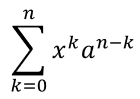
auto presentation = System::MakeObject<Presentation>();
auto slide = presentation->get_Slide(0);

auto mathShape = slide->get_Shapes()->AddMathShape(20.0f, 20.0f, 700.0f, 120.0f);
auto mathPortion = System::ExplicitCast<MathPortion>(mathShape->get_TextFrame()->get_Paragraph(0)->get_Portion(0));
auto mathParagraph = mathPortion->get_MathParagraph();

auto summationBase = System::MakeObject<MathematicalText>(u"x")
        - >SetSuperscript(u"k")
        - >Join(System::MakeObject<MathematicalText>(u"a")->SetSuperscript(u"n-k"));

auto summation = summationBase->Nary(MathNaryOperatorTypes::Summation, u"k=0", u"n");

mathParagraph->Add(System::MakeObject<MathBlock>(summation));

presentation->Save(u"nary-operators.pptx", SaveFormat::Pptx);
presentation->Dispose();
Operadores N‑ários são para operadores grandes com limites opcionais. Operadores simples como +, - e = são geralmente adicionados como MathematicalText e concatenados na expressão.
Para uma integral, use Integral:
auto integralBase = System::MakeObject<MathematicalText>(u"x")->Join(System::MakeObject<MathematicalText>(u"dx")->ToBox());
auto integral = integralBase->Integral(MathIntegralTypes::Simple, u"0", u"1");
Adicionar matrizes
Use MathMatrix para linhas e colunas. Matrizes não incluem colchetes por padrão, portanto, coloque a matriz entre parênteses, colchetes ou chaves quando necessário.
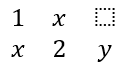
auto presentation = System::MakeObject<Presentation>();
auto slide = presentation->get_Slide(0);

auto mathShape = slide->get_Shapes()->AddMathShape(20.0f, 20.0f, 700.0f, 120.0f);
auto mathPortion = System::ExplicitCast<MathPortion>(mathShape->get_TextFrame()->get_Paragraph(0)->get_Portion(0));
auto mathParagraph = mathPortion->get_MathParagraph();

auto matrix = System::MakeObject<MathMatrix>(2, 3);
matrix->idx_set(0, 0, System::MakeObject<MathematicalText>(u"1"));
matrix->idx_set(0, 1, System::MakeObject<MathematicalText>(u"x"));
matrix->idx_set(1, 0, System::MakeObject<MathematicalText>(u"x"));
matrix->idx_set(1, 1, System::MakeObject<MathematicalText>(u"2"));
matrix->idx_set(1, 2, System::MakeObject<MathematicalText>(u"y"));

mathParagraph->Add(System::MakeObject<MathBlock>(matrix));

presentation->Save(u"matrix.pptx", SaveFormat::Pptx);
presentation->Dispose();
Adicionar arrays de equações
Use ToMathArray quando precisar de equações alinhadas ou de uma pilha vertical de expressões.

auto presentation = System::MakeObject<Presentation>();
auto slide = presentation->get_Slide(0);

auto mathShape = slide->get_Shapes()->AddMathShape(20.0f, 20.0f, 700.0f, 140.0f);
auto mathPortion = System::ExplicitCast<MathPortion>(mathShape->get_TextFrame()->get_Paragraph(0)->get_Portion(0));
auto mathParagraph = mathPortion->get_MathParagraph();

auto equationArray = System::MakeObject<MathematicalText>(u"x")
        - >Join(u"y")
        - >ToMathArray();

mathParagraph->Add(System::MakeObject<MathBlock>(equationArray));

presentation->Save(u"equation-array.pptx", SaveFormat::Pptx);
presentation->Dispose();
Adicionar funções trigonométricas
Use AsArgumentOfFunction quando o argumento for o elemento atual e o nome da função for conhecido.

auto presentation = System::MakeObject<Presentation>();
auto slide = presentation->get_Slide(0);

auto mathShape = slide->get_Shapes()->AddMathShape(20.0f, 20.0f, 700.0f, 100.0f);
auto mathPortion = System::ExplicitCast<MathPortion>(mathShape->get_TextFrame()->get_Paragraph(0)->get_Portion(0));
auto mathParagraph = mathPortion->get_MathParagraph();

auto cosine = System::MakeObject<MathematicalText>(u"2x")
        - >AsArgumentOfFunction(MathFunctionsOfOneArgument::Cos);

mathParagraph->Add(System::MakeObject<MathBlock>(cosine));

presentation->Save(u"trigonometric-function.pptx", SaveFormat::Pptx);
presentation->Dispose();
Adicionar subscritos e sobrescritos
Use os auxiliares de subscrito e sobrescrito para índices e potências. Quando os índices devem aparecer à esquerda da base, use SetSubSuperscriptOnTheLeft.

auto presentation = System::MakeObject<Presentation>();
auto slide = presentation->get_Slide(0);

auto mathShape = slide->get_Shapes()->AddMathShape(20.0f, 20.0f, 700.0f, 100.0f);
auto mathPortion = System::ExplicitCast<MathPortion>(mathShape->get_TextFrame()->get_Paragraph(0)->get_Portion(0));
auto mathParagraph = mathPortion->get_MathParagraph();

auto scripts = System::MakeObject<MathematicalText>(u"Y")
        - >SetSubSuperscriptOnTheLeft(u"1", u"n");

mathParagraph->Add(System::MakeObject<MathBlock>(scripts));

presentation->Save(u"subscript-superscript.pptx", SaveFormat::Pptx);
presentation->Dispose();
Adicionar delimitadores
Use Enclose para colocar uma expressão dentro de delimitadores. Você também pode definir um caractere separador para expressões delimitadoras que contenham vários elementos.

auto presentation = System::MakeObject<Presentation>();
auto slide = presentation->get_Slide(0);

auto mathShape = slide->get_Shapes()->AddMathShape(20.0f, 20.0f, 700.0f, 100.0f);
auto mathPortion = System::ExplicitCast<MathPortion>(mathShape->get_TextFrame()->get_Paragraph(0)->get_Portion(0));
auto mathParagraph = mathPortion->get_MathParagraph();

auto delimiter = System::MakeObject<MathematicalText>(u"x")
        - >Join(u"y")
        - >Join(u"z")
        - >Enclose(u'<', u'>', u'|');

mathParagraph->Add(System::MakeObject<MathBlock>(delimiter));

presentation->Save(u"delimiters.pptx", SaveFormat::Pptx);
presentation->Dispose();
Adicionar uma caixa de borda
Use ToBorderBox quando a própria equação deve ser enquadrada.
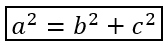
auto presentation = System::MakeObject<Presentation>();
auto slide = presentation->get_Slide(0);

auto mathShape = slide->get_Shapes()->AddMathShape(20.0f, 20.0f, 700.0f, 100.0f);
auto mathPortion = System::ExplicitCast<MathPortion>(mathShape->get_TextFrame()->get_Paragraph(0)->get_Portion(0));
auto mathParagraph = mathPortion->get_MathParagraph();

auto boxedEquation = System::MakeObject<MathematicalText>(u"a")
        - >SetSuperscript(u"2")
        - >Join(u"=")
        - >Join(System::MakeObject<MathematicalText>(u"b")->SetSuperscript(u"2"))
        - >Join(u"+")
        - >Join(System::MakeObject<MathematicalText>(u"c")->SetSuperscript(u"2"))
        - >ToBorderBox();

mathParagraph->Add(System::MakeObject<MathBlock>(boxedEquation));

presentation->Save(u"border-box.pptx", SaveFormat::Pptx);
presentation->Dispose();
Agrupar termos
Use Group para colocar um caractere de agrupamento acima ou abaixo de uma expressão. Adicione um limite para rotular os termos agrupados.

auto presentation = System::MakeObject<Presentation>();
auto slide = presentation->get_Slide(0);

auto mathShape = slide->get_Shapes()->AddMathShape(20.0f, 20.0f, 700.0f, 120.0f);
auto mathPortion = System::ExplicitCast<MathPortion>(mathShape->get_TextFrame()->get_Paragraph(0)->get_Portion(0));
auto mathParagraph = mathPortion->get_MathParagraph();

auto grouped = System::MakeObject<MathematicalText>(u"x + y")
        - >Group(u'\u23DF', MathTopBotPositions::Bottom, MathTopBotPositions::Top)
        - >SetLowerLimit(u"any text");

mathParagraph->Add(System::MakeObject<MathBlock>(grouped));

presentation->Save(u"grouped-terms.pptx", SaveFormat::Pptx);
presentation->Dispose();
Formatar elementos matemáticos
Use auxiliares de formatação apenas onde eles esclarecem a fórmula. Por exemplo, Overbar coloca uma barra acima de um elemento matemático.

auto presentation = System::MakeObject<Presentation>();
auto slide = presentation->get_Slide(0);

auto mathShape = slide->get_Shapes()->AddMathShape(20.0f, 20.0f, 700.0f, 100.0f);
auto mathPortion = System::ExplicitCast<MathPortion>(mathShape->get_TextFrame()->get_Paragraph(0)->get_Portion(0));
auto mathParagraph = mathPortion->get_MathParagraph();

auto overbar = System::MakeObject<MathematicalText>(u"ABC")->Overbar();

mathParagraph->Add(System::MakeObject<MathBlock>(overbar));

presentation->Save(u"overbar.pptx", SaveFormat::Pptx);
presentation->Dispose();
Referência rápida
| Tarefa | API principal |
|---|---|
| Criar texto matemático | MathematicalText |
| Combinar elementos | IMathElement.Join |
| Criar frações | IMathElement.Divide |
| Adicionar sobrescrito ou subscrito | SetSuperscript, SetSubscript |
| Adicionar funções | Function, AsArgumentOfFunction |
| Adicionar radicais | IMathElement.Radical |
| Adicionar limites | SetLowerLimit, SetUpperLimit |
| Adicionar scripts à esquerda | SetSubSuperscriptOnTheLeft |
| Adicionar somatórios e integrais | Nary, Integral |
| Adicionar matrizes | MathMatrix |
| Adicionar arrays de equações | ToMathArray |
| Adicionar delimitadores | Enclose |
| Adicionar barras e bordas | Overbar, ToBorderBox |
| Agrupar termos | Group |
FAQ
Posso editar uma equação existente do PowerPoint?
Sim. Abra a apresentação, localize a forma que contém um MathPortion, obtenha seu MathParagraph e atualize os blocos de matemática naquele parágrafo.
As equações são salvas como matemática editável do PowerPoint?
Sim. Ao salvar em PPTX, Aspose.Slides grava a equação como conteúdo matemático do Office editável.
Posso exportar equações para LaTeX?
Sim. Obtenha o IMathParagraph da sua IMathPortion e chame IMathParagraph::ToLatex para exportá‑la diretamente. Para um exemplo completo, veja Export Math Equations from Presentations in C++.