
Quản lý các đoạn PowerPoint trong C++
Tổng quan
Aspose.Slides for C++ đại diện cho văn bản như một hệ thống phân cấp của các khung văn bản, đoạn văn và phần:
- ITextFrame đại diện cho vùng chứa văn bản trong một hình dạng và cung cấp quyền truy cập vào bộ sưu tập các đoạn văn.
- IParagraph đại diện cho một đoạn văn trong khung văn bản và cung cấp quyền truy cập vào các phần cũng như định dạng cấp độ đoạn.
- IPortion đại diện cho một đoạn chạy văn bản trong một đoạn văn. Mỗi phần có thể có văn bản riêng và định dạng cấp ký tự.
Do đó, một đoạn văn có thể chứa văn bản với các phông chữ, màu sắc, kích thước và định dạng khác nhau bằng cách sử dụng nhiều phần.
Tạo và Định dạng Đoạn văn
Tạo Đoạn văn với Nhiều Phần
Các bước sau tạo một khung văn bản với ba đoạn văn, mỗi đoạn chứa ba phần:
- Tạo một thể hiện của lớp Presentation.
- Truy cập tham chiếu của slide tương ứng thông qua chỉ mục của nó.
- Thêm một IAutoShape hình chữ nhật vào slide.
- Truy cập ITextFrame của hình dạng.
- Sử dụng đoạn văn mặc định và thêm hai đối tượng IParagraph nữa vào khung văn bản.
- Thêm đủ đối tượng IPortion cho mỗi đoạn để chứa ba phần. Đoạn văn mặc định đã chứa một phần rỗng.
- Đặt văn bản cho mỗi phần.
- Áp dụng định dạng cấp ký tự thông qua IPortion::get_PortionFormat.
- Lưu bản thuyết trình đã sửa.
Ví dụ C++ sau thực hiện các bước:
#include <DOM/FillType.h>
#include <DOM/IAutoShape.h>
#include <DOM/IParagraphCollection.h>
#include <DOM/IPortionCollection.h>
#include <DOM/NullableBool.h>
#include <DOM/Paragraph.h>
#include <DOM/Portion.h>
#include <DOM/Presentation.h>
#include <DOM/ShapeType.h>
#include <Export/SaveFormat.h>
#include <drawing/color.h>
#include <system/string.h>

using namespace Aspose::Slides;
using namespace Aspose::Slides::Export;
using namespace System;
using namespace System::Drawing;

auto presentation = MakeObject<Presentation>();
auto slide = presentation->get_Slide(0);
auto shape = slide->get_Shapes()->AddAutoShape(ShapeType::Rectangle, 50, 150, 300, 150);
auto textFrame = shape->get_TextFrame();

auto firstParagraph = textFrame->get_Paragraph(0);
firstParagraph->get_Portions()->Add(MakeObject<Portion>());
firstParagraph->get_Portions()->Add(MakeObject<Portion>());

auto secondParagraph = MakeObject<Paragraph>();
secondParagraph->get_Portions()->Add(MakeObject<Portion>());
secondParagraph->get_Portions()->Add(MakeObject<Portion>());
secondParagraph->get_Portions()->Add(MakeObject<Portion>());
textFrame->get_Paragraphs()->Add(secondParagraph);

auto thirdParagraph = MakeObject<Paragraph>();
thirdParagraph->get_Portions()->Add(MakeObject<Portion>());
thirdParagraph->get_Portions()->Add(MakeObject<Portion>());
thirdParagraph->get_Portions()->Add(MakeObject<Portion>());
textFrame->get_Paragraphs()->Add(thirdParagraph);

auto paragraphCount = textFrame->get_Paragraphs()->get_Count();
for (int paragraphIndex = 0; paragraphIndex < paragraphCount; paragraphIndex++)
{
    auto paragraph = textFrame->get_Paragraph(paragraphIndex);
    auto portionCount = paragraph->get_Portions()->get_Count();
    for (int portionIndex = 0; portionIndex < portionCount; portionIndex++)
    {
        auto portion = paragraph->get_Portion(portionIndex);
        portion->set_Text(String::Format(u"Portion {0}.{1}", paragraphIndex + 1, portionIndex + 1));
        auto portionFormat = portion->get_PortionFormat();

        if (portionIndex == 0)
        {
            portionFormat->get_FillFormat()->set_FillType(FillType::Solid);
            portionFormat->get_FillFormat()->get_SolidFillColor()->set_Color(Color::get_Red());
            portionFormat->set_FontBold(NullableBool::True);
            portionFormat->set_FontHeight(15);
        }
        else if (portionIndex == 1)
        {
            portionFormat->get_FillFormat()->set_FillType(FillType::Solid);
            portionFormat->get_FillFormat()->get_SolidFillColor()->set_Color(Color::get_Blue());
            portionFormat->set_FontItalic(NullableBool::True);
            portionFormat->set_FontHeight(18);
        }
    }
}

presentation->Save(u"paragraphs_with_portions.pptx", SaveFormat::Pptx);
presentation->Dispose();
Tạo Danh sách Đánh dấu và Đánh số
Tạo Danh sách Đánh dấu hoặc Đánh số
Các dấu đầu dòng và đánh số giúp người đọc nhanh chóng quét các mục liên quan. Trong Aspose.Slides, cài đặt danh sách được định nghĩa qua IBulletFormat.
- Tạo một thể hiện của lớp Presentation.
- Truy cập tham chiếu của slide tương ứng thông qua chỉ mục của nó.
- Thêm một IAutoShape vào slide đã chọn.
- Truy cập ITextFrame của hình dạng.
- Xóa đoạn văn mặc định khỏi khung văn bản.
- Tạo một Paragraph cho dấu đầu dòng ký hiệu.
- Đặt IBulletFormat::set_Type thành BulletType::Symbol và chỉ định ký tự dấu đầu dòng.
- Đặt văn bản đoạn, thụt lề, màu dấu đầu dòng và chiều cao dấu đầu dòng.
- Thêm đoạn vào khung văn bản.
- Tạo đoạn thứ hai và đặt IBulletFormat::set_Type thành BulletType::Numbered.
- Cấu hình kiểu dấu đầu dòng có số và thêm đoạn vào khung văn bản.
- Lưu bản thuyết trình.
Ví dụ C++ sau tạo một dấu đầu dòng ký hiệu và một dấu đầu dòng có số:
#include <DOM/BulletType.h>
#include <DOM/ColorType.h>
#include <DOM/IAutoShape.h>
#include <DOM/IParagraphCollection.h>
#include <DOM/NullableBool.h>
#include <DOM/NumberedBulletStyle.h>
#include <DOM/Paragraph.h>
#include <DOM/Presentation.h>
#include <DOM/ShapeType.h>
#include <Export/SaveFormat.h>
#include <drawing/color.h>
#include <system/convert.h>

using namespace Aspose::Slides;
using namespace Aspose::Slides::Export;
using namespace System;
using namespace System::Drawing;

auto presentation = MakeObject<Presentation>();
auto slide = presentation->get_Slide(0);
auto shape = slide->get_Shapes()->AddAutoShape(ShapeType::Rectangle, 200, 200, 400, 200);
auto textFrame = shape->get_TextFrame();
textFrame->get_Paragraphs()->Clear();

auto symbolParagraph = MakeObject<Paragraph>();
symbolParagraph->set_Text(u"Welcome to Aspose.Slides");
symbolParagraph->get_ParagraphFormat()->get_Bullet()->set_Type(BulletType::Symbol);
symbolParagraph->get_ParagraphFormat()->get_Bullet()->set_Char(Convert::ToChar(0x2022));
symbolParagraph->get_ParagraphFormat()->set_Indent(25);
symbolParagraph->get_ParagraphFormat()->get_Bullet()->get_Color()->set_ColorType(ColorType::RGB);
symbolParagraph->get_ParagraphFormat()->get_Bullet()->get_Color()->set_Color(Color::get_Black());
symbolParagraph->get_ParagraphFormat()->get_Bullet()->set_IsBulletHardColor(NullableBool::True);
symbolParagraph->get_ParagraphFormat()->get_Bullet()->set_Height(100);
textFrame->get_Paragraphs()->Add(symbolParagraph);

auto numberedParagraph = MakeObject<Paragraph>();
numberedParagraph->set_Text(u"This is a numbered item");
numberedParagraph->get_ParagraphFormat()->get_Bullet()->set_Type(BulletType::Numbered);
numberedParagraph->get_ParagraphFormat()->get_Bullet()->set_NumberedBulletStyle(NumberedBulletStyle::BulletCircleNumWDBlackPlain);
numberedParagraph->get_ParagraphFormat()->set_Indent(25);
numberedParagraph->get_ParagraphFormat()->get_Bullet()->get_Color()->set_ColorType(ColorType::RGB);
numberedParagraph->get_ParagraphFormat()->get_Bullet()->get_Color()->set_Color(Color::get_Black());
numberedParagraph->get_ParagraphFormat()->get_Bullet()->set_IsBulletHardColor(NullableBool::True);
numberedParagraph->get_ParagraphFormat()->get_Bullet()->set_Height(100);
textFrame->get_Paragraphs()->Add(numberedParagraph);

presentation->Save(u"bulleted_and_numbered_list.pptx", SaveFormat::Pptx);
presentation->Dispose();
Sử dụng Dấu đầu dòng Hình ảnh
Dấu đầu dòng hình ảnh cho phép bạn sử dụng một hình ảnh tùy chỉnh thay cho ký hiệu hoặc số.
- Tạo một thể hiện của lớp Presentation.
- Truy cập tham chiếu của slide tương ứng thông qua chỉ mục của nó.
- Thêm một IAutoShape và truy cập ITextFrame của nó.
- Xóa đoạn văn mặc định khỏi khung văn bản.
- Tải hình ảnh dấu đầu dòng và thêm nó vào bộ sưu tập hình ảnh của bản thuyết trình dưới dạng một IPPImage.
- Tạo một Paragraph và đặt văn bản cho nó.
- Đặt IBulletFormat::set_Type thành BulletType::Picture.
- Gán hình ảnh qua ISlidesPicture::set_Image và đặt chiều cao dấu đầu dòng.
- Thêm đoạn vào khung văn bản.
- Lưu bản thuyết trình đã sửa.
Ví dụ C++ sau tạo một dấu đầu dòng hình ảnh:
#include <DOM/BulletType.h>
#include <DOM/IAutoShape.h>
#include <DOM/IImageCollection.h>
#include <DOM/IParagraphCollection.h>
#include <DOM/Paragraph.h>
#include <DOM/Presentation.h>
#include <DOM/ShapeType.h>
#include <Export/SaveFormat.h>
#include <IImage.h>
#include <Util/Images.h>

using namespace Aspose::Slides;
using namespace Aspose::Slides::Export;
using namespace System;

auto presentation = MakeObject<Presentation>();
auto slide = presentation->get_Slide(0);

auto bulletImage = Images::FromFile(u"bullets.png");
auto presentationImage = presentation->get_Images()->AddImage(bulletImage);
bulletImage->Dispose();

auto shape = slide->get_Shapes()->AddAutoShape(ShapeType::Rectangle, 200, 200, 400, 200);
auto textFrame = shape->get_TextFrame();
textFrame->get_Paragraphs()->Clear();

auto paragraph = MakeObject<Paragraph>();
paragraph->set_Text(u"Welcome to Aspose.Slides");
paragraph->get_ParagraphFormat()->get_Bullet()->set_Type(BulletType::Picture);
paragraph->get_ParagraphFormat()->get_Bullet()->get_Picture()->set_Image(presentationImage);
paragraph->get_ParagraphFormat()->get_Bullet()->set_Height(100);
textFrame->get_Paragraphs()->Add(paragraph);

presentation->Save(u"picture_bullet.pptx", SaveFormat::Pptx);
presentation->Save(u"picture_bullet.ppt", SaveFormat::Ppt);
presentation->Dispose();
Tạo Danh sách Đa cấp
Đặt IParagraphFormat::set_Depth để đặt các đoạn ở các mức độ khác nhau của một danh sách. Mức cao nhất có độ sâu 0.
- Tạo một Presentation và truy cập một slide.
- Thêm một IAutoShape và xóa đoạn văn mặc định khỏi khung văn bản của nó.
- Tạo bốn đoạn và cấu hình ký hiệu dấu đầu dòng cho chúng.
- Đặt giá trị IParagraphFormat::set_Depth thành
0,1,2và3. - Thêm các đoạn vào khung văn bản và lưu bản thuyết trình.
Ví dụ C++ dưới đây tạo một danh sách đánh dấu bốn cấp:
#include <DOM/BulletType.h>
#include <DOM/FillType.h>
#include <DOM/IAutoShape.h>
#include <DOM/IParagraphCollection.h>
#include <DOM/Paragraph.h>
#include <DOM/Presentation.h>
#include <DOM/ShapeType.h>
#include <Export/SaveFormat.h>
#include <drawing/color.h>
#include <system/convert.h>

using namespace Aspose::Slides;
using namespace Aspose::Slides::Export;
using namespace System;
using namespace System::Drawing;

auto presentation = MakeObject<Presentation>();
auto slide = presentation->get_Slide(0);
auto shape = slide->get_Shapes()->AddAutoShape(ShapeType::Rectangle, 200, 200, 400, 200);
auto textFrame = shape->get_TextFrame();
textFrame->get_Paragraphs()->Clear();

auto firstParagraph = MakeObject<Paragraph>();
firstParagraph->set_Text(u"Content");
firstParagraph->get_ParagraphFormat()->get_Bullet()->set_Type(BulletType::Symbol);
firstParagraph->get_ParagraphFormat()->get_Bullet()->set_Char(Convert::ToChar(0x2022));
firstParagraph->get_ParagraphFormat()->get_DefaultPortionFormat()->get_FillFormat()->set_FillType(FillType::Solid);
firstParagraph->get_ParagraphFormat()->get_DefaultPortionFormat()->get_FillFormat()->get_SolidFillColor()->set_Color(Color::get_Black());
firstParagraph->get_ParagraphFormat()->set_Depth(0);

auto secondParagraph = MakeObject<Paragraph>();
secondParagraph->set_Text(u"Second level");
secondParagraph->get_ParagraphFormat()->get_Bullet()->set_Type(BulletType::Symbol);
secondParagraph->get_ParagraphFormat()->get_Bullet()->set_Char(u'-');
secondParagraph->get_ParagraphFormat()->get_DefaultPortionFormat()->get_FillFormat()->set_FillType(FillType::Solid);
secondParagraph->get_ParagraphFormat()->get_DefaultPortionFormat()->get_FillFormat()->get_SolidFillColor()->set_Color(Color::get_Black());
secondParagraph->get_ParagraphFormat()->set_Depth(1);

auto thirdParagraph = MakeObject<Paragraph>();
thirdParagraph->set_Text(u"Third level");
thirdParagraph->get_ParagraphFormat()->get_Bullet()->set_Type(BulletType::Symbol);
thirdParagraph->get_ParagraphFormat()->get_Bullet()->set_Char(Convert::ToChar(0x2022));
thirdParagraph->get_ParagraphFormat()->get_DefaultPortionFormat()->get_FillFormat()->set_FillType(FillType::Solid);
thirdParagraph->get_ParagraphFormat()->get_DefaultPortionFormat()->get_FillFormat()->get_SolidFillColor()->set_Color(Color::get_Black());
thirdParagraph->get_ParagraphFormat()->set_Depth(2);

auto fourthParagraph = MakeObject<Paragraph>();
fourthParagraph->set_Text(u"Fourth level");
fourthParagraph->get_ParagraphFormat()->get_Bullet()->set_Type(BulletType::Symbol);
fourthParagraph->get_ParagraphFormat()->get_Bullet()->set_Char(u'-');
fourthParagraph->get_ParagraphFormat()->get_DefaultPortionFormat()->get_FillFormat()->set_FillType(FillType::Solid);
fourthParagraph->get_ParagraphFormat()->get_DefaultPortionFormat()->get_FillFormat()->get_SolidFillColor()->set_Color(Color::get_Black());
fourthParagraph->get_ParagraphFormat()->set_Depth(3);

textFrame->get_Paragraphs()->Add(firstParagraph);
textFrame->get_Paragraphs()->Add(secondParagraph);
textFrame->get_Paragraphs()->Add(thirdParagraph);
textFrame->get_Paragraphs()->Add(fourthParagraph);

presentation->Save(u"multilevel_list.pptx", SaveFormat::Pptx);
presentation->Dispose();
Bắt đầu Các Mục Danh sách Đánh số với Giá trị Tùy chỉnh
Sử dụng IBulletFormat::set_NumberedBulletStartWith để đặt số khởi đầu cho một đoạn có dấu đầu dòng số.
- Tạo một Presentation và thêm một IAutoShape vào một slide.
- Xóa đoạn văn mặc định khỏi khung văn bản của hình dạng.
- Tạo ba đoạn có dấu đầu dòng số.
- Đặt IBulletFormat::set_NumberedBulletStartWith thành
2,3và7cho các đoạn tương ứng. - Thêm các đoạn vào khung văn bản và lưu bản thuyết trình.
Ví dụ C++ này gán một số bắt đầu tùy chỉnh cho mỗi đoạn:
#include <DOM/BulletType.h>
#include <DOM/IAutoShape.h>
#include <DOM/IParagraphCollection.h>
#include <DOM/Paragraph.h>
#include <DOM/Presentation.h>
#include <DOM/ShapeType.h>
#include <Export/SaveFormat.h>

using namespace Aspose::Slides;
using namespace Aspose::Slides::Export;
using namespace System;

auto presentation = MakeObject<Presentation>();
auto slide = presentation->get_Slide(0);
auto shape = slide->get_Shapes()->AddAutoShape(ShapeType::Rectangle, 200, 200, 400, 200);
auto textFrame = shape->get_TextFrame();
textFrame->get_Paragraphs()->Clear();

auto firstParagraph = MakeObject<Paragraph>();
firstParagraph->set_Text(u"Start at 2");
firstParagraph->get_ParagraphFormat()->get_Bullet()->set_Type(BulletType::Numbered);
firstParagraph->get_ParagraphFormat()->get_Bullet()->set_NumberedBulletStartWith(2);
textFrame->get_Paragraphs()->Add(firstParagraph);

auto secondParagraph = MakeObject<Paragraph>();
secondParagraph->set_Text(u"Start at 3");
secondParagraph->get_ParagraphFormat()->get_Bullet()->set_Type(BulletType::Numbered);
secondParagraph->get_ParagraphFormat()->get_Bullet()->set_NumberedBulletStartWith(3);
textFrame->get_Paragraphs()->Add(secondParagraph);

auto thirdParagraph = MakeObject<Paragraph>();
thirdParagraph->set_Text(u"Start at 7");
thirdParagraph->get_ParagraphFormat()->get_Bullet()->set_Type(BulletType::Numbered);
thirdParagraph->get_ParagraphFormat()->get_Bullet()->set_NumberedBulletStartWith(7);
textFrame->get_Paragraphs()->Add(thirdParagraph);

presentation->Save(u"custom_numbered_list.pptx", SaveFormat::Pptx);
presentation->Dispose();
Kiểm soát Bố cục Đoạn và Thuộc tính Kết thúc
Đặt Thụt lề Dòng Đầu
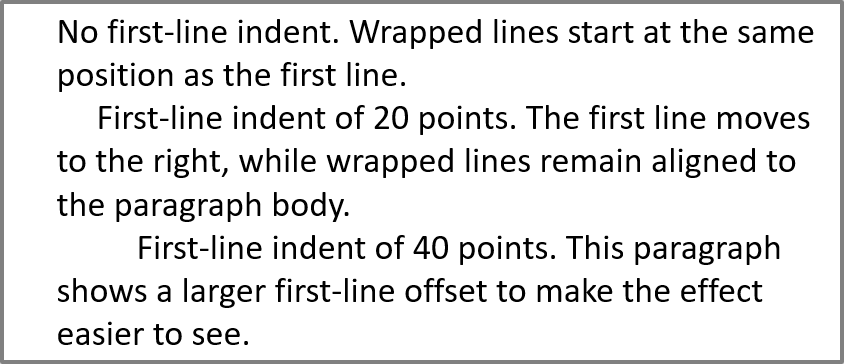
Sử dụng IParagraphFormat::set_Indent để kiểm soát thụt lề dòng đầu của một đoạn. Phương thức này chỉ di chuyển dòng đầu so với lề trái của đoạn. Giá trị dương dịch dòng đầu sang phải, trong khi các dòng còn lại vẫn căn chỉnh với thân đoạn.
Sử dụng IParagraphFormat::set_MarginLeft khi bạn cần di chuyển toàn bộ đoạn. Sử dụng IParagraphFormat::set_Indent khi bạn chỉ muốn di chuyển dòng đầu.
Ví dụ dưới đây tạo một số đoạn và áp dụng các giá trị khác nhau của IParagraphFormat::set_Indent để minh họa cách thụt lề dòng đầu ảnh hưởng đến bố cục đoạn.
- Tạo một thể hiện của lớp Presentation.
- Truy cập slide mục tiêu.
- Thêm một IAutoShape hình chữ nhật vào slide.
- Truy cập ITextFrame của hình dạng và xóa đoạn mặc định.
- Tạo một số đoạn và đặt các giá trị khác nhau của IParagraphFormat::set_Indent cho chúng.
- Thêm các đoạn vào khung văn bản.
- Lưu bản thuyết trình đã sửa.
Mã này cho bạn thấy cách đặt thụt lề đoạn:
#include <DOM/FillType.h>
#include <DOM/IAutoShape.h>
#include <DOM/IParagraphCollection.h>
#include <DOM/Paragraph.h>
#include <DOM/Presentation.h>
#include <DOM/ShapeType.h>
#include <DOM/TextAutofitType.h>
#include <Export/SaveFormat.h>
#include <drawing/color.h>

using namespace Aspose::Slides;
using namespace Aspose::Slides::Export;
using namespace System;
using namespace System::Drawing;

auto presentation = MakeObject<Presentation>();
auto slide = presentation->get_Slide(0);
auto shape = slide->get_Shapes()->AddAutoShape(ShapeType::Rectangle, 50, 50, 420, 220);
shape->get_FillFormat()->set_FillType(FillType::NoFill);
shape->get_LineFormat()->get_FillFormat()->set_FillType(FillType::Solid);
shape->get_LineFormat()->get_FillFormat()->get_SolidFillColor()->set_Color(Color::get_Gray());

auto textFrame = shape->get_TextFrame();
textFrame->get_TextFrameFormat()->set_AutofitType(TextAutofitType::Shape);
textFrame->get_Paragraphs()->Clear();

auto firstParagraph = MakeObject<Paragraph>();
firstParagraph->set_Text(u"No first-line indent. Wrapped lines start at the same position as the first line.");
firstParagraph->get_ParagraphFormat()->get_DefaultPortionFormat()->get_FillFormat()->set_FillType(FillType::Solid);
firstParagraph->get_ParagraphFormat()->get_DefaultPortionFormat()->get_FillFormat()->get_SolidFillColor()->set_Color(Color::get_Black());
firstParagraph->get_ParagraphFormat()->set_MarginLeft(20);
firstParagraph->get_ParagraphFormat()->set_Indent(0);

auto secondParagraph = MakeObject<Paragraph>();
secondParagraph->set_Text(u"First-line indent of 20 points. The first line moves to the right, while wrapped lines remain aligned to the paragraph body.");
secondParagraph->get_ParagraphFormat()->get_DefaultPortionFormat()->get_FillFormat()->set_FillType(FillType::Solid);
secondParagraph->get_ParagraphFormat()->get_DefaultPortionFormat()->get_FillFormat()->get_SolidFillColor()->set_Color(Color::get_Black());
secondParagraph->get_ParagraphFormat()->set_MarginLeft(20);
secondParagraph->get_ParagraphFormat()->set_Indent(20);

auto thirdParagraph = MakeObject<Paragraph>();
thirdParagraph->set_Text(u"First-line indent of 40 points. This paragraph shows a larger first-line offset to make the effect easier to see.");
thirdParagraph->get_ParagraphFormat()->get_DefaultPortionFormat()->get_FillFormat()->set_FillType(FillType::Solid);
thirdParagraph->get_ParagraphFormat()->get_DefaultPortionFormat()->get_FillFormat()->get_SolidFillColor()->set_Color(Color::get_Black());
thirdParagraph->get_ParagraphFormat()->set_MarginLeft(20);
thirdParagraph->get_ParagraphFormat()->set_Indent(40);

textFrame->get_Paragraphs()->Add(firstParagraph);
textFrame->get_Paragraphs()->Add(secondParagraph);
textFrame->get_Paragraphs()->Add(thirdParagraph);

presentation->Save(u"paragraph_indent.pptx", SaveFormat::Pptx);
presentation->Dispose();
Kết quả:
Đặt Thụt lề Treo
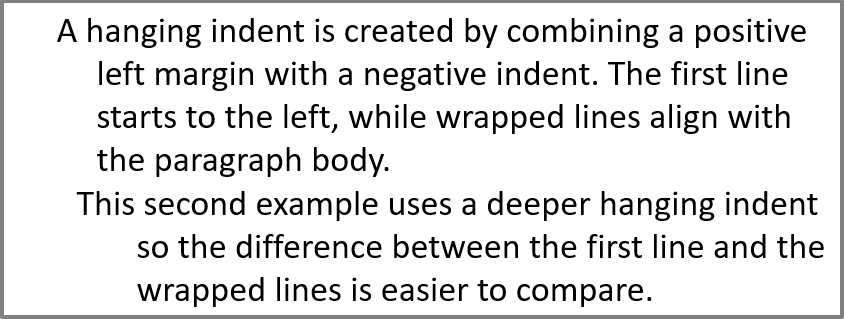
Thụt lề treo là bố cục đoạn trong đó dòng đầu bắt đầu ở bên trái so với các dòng còn lại. Trong Aspose.Slides, bạn tạo hiệu ứng này bằng IParagraphFormat::set_Indent. Đặt thụt lề thành giá trị âm để di chuyển dòng đầu sang trái so với thân đoạn.
Thực tế, IParagraphFormat::set_MarginLeft xác định vị trí bên trái của thân đoạn, và IParagraphFormat::set_Indent xác định vị trí của dòng đầu so với lề đó. Để tạo thụt lề treo, đặt giá trị lề trái dương và giá trị thụt lề âm.
Định dạng này hữu ích cho thư mục, tài liệu tham khảo, mục giải thích và các đoạn khác mà các dòng gập phải căn dưới thân đoạn thay vì dưới ký tự đầu tiên của dòng đầu.
- Tạo một thể hiện của lớp Presentation.
- Truy cập slide mục tiêu.
- Thêm một IAutoShape hình chữ nhật vào slide.
- Truy cập ITextFrame của hình dạng và xóa đoạn mặc định.
- Tạo các đoạn và đặt một giá trị dương cho IParagraphFormat::set_MarginLeft cho mỗi đoạn.
- Đặt một giá trị âm cho IParagraphFormat::set_Indent để tạo hiệu ứng thụt lề treo.
- Thêm các đoạn vào khung văn bản.
- Lưu bản thuyết trình đã sửa.
Mã này cho bạn thấy cách đặt thụt lề treo cho một đoạn:
#include <DOM/FillType.h>
#include <DOM/IAutoShape.h>
#include <DOM/IParagraphCollection.h>
#include <DOM/Paragraph.h>
#include <DOM/Presentation.h>
#include <DOM/ShapeType.h>
#include <DOM/TextAutofitType.h>
#include <Export/SaveFormat.h>
#include <drawing/color.h>

using namespace Aspose::Slides;
using namespace Aspose::Slides::Export;
using namespace System;
using namespace System::Drawing;

auto presentation = MakeObject<Presentation>();
auto slide = presentation->get_Slide(0);
auto shape = slide->get_Shapes()->AddAutoShape(ShapeType::Rectangle, 50, 50, 420, 220);
shape->get_FillFormat()->set_FillType(FillType::NoFill);
shape->get_LineFormat()->get_FillFormat()->set_FillType(FillType::Solid);
shape->get_LineFormat()->get_FillFormat()->get_SolidFillColor()->set_Color(Color::get_Gray());

auto textFrame = shape->get_TextFrame();
textFrame->get_TextFrameFormat()->set_AutofitType(TextAutofitType::Shape);
textFrame->get_Paragraphs()->Clear();

auto firstParagraph = MakeObject<Paragraph>();
firstParagraph->set_Text(u"A hanging indent is created by combining a positive left margin with a negative indent. The first line starts to the left, while wrapped lines align with the paragraph body.");
firstParagraph->get_ParagraphFormat()->get_DefaultPortionFormat()->get_FillFormat()->set_FillType(FillType::Solid);
firstParagraph->get_ParagraphFormat()->get_DefaultPortionFormat()->get_FillFormat()->get_SolidFillColor()->set_Color(Color::get_Black());
firstParagraph->get_ParagraphFormat()->set_MarginLeft(40);
firstParagraph->get_ParagraphFormat()->set_Indent(-20);

auto secondParagraph = MakeObject<Paragraph>();
secondParagraph->set_Text(u"This second example uses a deeper hanging indent so the difference between the first line and the wrapped lines is easier to compare.");
secondParagraph->get_ParagraphFormat()->get_DefaultPortionFormat()->get_FillFormat()->set_FillType(FillType::Solid);
secondParagraph->get_ParagraphFormat()->get_DefaultPortionFormat()->get_FillFormat()->get_SolidFillColor()->set_Color(Color::get_Black());
secondParagraph->get_ParagraphFormat()->set_MarginLeft(60);
secondParagraph->get_ParagraphFormat()->set_Indent(-30);

textFrame->get_Paragraphs()->Add(firstParagraph);
textFrame->get_Paragraphs()->Add(secondParagraph);

presentation->Save(u"hanging_indent.pptx", SaveFormat::Pptx);
presentation->Dispose();
Kết quả:
Đặt Thuộc tính Kết thúc Đoạn
IParagraph::set_EndParagraphPortionFormat kiểm soát định dạng của ký hiệu kết thúc đoạn. Ví dụ sau gán kích thước phông chữ và phông Latin cho ký hiệu kết thúc của đoạn thứ hai:
- Tải một Presentation và truy cập một slide.
- Thêm một IAutoShape và xóa đoạn mặc định của nó.
- Tạo hai đoạn và thêm các phần văn bản vào chúng.
- Tạo một PortionFormat cho ký hiệu kết thúc của đoạn thứ hai.
- Đặt IBasePortionFormat::set_FontHeight và IBasePortionFormat::set_LatinFont.
- Gán định dạng bằng IParagraph::set_EndParagraphPortionFormat và lưu bản thuyết trình.
#include <DOM/Fonts/FontData.h>
#include <DOM/IAutoShape.h>
#include <DOM/IParagraphCollection.h>
#include <DOM/IPortionCollection.h>
#include <DOM/Paragraph.h>
#include <DOM/Portion.h>
#include <DOM/PortionFormat.h>
#include <DOM/Presentation.h>
#include <DOM/ShapeType.h>
#include <Export/SaveFormat.h>

using namespace Aspose::Slides;
using namespace Aspose::Slides::Export;
using namespace System;

auto presentation = MakeObject<Presentation>(u"Test.pptx");
auto slide = presentation->get_Slide(0);
auto shape = slide->get_Shapes()->AddAutoShape(ShapeType::Rectangle, 10, 10, 200, 250);
auto textFrame = shape->get_TextFrame();
textFrame->get_Paragraphs()->Clear();

auto firstParagraph = MakeObject<Paragraph>();
firstParagraph->get_Portions()->Add(MakeObject<Portion>(u"Sample text"));

auto secondParagraph = MakeObject<Paragraph>();
secondParagraph->get_Portions()->Add(MakeObject<Portion>(u"Sample text 2"));

auto endParagraphFormat = MakeObject<PortionFormat>();
endParagraphFormat->set_FontHeight(48);
endParagraphFormat->set_LatinFont(MakeObject<FontData>(u"Times New Roman"));
secondParagraph->set_EndParagraphPortionFormat(endParagraphFormat);

textFrame->get_Paragraphs()->Add(firstParagraph);
textFrame->get_Paragraphs()->Add(secondParagraph);

presentation->Save(u"end_paragraph_format.pptx", SaveFormat::Pptx);
presentation->Dispose();
Đếm Các Dòng Được Kết xuất
Đối với các quy tắc đoạn ảnh hưởng đến việc gập tự động và dấu chấm câu ở cuối dòng, xem Control Line Breaking và Control Hanging Punctuation.
Sử dụng IParagraph::GetLinesCount để đếm số dòng mà một đoạn chiếm sau khi bố trí văn bản, bao gồm việc gập tự động. Điều này hữu ích khi kiểm tra độ dài và bố cục văn bản trong các mẫu bản thuyết trình.
Một đoạn là một mục trong ITextFrame::get_Paragraphs, và nó có thể chiếm nhiều dòng được kết xuất. Một ngắt dòng rõ ràng trong đoạn sẽ buộc tạo một dòng mới mà không tạo đoạn mới. Việc gập tự động tạo các dòng dựa trên chiều rộng có sẵn mà không chèn ký tự ngắt dòng vào văn bản. Vì vậy, đếm số đoạn hoặc ký tự ngắt dòng không cho biết số dòng đã được kết xuất.
Ví dụ sau tạo một hình dạng văn bản, đếm các dòng của nó, thu hẹp hình dạng, sau đó thay thế văn bản bằng một chuỗi ngắn hơn. Việc gập được bật và tự động vừa vặn bị tắt để chiều rộng hình dạng kiểm soát việc gập mà không tự động thu nhỏ văn bản hay thay đổi kích thước hình dạng. Kích thước hình dạng được tính bằng điểm. Cuối cùng, ví dụ thêm một đoạn nữa và cộng tổng số dòng trong khung văn bản.
#include <DOM/IAutoShape.h>
#include <DOM/IParagraphCollection.h>
#include <DOM/NullableBool.h>
#include <DOM/Paragraph.h>
#include <DOM/Presentation.h>
#include <DOM/ShapeType.h>
#include <DOM/TextAutofitType.h>
#include <system/console.h>

using namespace Aspose::Slides;
using namespace System;

auto presentation = MakeObject<Presentation>();
auto slide = presentation->get_Slide(0);

auto shape = slide->get_Shapes()->AddAutoShape(ShapeType::Rectangle, 50, 50, 400, 200);
auto textFrame = shape->get_TextFrame();
textFrame->get_TextFrameFormat()->set_WrapText(NullableBool::True);
textFrame->get_TextFrameFormat()->set_AutofitType(TextAutofitType::None);

auto paragraph = textFrame->get_Paragraph(0);
paragraph->get_ParagraphFormat()->get_DefaultPortionFormat()->set_FontHeight(20);
paragraph->set_Text(u"This text demonstrates how automatic wrapping changes the number of rendered lines.");
Console::WriteLine(u"Original width: {0}", paragraph->GetLinesCount());

shape->set_Width(150);
Console::WriteLine(u"Narrower shape: {0}", paragraph->GetLinesCount());

paragraph->set_Text(u"Short text.");
Console::WriteLine(u"Shorter text: {0}", paragraph->GetLinesCount());

auto secondParagraph = MakeObject<Paragraph>();
secondParagraph->set_Text(u"Another paragraph.");
secondParagraph->get_ParagraphFormat()->get_DefaultPortionFormat()->set_FontHeight(20);
textFrame->get_Paragraphs()->Add(secondParagraph);

auto totalLineCount = 0;
for (auto currentParagraph : textFrame->get_Paragraphs())
{
    totalLineCount += currentParagraph->GetLinesCount();
}
Console::WriteLine(u"Total lines in the text frame: {0}", totalLineCount);
presentation->Dispose();
Với văn bản và các kích thước này, thu hẹp hình dạng làm tăng số dòng, trong khi thay thế bằng chuỗi ngắn hơn làm giảm số dòng. Các số đếm chính xác có thể thay đổi tùy thuộc vào việc có sẵn phông chữ và việc thay thế, kích thước phông, lề, thụt lề, gập và cài đặt tự động vừa vặn. Hãy sử dụng phông và cài đặt bố cục dự kiến cho môi trường đích khi kiểm tra mẫu.
Số dòng chỉ không quyết định liệu văn bản có tràn ra ngoài vùng chứa hay không. Chiều cao khả dụng, chiều cao dòng, khoảng cách đoạn và dòng, cũng như hành vi tự động vừa vặn đều quan trọng; ngay cả một dòng duy nhất cũng có thể vượt quá chiều rộng khi tắt gập.
Nhập và Xuất Nội dung Đoạn
Nhập Văn bản HTML vào Đoạn
Sử dụng IParagraphCollection::AddFromHtml để chuyển đổi markup HTML thành các đoạn và phần trong một khung văn bản.
- Tạo một thể hiện của lớp Presentation.
- Truy cập một slide và thêm một IAutoShape.
- Truy cập ITextFrame của hình dạng và xóa đoạn mặc định.
- Đọc tệp HTML nguồn.
- Chuyển chuỗi HTML cho IParagraphCollection::AddFromHtml.
- Lưu bản thuyết trình đã sửa.
Ví dụ C++ này nhập HTML vào một khung văn bản:
#include <DOM/FillType.h>
#include <DOM/IAutoShape.h>
#include <DOM/IParagraphCollection.h>
#include <DOM/ISlideSize.h>
#include <DOM/Presentation.h>
#include <DOM/ShapeType.h>
#include <Export/SaveFormat.h>
#include <system/io/stream_reader.h>

using namespace Aspose::Slides;
using namespace Aspose::Slides::Export;
using namespace System;
using namespace System::IO;

auto presentation = MakeObject<Presentation>();
auto slide = presentation->get_Slide(0);
auto slideSize = presentation->get_SlideSize()->get_Size();
auto shape = slide->get_Shapes()->AddAutoShape(ShapeType::Rectangle, 10, 10, slideSize.get_Width() - 20, slideSize.get_Height() - 20);
shape->get_FillFormat()->set_FillType(FillType::NoFill);
shape->get_TextFrame()->get_Paragraphs()->Clear();

auto reader = MakeObject<StreamReader>(u"file.html");
auto html = reader->ReadToEnd();
reader->Close();
shape->get_TextFrame()->get_Paragraphs()->AddFromHtml(html);

presentation->Save(u"html_text.pptx", SaveFormat::Pptx);
presentation->Dispose();
Xuất Văn bản Đoạn ra HTML
Sử dụng IParagraphCollection::ExportToHtml để xuất một phạm vi đoạn đã chọn dưới dạng HTML.
- Tạo một thể hiện của lớp Presentation và tải bản thuyết trình mong muốn.
- Truy cập slide và tìm IAutoShape chứa văn bản.
- Truy cập ITextFrame của hình dạng.
- Gọi IParagraphCollection::ExportToHtml với chỉ mục đoạn bắt đầu và số lượng đoạn cần xuất.
- Ghi chuỗi HTML trả về vào tệp.
Ví dụ C++ này xuất tất cả các đoạn từ hình dạng văn bản đầu tiên:
#include <DOM/IAutoShape.h>
#include <DOM/IParagraphCollection.h>
#include <DOM/Presentation.h>
#include <system/console.h>
#include <system/io/stream_writer.h>
#include <system/object_ext.h>
#include <system/text/encoding.h>

using namespace Aspose::Slides;
using namespace System;
using namespace System::IO;
using namespace System::Text;

auto presentation = MakeObject<Presentation>(u"ExportingHTMLText.pptx");
auto shape = presentation->get_Slide(0)->get_Shape(0);
auto textShape = AsCast<IAutoShape>(shape);

if (textShape != nullptr && textShape->get_TextFrame() != nullptr)
{
    auto paragraphs = textShape->get_TextFrame()->get_Paragraphs();
    auto html = paragraphs->ExportToHtml(0, paragraphs->get_Count(), nullptr);
    auto writer = MakeObject<StreamWriter>(u"paragraphs.html", false, Encoding::get_UTF8());
    writer->Write(html);
    writer->Close();
}
else
{
    Console::WriteLine(u"The first shape is not a text shape.");
}

presentation->Dispose();
Kết xuất Đoạn dưới dạng Hình ảnh
IParagraph::GetImage kết xuất trực tiếp một đoạn riêng lẻ và trả về một IImage. Lưu kết quả vào tệp hoặc luồng bằng IImage::Save. Bạn không cần phải kết xuất hình dạng chứa hoặc cắt bitmap một cách thủ công.
IParagraph::GetImage có thể trả về nullptr nếu không tìm thấy đoạn trong bộ sưu tập cha, không có giới hạn kết xuất hợp lệ, hoặc không thể kết xuất. Kiểm tra kết quả trước khi lưu và giải phóng hình ảnh đã trả về sau khi sử dụng.
Kết xuất Đoạn ở Tỷ lệ Mặc định
Giả sử chúng ta có một tệp bản thuyết trình tên sample.pptx với một slide, trong đó hình dạng đầu tiên là một hộp văn bản chứa ba đoạn.
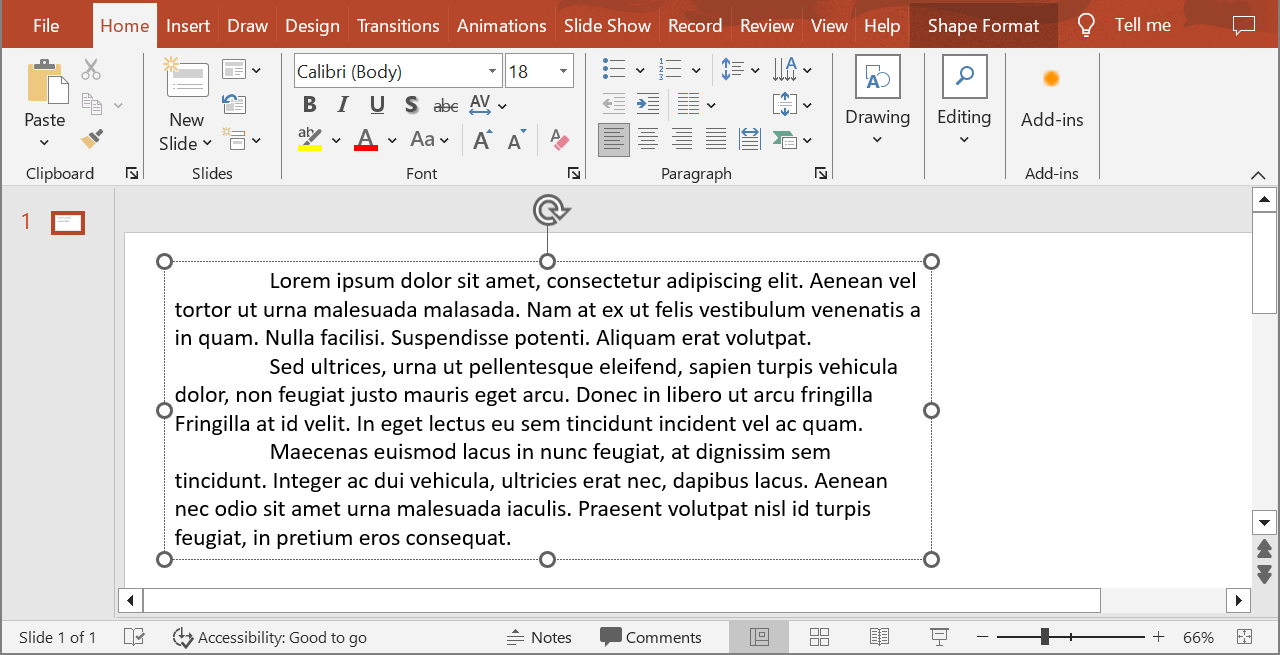
Ví dụ sau kết xuất đoạn thứ hai trong một hình dạng văn bản thông thường ở tỷ lệ mặc định và lưu ảnh trả về dưới dạng PNG.
#include <DOM/IAutoShape.h>
#include <DOM/IParagraph.h>
#include <DOM/Presentation.h>
#include <IImage.h>
#include <ImageFormat.h>
#include <system/console.h>
#include <system/object_ext.h>

using namespace Aspose::Slides;
using namespace System;

auto presentation = MakeObject<Presentation>(u"sample.pptx");
auto shape = presentation->get_Slide(0)->get_Shape(0);
auto textShape = AsCast<IAutoShape>(shape);

if (textShape != nullptr && textShape->get_TextFrame() != nullptr && textShape->get_TextFrame()->get_Paragraphs()->get_Count() > 1)
{
    auto paragraph = textShape->get_TextFrame()->get_Paragraph(1);
    auto paragraphImage = paragraph->GetImage();

    if (paragraphImage != nullptr)
    {
        paragraphImage->Save(u"paragraph.png", ImageFormat::Png);
        paragraphImage->Dispose();
    }
    else
    {
        Console::WriteLine(u"The paragraph could not be rendered.");
    }
}
else
{
    Console::WriteLine(u"The expected text shape or paragraph was not found.");
}

presentation->Dispose();
Kết quả:

Kết xuất Đoạn trong Ô Bảng với Tỷ lệ Thu phóng
Sử dụng phương thức IParagraph::GetImage có tham số float scaleX và float scaleY để đặt hệ số tỷ lệ ngang và dọc. Ví dụ sau tạo một bảng, kết xuất đoạn trong ô đầu tiên với độ rộng và chiều cao gấp đôi so với mặc định, và lưu kết quả dưới dạng PNG.
#include <DOM/IParagraph.h>
#include <DOM/Presentation.h>
#include <DOM/Table/ITable.h>
#include <IImage.h>
#include <ImageFormat.h>
#include <system/array.h>
#include <system/console.h>

using namespace Aspose::Slides;
using namespace System;

auto scaleX = 2.0f;
auto scaleY = 2.0f;

auto presentation = MakeObject<Presentation>();
auto slide = presentation->get_Slide(0);
auto table = slide->get_Shapes()->AddTable(50, 50, MakeArray<double>({300}), MakeArray<double>({80}));
auto paragraph = table->idx_get(0, 0)->get_TextFrame()->get_Paragraph(0);
paragraph->set_Text(u"Text in a table cell");

auto paragraphImage = paragraph->GetImage(scaleX, scaleY);
if (paragraphImage != nullptr)
{
    paragraphImage->Save(u"table_paragraph.png", ImageFormat::Png);
    paragraphImage->Dispose();
}
else
{
    Console::WriteLine(u"The paragraph could not be rendered.");
}

presentation->Dispose();
Hệ số tỷ lệ 1 giữ trục đó ở kích thước pixel mặc định. Ví dụ, 2 cho cả hai trục tạo ra một ảnh có chiều rộng và chiều cao khoảng gấp đôi kích thước mặc định, tương đương với bốn lần số pixel. Các hệ số lớn hơn thường tạo ra văn bản sắc nét hơn cho việc phóng to hoặc xuất đầu ra độ phân giải cao, nhưng cũng làm tăng mức tiêu thụ bộ nhớ và kích thước tệp. Hệ số dưới 1 tạo ra ảnh nhỏ hơn với chi tiết ít hơn. Sử dụng các hệ số bằng nhau để giữ tỷ lệ khung hình của đoạn; các hệ số ngang và dọc khác nhau sẽ kéo dài đầu ra một cách độc lập.
Kết xuất toàn bộ hình dạng bằng IShape::GetImage vẫn hữu ích khi đầu ra cần bao gồm nền, viền hoặc ngữ cảnh hình ảnh của hình dạng. Đối với ảnh chỉ chứa đoạn, hãy sử dụng IParagraph::GetImage.
FAQ
Tôi có thể tắt hoàn toàn việc gập dòng trong khung văn bản không?
Có. Sử dụng ITextFrameFormat::set_WrapText để tắt gập, vì vậy các dòng sẽ không bị ngắt ở các cạnh của khung văn bản.
Làm sao tôi có thể lấy giới hạn trên slide chính xác của một đoạn cụ thể?
Sử dụng IParagraph::GetRect để lấy hình chữ nhật bao quanh của đoạn. IPortion::GetRect cung cấp giới hạn của một phần riêng lẻ.
Nơi nào kiểm soát căn chỉnh đoạn (trái, phải, giữa hoặc căn đều)?
IParagraphFormat::set_Alignment là cài đặt cấp đoạn và áp dụng cho toàn bộ đoạn bất kể định dạng riêng lẻ của các phần.
Để căn chỉnh dọc các phần có kích thước phông chữ khác nhau trong mỗi dòng, xem Align Fonts Within a Line.
Tôi có thể đặt ngôn ngữ kiểm tra chính tả cho một phần của đoạn không?
Có. Sử dụng IBasePortionFormat::set_LanguageId cho các phần riêng lẻ, vì vậy một đoạn có thể chứa văn bản bằng nhiều ngôn ngữ khác nhau.