
Applicera formanimationer i presentationer med C++
Overview
För att arbeta med de enskilda beteendena i en effekt eller redigera rörelsebansegment, se Custom Animation.
Aspose.Slides för C++ representerar bildanimationer som effekter i en bildtidslinje. En effekt har en målform, en animationstyp och undertyp, en trigger, tidinställningar och valfria egenskaper såsom ljud eller efteranimationsbeteende.
Tidslinjen innehåller två typer av sekvenser:
- Den huvudsekvensen spelas när bilden avancerar.
- En interaktiv sekvens startar när dess triggerform klickas.
Eftersom textrutor, bilder, diagram, tabeller och andra bildobjekt implementerar IShape, använder du samma ISequence::AddEffect‑metod för de flesta bildinnehåll. De tillgängliga effekterna listas i uppräkningen EffectType.
Add Shape Animations
För att lägga till en animation, hämta bildens huvudsekvens och anropa ISequence::AddEffect med målformen, effekttypen, undertypen och triggern. För en effekt som startar när en annan form klickas, skapa en interaktiv sekvens vars trigger är den andra formen.
Följande exempel skapar båda typerna av animation och sparar resultatet till shape-animations.pptx.
#include <DOM/Animation/EffectSubtype.h>
#include <DOM/Animation/EffectTriggerType.h>
#include <DOM/Animation/EffectType.h>
#include <DOM/Animation/IEffect.h>
#include <DOM/Animation/ISequence.h>
#include <DOM/Animation/ISequenceCollection.h>
#include <DOM/Animation/ITiming.h>
#include <DOM/IAnimationTimeLine.h>
#include <DOM/IAutoShape.h>
#include <DOM/IShapeCollection.h>
#include <DOM/ISlide.h>
#include <DOM/ISlideCollection.h>
#include <DOM/ITextFrame.h>
#include <DOM/Presentation.h>
#include <DOM/ShapeType.h>
#include <Export/SaveFormat.h>

using namespace Aspose::Slides;
using namespace Aspose::Slides::Animation;
using namespace Aspose::Slides::Export;
using namespace System;

auto presentation = MakeObject<Presentation>();
auto slide = presentation->get_Slide(0);

auto targetShape = slide->get_Shapes()->AddAutoShape(ShapeType::RoundCornerRectangle, 120.0f, 100.0f, 320.0f, 80.0f);
targetShape->get_TextFrame()->set_Text(u"Click to animate this shape");

auto mainSequence = slide->get_Timeline()->get_MainSequence();
auto entranceEffect = mainSequence->AddEffect(targetShape, EffectType::Fade, EffectSubtype::None, EffectTriggerType::OnClick);
entranceEffect->get_Timing()->set_Duration(1.5f);

auto triggerShape = slide->get_Shapes()->AddAutoShape(ShapeType::Bevel, 20.0f, 20.0f, 100.0f, 40.0f);
triggerShape->get_TextFrame()->set_Text(u"Move");

auto interactiveSequence = slide->get_Timeline()->get_InteractiveSequences()->Add(triggerShape);
interactiveSequence->AddEffect(targetShape, EffectType::PathFootball, EffectSubtype::None, EffectTriggerType::OnClick);

presentation->Save(u"shape-animations.pptx", SaveFormat::Pptx);
presentation->Dispose();
Triggern styr när en effekt startar:
- EffectTriggerType::OnClick väntar på ett klick i huvudsekvensen, eller på ett klick på triggerformen i en interaktiv sekvens.
- EffectTriggerType::WithPrevious startar med den föregående effekten.
- EffectTriggerType::AfterPrevious startar när den föregående effekten avslutas.
För att animera en bild, ett diagram eller en annan formtyp, skicka det objektet till ISequence::AddEffect istället för targetShape. För diagramspecifika grupperingsalternativ, se Animated Charts.
Read Shape Animations
Använd ISequence::GetEffectsByShape när du känner till målformen. För att inspektera varje effekt, enumerera huvudsekvensen och varje interaktiv sekvens. Enumerering undviker att anta att en sekvens innehåller en effekt på index 0.
Följande exempel skapar en form med huvudsekvens‑ och interaktiva effekter, hämtar de effekter som riktar sig mot formen och enumererar sedan varje sekvens på bilden.
#include <DOM/Animation/EffectSubtype.h>
#include <DOM/Animation/EffectTriggerType.h>
#include <DOM/Animation/EffectType.h>
#include <DOM/Animation/IEffect.h>
#include <DOM/Animation/ISequence.h>
#include <DOM/Animation/ISequenceCollection.h>
#include <DOM/Animation/ITiming.h>
#include <DOM/IAnimationTimeLine.h>
#include <DOM/IAutoShape.h>
#include <DOM/IShape.h>
#include <DOM/IShapeCollection.h>
#include <DOM/ISlide.h>
#include <DOM/ISlideCollection.h>
#include <DOM/ITextFrame.h>
#include <DOM/Presentation.h>
#include <DOM/ShapeType.h>
#include <system/console.h>
#include <system/string.h>

using namespace Aspose::Slides;
using namespace Aspose::Slides::Animation;
using namespace System;

auto printSequence = [](const String& label, const SharedPtr<ISequence>& sequence)
{
    Console::WriteLine(String::Format(u"  {0}: {1} effect(s)", label, sequence->get_Count()));

    for (const auto& effect : sequence)
    {
        auto targetName = effect->get_TargetShape() == nullptr ? u"unknown" : effect->get_TargetShape()->get_Name();
        auto effectDescription = String::Format(u"{0} {1}; target: {2}; trigger: {3}", effect->get_Type(), effect->get_Subtype(), targetName, effect->get_Timing()->get_TriggerType());
        Console::WriteLine(u"    " + effectDescription);
    }
};

auto presentation = MakeObject<Presentation>();
auto slide = presentation->get_Slide(0);
auto targetShape = slide->get_Shapes()->AddAutoShape(ShapeType::Rectangle, 120.0f, 100.0f, 320.0f, 80.0f);
targetShape->get_TextFrame()->set_Text(u"Animated shape");

auto mainSequence = slide->get_Timeline()->get_MainSequence();
mainSequence->AddEffect(targetShape, EffectType::Fade, EffectSubtype::None, EffectTriggerType::OnClick);

auto triggerShape = slide->get_Shapes()->AddAutoShape(ShapeType::Bevel, 20.0f, 20.0f, 100.0f, 40.0f);
triggerShape->get_TextFrame()->set_Text(u"Move");

auto interactiveSequence = slide->get_Timeline()->get_InteractiveSequences()->Add(triggerShape);
interactiveSequence->AddEffect(targetShape, EffectType::PathFootball, EffectSubtype::None, EffectTriggerType::OnClick);

auto targetEffects = mainSequence->GetEffectsByShape(targetShape);
Console::WriteLine(String::Format(u"The main sequence contains {0} effect(s) for {1}.", targetEffects->get_Length(), targetShape->get_Name()));

printSequence(u"Main sequence", mainSequence);

int32_t interactiveIndex = 1;
for (const auto& sequence : slide->get_Timeline()->get_InteractiveSequences())
{
    auto triggerName = sequence->get_TriggerShape() == nullptr ? u"unknown" : sequence->get_TriggerShape()->get_Name();
    auto sequenceLabel = String::Format(u"Interactive sequence {0}, trigger: {1}", interactiveIndex, triggerName);
    printSequence(sequenceLabel, sequence);
    interactiveIndex++;
}

presentation->Dispose();
Om du bara behöver effekterna för en form, identifiera först formen efter namn, platshållartyp eller en annan stabil egenskap; anropa sedan ISequence::GetEffectsByShape. Anta inte att IShapeCollection::idx_get på index 0 alltid är det avsedda objektet.
Work with Inherited Placeholder Effects
En platshållare på en normal bild kan ärva animationsbeteende från motsvarande platshållare på bildlayouten och mästaren. IShape::GetBasePlaceholder returnerar den överordnade platshållaren, eller nullptr när ingen förälder finns.
I den följande exempelpresentationen har sidfoten Random Bars på den normala bilden, Split på layoutbilden och Fly In på mästarbilden.
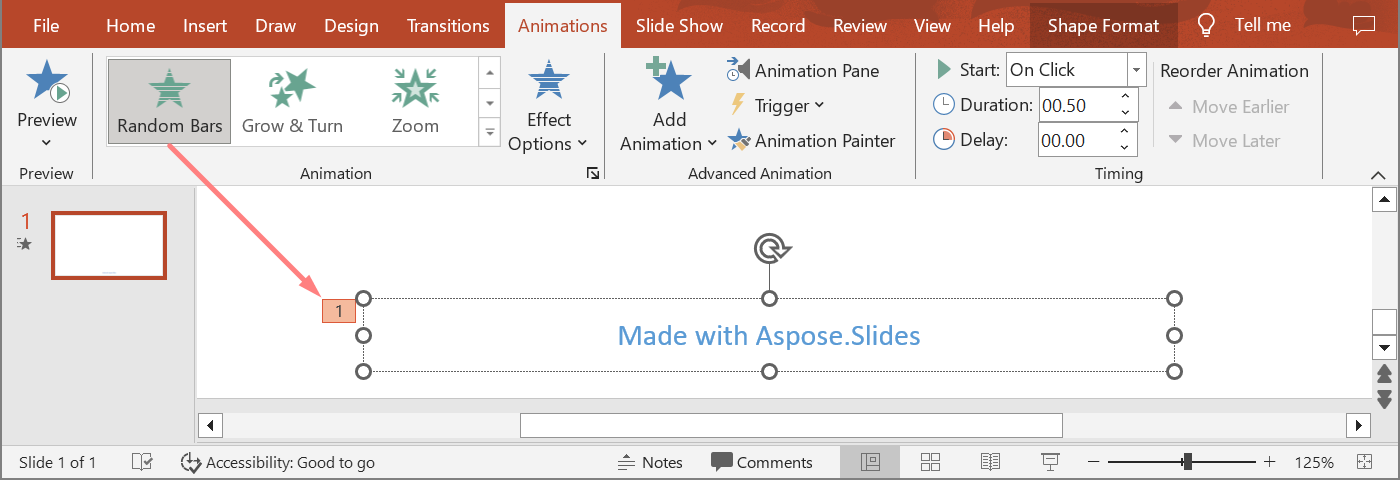
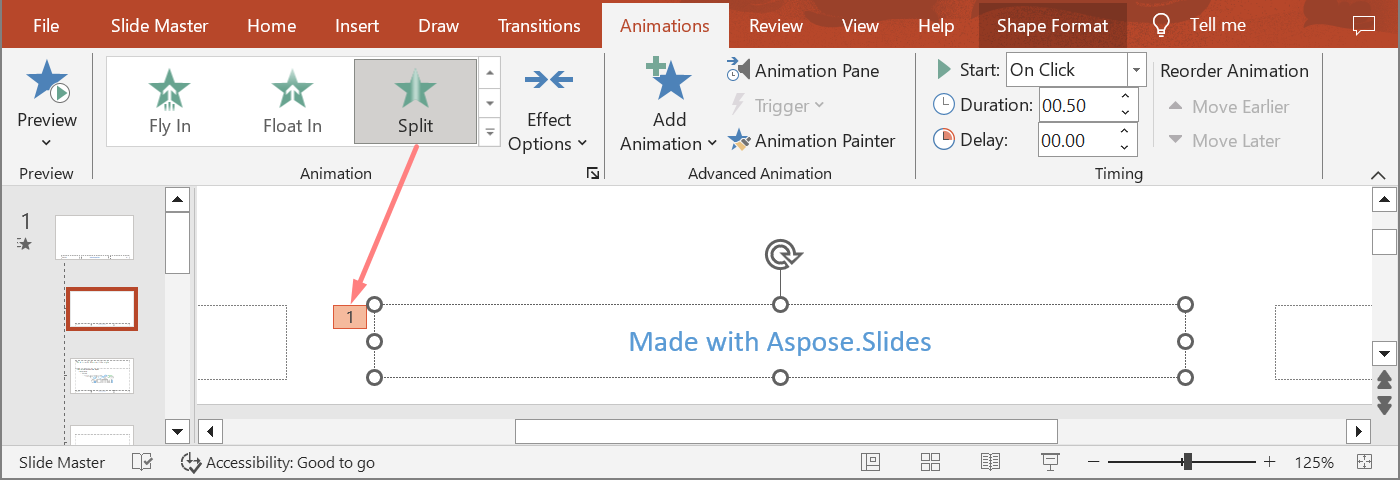
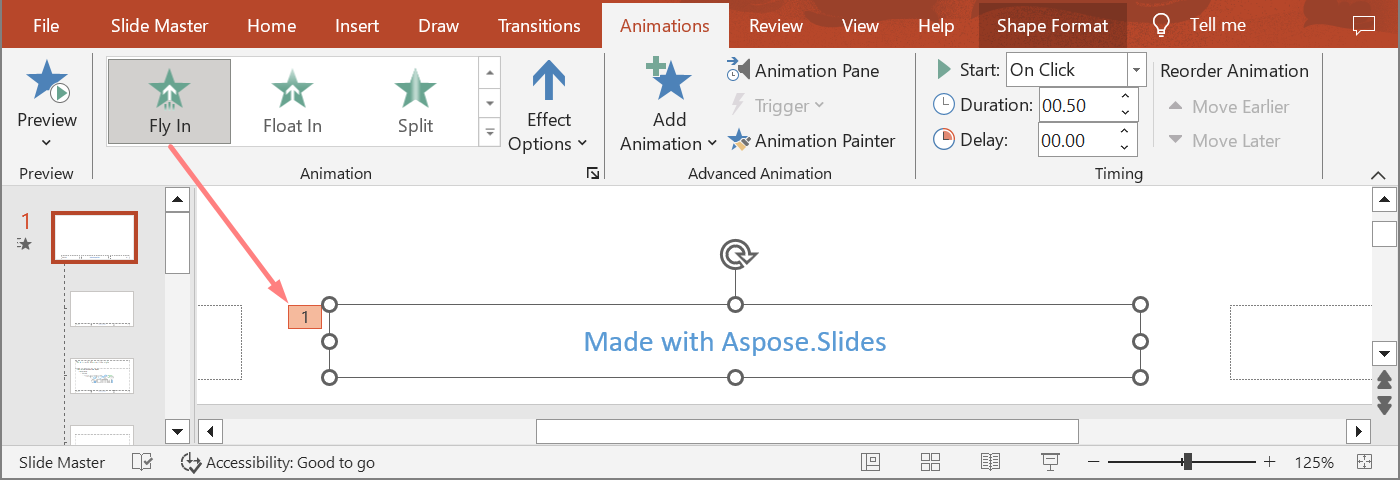
Nästa exempel bygger själva platshållar‑hierarkin. Det lägger till effekter på en mästarpplatshållare, en layout‑platshållare och motsvarande platshållare på en normal bild. Varje anrop till IShape::GetBasePlaceholder kontrolleras innan den returnerade formen används.
#include <DOM/Animation/EffectSubtype.h>
#include <DOM/Animation/EffectTriggerType.h>
#include <DOM/Animation/EffectType.h>
#include <DOM/Animation/IEffect.h>
#include <DOM/Animation/ISequence.h>
#include <DOM/IAnimationTimeLine.h>
#include <DOM/IAutoShape.h>
#include <DOM/IGlobalLayoutSlideCollection.h>
#include <DOM/ILayoutPlaceholderManager.h>
#include <DOM/ILayoutSlide.h>
#include <DOM/IMasterSlide.h>
#include <DOM/IShape.h>
#include <DOM/IShapeCollection.h>
#include <DOM/ISlide.h>
#include <DOM/ISlideCollection.h>
#include <DOM/Presentation.h>
#include <DOM/SlideLayoutType.h>
#include <Export/SaveFormat.h>
#include <system/array.h>
#include <system/console.h>
#include <system/exceptions.h>
#include <system/string.h>

using namespace Aspose::Slides;
using namespace Aspose::Slides::Animation;
using namespace Aspose::Slides::Export;
using namespace System;

auto findPlaceholderWithBase = [](const SharedPtr<ISlide>& slide) -> SharedPtr<IShape>
{
    for (const auto& shape : slide->get_Shapes())
    {
        if (shape->GetBasePlaceholder() != nullptr)
            return shape;
    }

    return nullptr;
};

auto printEffects = [](const String& source, const ArrayPtr<SharedPtr<IEffect>>& effects)
{
    Console::WriteLine(String::Format(u"{0}: {1} effect(s)", source, effects->get_Length()));

    for (const auto& effect : effects)
        Console::WriteLine(String::Format(u"  {0} {1}", effect->get_Type(), effect->get_Subtype()));
};

auto presentation = MakeObject<Presentation>();
auto layoutSlide = presentation->get_LayoutSlides()->GetByType(SlideLayoutType::Blank);
auto layoutPlaceholder = layoutSlide->get_PlaceholderManager()->AddTextPlaceholder(100.0f, 100.0f, 400.0f, 80.0f);
layoutSlide->get_Timeline()->get_MainSequence()->AddEffect(layoutPlaceholder, EffectType::Split, EffectSubtype::VerticalIn, EffectTriggerType::OnClick);

auto masterPlaceholder = layoutPlaceholder->GetBasePlaceholder();
if (masterPlaceholder != nullptr)
{
    auto masterSequence = layoutSlide->get_MasterSlide()->get_Timeline()->get_MainSequence();
    masterSequence->AddEffect(masterPlaceholder, EffectType::Fly, EffectSubtype::Bottom, EffectTriggerType::OnClick);
}

auto slide = presentation->get_Slides()->AddEmptySlide(layoutSlide);
auto slidePlaceholder = findPlaceholderWithBase(slide);

if (slidePlaceholder == nullptr)
    throw InvalidOperationException(u"The slide does not contain a placeholder linked to its layout slide.");

slide->get_Timeline()->get_MainSequence()->AddEffect(slidePlaceholder, EffectType::RandomBars, EffectSubtype::Horizontal, EffectTriggerType::OnClick);
printEffects(u"Normal slide", slide->get_Timeline()->get_MainSequence()->GetEffectsByShape(slidePlaceholder));

auto baseLayoutPlaceholder = slidePlaceholder->GetBasePlaceholder();
if (baseLayoutPlaceholder != nullptr)
{
    printEffects(u"Layout slide", layoutSlide->get_Timeline()->get_MainSequence()->GetEffectsByShape(baseLayoutPlaceholder));

    auto baseMasterPlaceholder = baseLayoutPlaceholder->GetBasePlaceholder();
    if (baseMasterPlaceholder != nullptr)
        printEffects(u"Master slide", layoutSlide->get_MasterSlide()->get_Timeline()->get_MainSequence()->GetEffectsByShape(baseMasterPlaceholder));
}

presentation->Save(u"placeholder-animations.pptx", SaveFormat::Pptx);
presentation->Dispose();
Change Animation Timing
PowerPoint‑dialogen Timing motsvarar metoderna i ITiming.
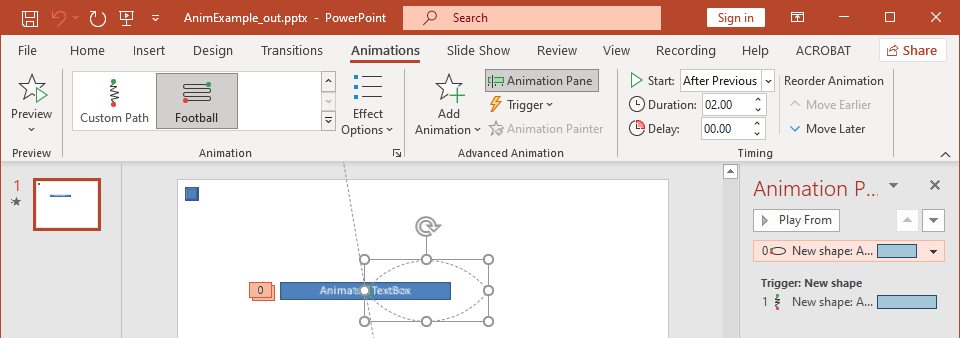
- Start motsvarar ITiming::set_TriggerType.
- Varaktighet motsvarar ITiming::set_Duration, i sekunder.
- Fördröjning motsvarar ITiming::set_TriggerDelayTime, i sekunder.
- Upprepning motsvarar ITiming::set_RepeatCount, ITiming::set_RepeatUntilNextClick, eller ITiming::set_RepeatUntilEndSlide.
- Spola tillbaka när uppspelning är klar motsvarar ITiming::set_Rewind.
Detta fristående exempel lägger till en effekt, ändrar dess timing via objektet som returneras av ISequence::AddEffect, och sparar resultatet. Att behålla den returnerade IEffect‑referensen undviker ett onödigt kollektionsindex.
#include <DOM/Animation/EffectSubtype.h>
#include <DOM/Animation/EffectTriggerType.h>
#include <DOM/Animation/EffectType.h>
#include <DOM/Animation/IEffect.h>
#include <DOM/Animation/ISequence.h>
#include <DOM/Animation/ITiming.h>
#include <DOM/IAnimationTimeLine.h>
#include <DOM/IAutoShape.h>
#include <DOM/IShapeCollection.h>
#include <DOM/ISlide.h>
#include <DOM/ISlideCollection.h>
#include <DOM/ITextFrame.h>
#include <DOM/Presentation.h>
#include <DOM/ShapeType.h>
#include <Export/SaveFormat.h>

using namespace Aspose::Slides;
using namespace Aspose::Slides::Animation;
using namespace Aspose::Slides::Export;
using namespace System;

auto presentation = MakeObject<Presentation>();
auto slide = presentation->get_Slide(0);
auto shape = slide->get_Shapes()->AddAutoShape(ShapeType::Rectangle, 120.0f, 100.0f, 320.0f, 80.0f);
shape->get_TextFrame()->set_Text(u"Timed animation");

auto effect = slide->get_Timeline()->get_MainSequence()->AddEffect(shape, EffectType::Fade, EffectSubtype::None, EffectTriggerType::OnClick);
effect->get_Timing()->set_TriggerType(EffectTriggerType::OnClick);
effect->get_Timing()->set_Duration(2.0f);
effect->get_Timing()->set_TriggerDelayTime(0.5f);
effect->get_Timing()->set_RepeatUntilNextClick(false);
effect->get_Timing()->set_RepeatUntilEndSlide(false);
effect->get_Timing()->set_RepeatCount(2.0f);
effect->get_Timing()->set_Rewind(true);

presentation->Save(u"shape-animation-timing.pptx", SaveFormat::Pptx);
presentation->Dispose();
Använd ett upprepningsläge med avsikt. Att kombinera ett upprepningsantal med en “tills”-flagga kan ge förvirrande resultat i olika visare. När du byter upprepningsläge, anropa ITiming::set_RepeatUntilNextClick och ITiming::set_RepeatUntilEndSlide innan du anropar ITiming::set_RepeatCount, eftersom inställning av någon av flaggorna också ändrar det aktiva upprepningsläget.
Add and Extract Animation Sounds
En animationseffekt kan referera till inbäddat ljud via IEffect::set_Sound. IEffect::set_StopPreviousSound talar om för en effekt att stoppa ljud som startats av en tidigare effekt.
Add a Sound to an Effect
Följande exempel förväntar sig en lokal ljudfil med namnet animation-sound.wav. Det skapar två effekter, bäddar in den filen som ljud för den första effekten, och konfigurerar den andra effekten att stoppa ljudet. Det använder objekten som returneras av ISequence::AddEffect, så inget sekvensindex behövs.
#include <DOM/Animation/EffectSubtype.h>
#include <DOM/Animation/EffectTriggerType.h>
#include <DOM/Animation/EffectType.h>
#include <DOM/Animation/IEffect.h>
#include <DOM/Animation/ISequence.h>
#include <DOM/IAnimationTimeLine.h>
#include <DOM/IAudio.h>
#include <DOM/IAudioCollection.h>
#include <DOM/IAutoShape.h>
#include <DOM/IShapeCollection.h>
#include <DOM/ISlide.h>
#include <DOM/ISlideCollection.h>
#include <DOM/ITextFrame.h>
#include <DOM/Presentation.h>
#include <DOM/ShapeType.h>
#include <Export/SaveFormat.h>
#include <system/io/file.h>

using namespace Aspose::Slides;
using namespace Aspose::Slides::Animation;
using namespace Aspose::Slides::Export;
using namespace System;
using namespace System::IO;

auto presentation = MakeObject<Presentation>();
auto slide = presentation->get_Slide(0);
auto firstShape = slide->get_Shapes()->AddAutoShape(ShapeType::Rectangle, 80.0f, 100.0f, 240.0f, 80.0f);
auto secondShape = slide->get_Shapes()->AddAutoShape(ShapeType::Rectangle, 400.0f, 100.0f, 240.0f, 80.0f);
firstShape->get_TextFrame()->set_Text(u"Starts sound");
secondShape->get_TextFrame()->set_Text(u"Stops sound");

auto sequence = slide->get_Timeline()->get_MainSequence();
auto firstEffect = sequence->AddEffect(firstShape, EffectType::Fade, EffectSubtype::None, EffectTriggerType::OnClick);
auto secondEffect = sequence->AddEffect(secondShape, EffectType::Fade, EffectSubtype::None, EffectTriggerType::OnClick);

auto audioData = File::ReadAllBytes(u"animation-sound.wav");
auto effectSound = presentation->get_Audios()->AddAudio(audioData);
firstEffect->set_Sound(effectSound);
secondEffect->set_StopPreviousSound(true);

presentation->Save(u"shape-animation-sound.pptx", SaveFormat::Pptx);
presentation->Dispose();
Extract Embedded Effect Sounds
Följande exempel förväntar sig en lokal presentation med namnet presentation-with-animation-sounds.pptx. Det skannar både huvud‑ och interaktiva sekvenser och skriver varje inbäddat effektljud till katalogen extracted-animation-sounds. Filändelsen väljs utifrån ljud‑MIME‑typen som exponeras av IAudio::get_ContentType.
#include <DOM/Animation/IEffect.h>
#include <DOM/Animation/ISequence.h>
#include <DOM/Animation/ISequenceCollection.h>
#include <DOM/IAnimationTimeLine.h>
#include <DOM/IAudio.h>
#include <DOM/ISlide.h>
#include <DOM/ISlideCollection.h>
#include <DOM/Presentation.h>
#include <system/console.h>
#include <system/io/directory.h>
#include <system/io/file.h>
#include <system/io/path.h>
#include <system/string.h>

using namespace Aspose::Slides;
using namespace Aspose::Slides::Animation;
using namespace System;
using namespace System::IO;

auto getAudioExtension = [](const String& contentType)
{
    auto normalizedType = String::IsNullOrEmpty(contentType) ? String::Empty : contentType.ToLowerInvariant();

    if (normalizedType == u"audio/mpeg")
        return String(u".mp3");

    if (normalizedType == u"audio/mp4")
        return String(u".m4a");

    if (normalizedType == u"audio/ogg")
        return String(u".ogg");

    if (normalizedType == u"audio/wav" || normalizedType == u"audio/x-wav")
        return String(u".wav");

    return String(u".bin");
};

auto saveSounds = [&getAudioExtension](const SharedPtr<ISequence>& sequence, const String& outputDirectory, int32_t& soundIndex)
{
    for (const auto& effect : sequence)
    {
        if (effect->get_Sound() == nullptr)
            continue;

        auto extension = getAudioExtension(effect->get_Sound()->get_ContentType());
        auto outputPath = Path::Combine(outputDirectory, String::Format(u"effect-sound-{0}{1}", soundIndex, extension));
        File::WriteAllBytes(outputPath, effect->get_Sound()->get_BinaryData());
        soundIndex++;
    }
};

auto inputPath = String(u"presentation-with-animation-sounds.pptx");
auto outputDirectory = String(u"extracted-animation-sounds");

Directory::CreateDirectory_(outputDirectory);

auto presentation = MakeObject<Presentation>(inputPath);
int32_t soundIndex = 1;

for (const auto& slide : presentation->get_Slides())
{
    saveSounds(slide->get_Timeline()->get_MainSequence(), outputDirectory, soundIndex);

    for (const auto& sequence : slide->get_Timeline()->get_InteractiveSequences())
        saveSounds(sequence, outputDirectory, soundIndex);
}

Console::WriteLine(String::Format(u"Extracted {0} sound file(s) to {1}.", soundIndex - 1, Path::GetFullPath(outputDirectory)));
presentation->Dispose();
För stora ljudobjekt, använd IAudio::GetStream och kopiera strömmen till en fil istället för att ladda hela objektet i en byte‑array.
Set After-Animation Behavior
After animation‑alternativet styr vad som händer med en form efter att dess effekt avslutats.
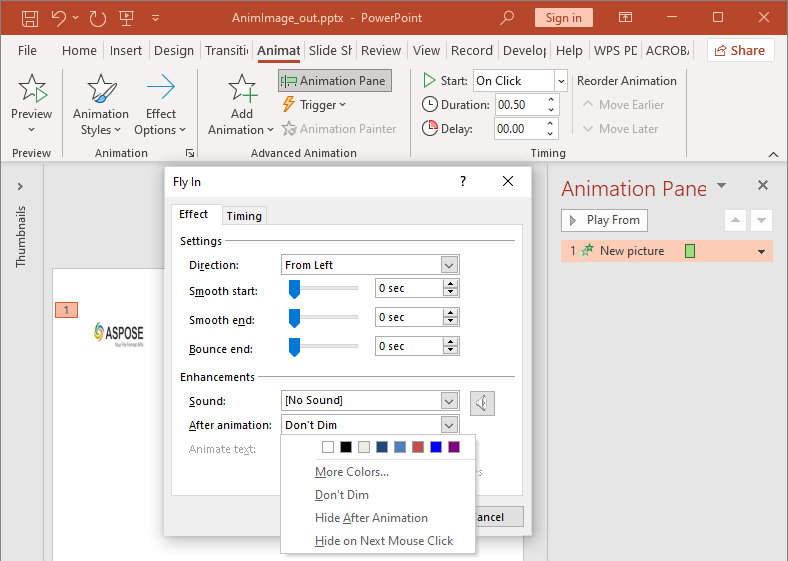
AfterAnimationType‑uppräkningen stödjer att låta formen förbli oförändrad, ändra dess färg, gömma den efter animationen, eller gömma den vid nästa klick. När typen är AfterAnimationType::Color, anropa IEffect::get_AfterAnimationColor för att även sätta färgen.
Detta fristående exempel skapar en effekt, sätter dess efter‑animationsbeteende via den returnerade effekt‑objektet, och sparar resultatet.
#include <DOM/Animation/AfterAnimationType.h>
#include <DOM/Animation/EffectSubtype.h>
#include <DOM/Animation/EffectTriggerType.h>
#include <DOM/Animation/EffectType.h>
#include <DOM/Animation/IEffect.h>
#include <DOM/Animation/ISequence.h>
#include <DOM/IAnimationTimeLine.h>
#include <DOM/IAutoShape.h>
#include <DOM/IColorFormat.h>
#include <DOM/IShapeCollection.h>
#include <DOM/ISlide.h>
#include <DOM/ISlideCollection.h>
#include <DOM/ITextFrame.h>
#include <DOM/Presentation.h>
#include <DOM/ShapeType.h>
#include <Export/SaveFormat.h>
#include <drawing/color.h>

using namespace Aspose::Slides;
using namespace Aspose::Slides::Animation;
using namespace Aspose::Slides::Export;
using namespace System;
using namespace System::Drawing;

auto presentation = MakeObject<Presentation>();
auto slide = presentation->get_Slide(0);
auto shape = slide->get_Shapes()->AddAutoShape(ShapeType::Rectangle, 120.0f, 100.0f, 320.0f, 80.0f);
shape->get_TextFrame()->set_Text(u"Dim after animation");

auto effect = slide->get_Timeline()->get_MainSequence()->AddEffect(shape, EffectType::Fade, EffectSubtype::None, EffectTriggerType::OnClick);
effect->set_AfterAnimationType(AfterAnimationType::Color);
effect->get_AfterAnimationColor()->set_Color(Color::get_LightGray());

presentation->Save(u"shape-animation-after-effect.pptx", SaveFormat::Pptx);
presentation->Dispose();
Att byta typ från AfterAnimationType::Color rensar inställningen för efter‑animationsfärg.
Animate Text
Textanimation har två relaterade kontroller:
- ITextAnimation::set_BuildType styr om stycken visas tillsammans eller på stycknivå.
- IEffect::set_AnimateTextType styr om text visas på en gång, per ord eller per bokstav. IEffect::set_DelayBetweenTextParts anger fördröjningen mellan ord eller bokstäver. Ett positivt värde är en procentandel av effektens varaktighet; ett negativt värde är en fördröjning i sekunder.
Följande fristående exempel animerar orden i en textruta. BuildType::AsOneObject inaktiverar stycke‑för‑stycke‑uppbyggnad så att ordinställningen gäller hela textramen.
#include <DOM/Animation/AnimateTextType.h>
#include <DOM/Animation/BuildType.h>
#include <DOM/Animation/EffectSubtype.h>
#include <DOM/Animation/EffectTriggerType.h>
#include <DOM/Animation/EffectType.h>
#include <DOM/Animation/IEffect.h>
#include <DOM/Animation/ISequence.h>
#include <DOM/Animation/ITextAnimation.h>
#include <DOM/IAnimationTimeLine.h>
#include <DOM/IAutoShape.h>
#include <DOM/IShapeCollection.h>
#include <DOM/ISlide.h>
#include <DOM/ISlideCollection.h>
#include <DOM/ITextFrame.h>
#include <DOM/Presentation.h>
#include <DOM/ShapeType.h>
#include <Export/SaveFormat.h>

using namespace Aspose::Slides;
using namespace Aspose::Slides::Animation;
using namespace Aspose::Slides::Export;
using namespace System;

auto presentation = MakeObject<Presentation>();
auto slide = presentation->get_Slide(0);
auto textBox = slide->get_Shapes()->AddAutoShape(ShapeType::Rectangle, 80.0f, 80.0f, 560.0f, 100.0f);
textBox->get_TextFrame()->set_Text(u"Aspose.Slides animates this sentence word by word.");

auto effect = slide->get_Timeline()->get_MainSequence()->AddEffect(textBox, EffectType::Fade, EffectSubtype::None, EffectTriggerType::OnClick);
effect->get_TextAnimation()->set_BuildType(BuildType::AsOneObject);
effect->set_AnimateTextType(AnimateTextType::ByWord);
effect->set_DelayBetweenTextParts(20.0f);

presentation->Save(u"animated-text.pptx", SaveFormat::Pptx);
presentation->Dispose();
För att bygga en textruta stycke för stycke, använd ITextAnimation::set_BuildType med BuildType::ByLevelParagraphs1 eller någon annan stycknivå. För att rikta en enskild paragraf med sin egen effekt, använd den ISequence::AddEffect‑överladdning som accepterar ett IParagraph. Se Animated Text för exempel på stycknivå.
Export and Compatibility Notes
- Att spara till PPT eller PPTX bevarar animationsmodellen, men den slutgiltiga uppspelningen styrs av presentationsvisaren.
- PDF och statiska bilder spelar inte upp animationer. Använd HTML5 export, animerad GIF eller videokonvertering när utskriften måste visa rörelse.
- För HTML5, aktivera Html5Options::set_AnimateShapes och, vid behov, Html5Options::set_AnimateTransitions.
- Videorendering stöder många vanliga ingångs‑, betoning‑, utgångs‑ och rörelseban‑effekter, men inte alla PowerPoint‑effekter stöds. Kontrollera de aktuella supported animations and effects och testa kritiska presentationer med den Aspose.Slides‑version du använder.
- Avancerade anpassade effekter och effekter importerade från andra presentationsformat kan bevaras i filen men renderas annorlunda i PowerPoint, HTML5 eller video. Validera det exporterade resultatet snarare än att enbart lita på effektens namn.
FAQ
Varför visas en animation i PowerPoint men inte i en PDF?
PDF är ett statiskt format, så animationer och bildövergångar spelas inte upp. Exportera till HTML5, animerad GIF eller video när rörelse måste bevaras.
Varför spelas en effekt annorlunda i en video?
Videokonvertering renderar animationer istället för att lagra det ursprungliga PowerPoint‑beteendet. Vissa avancerade effekter stöds inte eller approximeras. Granska tabellen med stöd för effekter och testa den faktiska presentationen innan produktion.
Ändrar det animationens ordning om en form flyttas framåt eller bakåt?
Nej. Formens z‑ordning styr överlappning, medan sekvensordning och triggers styr animationsuppspelning. Ändra tidslinjen om du behöver en annan uppspelningsordning.