
C++ を使用してプレゼンテーションにシェイプ アニメーションを適用する
概要
エフェクト内の個々の動作を操作したり、モーション パス セグメントを編集したりするには、カスタム アニメーションをご覧ください。
Aspose.Slides for C++ はスライド アニメーションをスライド タイムライン上のエフェクトとして表現します。エフェクトには対象シェイプ、アニメーションの種類とサブタイプ、トリガー、タイミング設定、そしてサウンドやアフター アニメーションの動作などのオプション プロパティがあります。
タイムラインには 2 種類のシーケンスがあります。
- メインシーケンス はスライドが進むと再生されます。
- インタラクティブシーケンス はトリガー シェイプがクリックされたときに開始します。
テキスト ボックス、画像、チャート、表、その他のスライド オブジェクトはすべて IShape を実装しているため、ほとんどのスライド コンテンツに対して同じ ISequence::AddEffect メソッドを使用します。利用可能なエフェクトは EffectType 列挙体に一覧表示されています。
シェイプ アニメーションの追加
アニメーションを追加するには、スライドのメインシーケンスを取得し、対象シェイプ、エフェクトの種類、サブタイプ、トリガーを指定して ISequence::AddEffect を呼び出します。別のシェイプがクリックされたときに開始するエフェクトの場合、そのシェイプをトリガーとするインタラクティブシーケンスを作成します。
以下の例は両方のタイプのアニメーションを作成し、結果を shape-animations.pptx に保存します。
#include <DOM/Animation/EffectSubtype.h>
#include <DOM/Animation/EffectTriggerType.h>
#include <DOM/Animation/EffectType.h>
#include <DOM/Animation/IEffect.h>
#include <DOM/Animation/ISequence.h>
#include <DOM/Animation/ISequenceCollection.h>
#include <DOM/Animation/ITiming.h>
#include <DOM/IAnimationTimeLine.h>
#include <DOM/IAutoShape.h>
#include <DOM/IShapeCollection.h>
#include <DOM/ISlide.h>
#include <DOM/ISlideCollection.h>
#include <DOM/ITextFrame.h>
#include <DOM/Presentation.h>
#include <DOM/ShapeType.h>
#include <Export/SaveFormat.h>

using namespace Aspose::Slides;
using namespace Aspose::Slides::Animation;
using namespace Aspose::Slides::Export;
using namespace System;

auto presentation = MakeObject<Presentation>();
auto slide = presentation->get_Slide(0);

auto targetShape = slide->get_Shapes()->AddAutoShape(ShapeType::RoundCornerRectangle, 120.0f, 100.0f, 320.0f, 80.0f);
targetShape->get_TextFrame()->set_Text(u"Click to animate this shape");

auto mainSequence = slide->get_Timeline()->get_MainSequence();
auto entranceEffect = mainSequence->AddEffect(targetShape, EffectType::Fade, EffectSubtype::None, EffectTriggerType::OnClick);
entranceEffect->get_Timing()->set_Duration(1.5f);

auto triggerShape = slide->get_Shapes()->AddAutoShape(ShapeType::Bevel, 20.0f, 20.0f, 100.0f, 40.0f);
triggerShape->get_TextFrame()->set_Text(u"Move");

auto interactiveSequence = slide->get_Timeline()->get_InteractiveSequences()->Add(triggerShape);
interactiveSequence->AddEffect(targetShape, EffectType::PathFootball, EffectSubtype::None, EffectTriggerType::OnClick);

presentation->Save(u"shape-animations.pptx", SaveFormat::Pptx);
presentation->Dispose();
トリガーはエフェクトの開始タイミングを制御します。
- EffectTriggerType::OnClick はメインシーケンスでクリックを待機するか、インタラクティブシーケンスでトリガー シェイプのクリックを待機します。
- EffectTriggerType::WithPrevious は前のエフェクトと同時に開始します。
- EffectTriggerType::AfterPrevious は前のエフェクトが終了したときに開始します。
画像、チャート、またはその他のシェイプ タイプをアニメーション化するには、targetShape の代わりにそのオブジェクトを ISequence::AddEffect に渡します。チャート固有のグルーピング オプションについては、Animated Charts を参照してください。
シェイプ アニメーションの取得
対象シェイプが分かっている場合は ISequence::GetEffectsByShape を使用します。すべてのエフェクトを調べるには、メインシーケンスとすべてのインタラクティブシーケンスを列挙します。列挙により、シーケンスがインデックス 0 にエフェクトを持つと仮定することを回避できます。
以下の例はメインシーケンスとインタラクティブエフェクトを持つシェイプを作成し、シェイプを対象とするエフェクトを取得し、スライド上のすべてのシーケンスを列挙します。
#include <DOM/Animation/EffectSubtype.h>
#include <DOM/Animation/EffectTriggerType.h>
#include <DOM/Animation/EffectType.h>
#include <DOM/Animation/IEffect.h>
#include <DOM/Animation/ISequence.h>
#include <DOM/Animation/ISequenceCollection.h>
#include <DOM/Animation/ITiming.h>
#include <DOM/IAnimationTimeLine.h>
#include <DOM/IAutoShape.h>
#include <DOM/IShape.h>
#include <DOM/IShapeCollection.h>
#include <DOM/ISlide.h>
#include <DOM/ISlideCollection.h>
#include <DOM/ITextFrame.h>
#include <DOM/Presentation.h>
#include <DOM/ShapeType.h>
#include <system/console.h>
#include <system/string.h>

using namespace Aspose::Slides;
using namespace Aspose::Slides::Animation;
using namespace System;

auto printSequence = [](const String& label, const SharedPtr<ISequence>& sequence)
{
    Console::WriteLine(String::Format(u"  {0}: {1} effect(s)", label, sequence->get_Count()));

    for (const auto& effect : sequence)
    {
        auto targetName = effect->get_TargetShape() == nullptr ? u"unknown" : effect->get_TargetShape()->get_Name();
        auto effectDescription = String::Format(u"{0} {1}; target: {2}; trigger: {3}", effect->get_Type(), effect->get_Subtype(), targetName, effect->get_Timing()->get_TriggerType());
        Console::WriteLine(u"    " + effectDescription);
    }
};

auto presentation = MakeObject<Presentation>();
auto slide = presentation->get_Slide(0);
auto targetShape = slide->get_Shapes()->AddAutoShape(ShapeType::Rectangle, 120.0f, 100.0f, 320.0f, 80.0f);
targetShape->get_TextFrame()->set_Text(u"Animated shape");

auto mainSequence = slide->get_Timeline()->get_MainSequence();
mainSequence->AddEffect(targetShape, EffectType::Fade, EffectSubtype::None, EffectTriggerType::OnClick);

auto triggerShape = slide->get_Shapes()->AddAutoShape(ShapeType::Bevel, 20.0f, 20.0f, 100.0f, 40.0f);
triggerShape->get_TextFrame()->set_Text(u"Move");

auto interactiveSequence = slide->get_Timeline()->get_InteractiveSequences()->Add(triggerShape);
interactiveSequence->AddEffect(targetShape, EffectType::PathFootball, EffectSubtype::None, EffectTriggerType::OnClick);

auto targetEffects = mainSequence->GetEffectsByShape(targetShape);
Console::WriteLine(String::Format(u"The main sequence contains {0} effect(s) for {1}.", targetEffects->get_Length(), targetShape->get_Name()));

printSequence(u"Main sequence", mainSequence);

int32_t interactiveIndex = 1;
for (const auto& sequence : slide->get_Timeline()->get_InteractiveSequences())
{
    auto triggerName = sequence->get_TriggerShape() == nullptr ? u"unknown" : sequence->get_TriggerShape()->get_Name();
    auto sequenceLabel = String::Format(u"Interactive sequence {0}, trigger: {1}", interactiveIndex, triggerName);
    printSequence(sequenceLabel, sequence);
    interactiveIndex++;
}

presentation->Dispose();
1 つのシェイプだけのエフェクトが必要な場合は、まず名前、プレースホルダー タイプ、または他の安定したプロパティでシェイプを特定し、次に ISequence::GetEffectsByShape を呼び出します。IShapeCollection::idx_get をインデックス 0 で取得したオブジェクトが常に目的のものとは限らないことに注意してください。
継承されたプレースホルダー エフェクトの操作
通常のスライド上のプレースホルダーは、レイアウト スライドやマスタースライド上の対応するプレースホルダーからアニメーション 動作を継承できます。IShape::GetBasePlaceholder はその親プレースホルダーを返し、親が存在しない場合は nullptr を返します。
以下の例示プレゼンテーションでは、フッターが通常スライドで Random Bars、レイアウトスライドで Split、マスタースライドで Fly In を持っています。

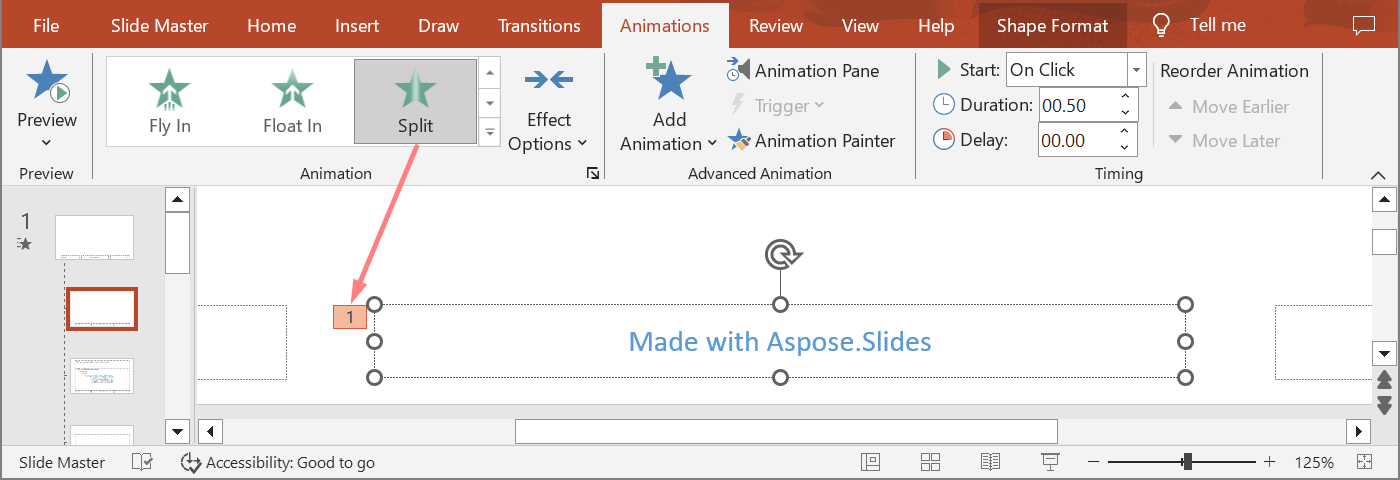

次の例はプレースホルダー階層そのものを構築します。マスタープレースホルダー、レイアウトプレースホルダー、および通常スライド上の対応するプレースホルダーにエフェクトを追加します。返されたシェイプを使用する前に、すべての IShape::GetBasePlaceholder 呼び出しがチェックされます。
#include <DOM/Animation/EffectSubtype.h>
#include <DOM/Animation/EffectTriggerType.h>
#include <DOM/Animation/EffectType.h>
#include <DOM/Animation/IEffect.h>
#include <DOM/Animation/ISequence.h>
#include <DOM/IAnimationTimeLine.h>
#include <DOM/IAutoShape.h>
#include <DOM/IGlobalLayoutSlideCollection.h>
#include <DOM/ILayoutPlaceholderManager.h>
#include <DOM/ILayoutSlide.h>
#include <DOM/IMasterSlide.h>
#include <DOM/IShape.h>
#include <DOM/IShapeCollection.h>
#include <DOM/ISlide.h>
#include <DOM/ISlideCollection.h>
#include <DOM/Presentation.h>
#include <DOM/SlideLayoutType.h>
#include <Export/SaveFormat.h>
#include <system/array.h>
#include <system/console.h>
#include <system/exceptions.h>
#include <system/string.h>

using namespace Aspose::Slides;
using namespace Aspose::Slides::Animation;
using namespace Aspose::Slides::Export;
using namespace System;

auto findPlaceholderWithBase = [](const SharedPtr<ISlide>& slide) -> SharedPtr<IShape>
{
    for (const auto& shape : slide->get_Shapes())
    {
        if (shape->GetBasePlaceholder() != nullptr)
            return shape;
    }

    return nullptr;
};

auto printEffects = [](const String& source, const ArrayPtr<SharedPtr<IEffect>>& effects)
{
    Console::WriteLine(String::Format(u"{0}: {1} effect(s)", source, effects->get_Length()));

    for (const auto& effect : effects)
        Console::WriteLine(String::Format(u"  {0} {1}", effect->get_Type(), effect->get_Subtype()));
};

auto presentation = MakeObject<Presentation>();
auto layoutSlide = presentation->get_LayoutSlides()->GetByType(SlideLayoutType::Blank);
auto layoutPlaceholder = layoutSlide->get_PlaceholderManager()->AddTextPlaceholder(100.0f, 100.0f, 400.0f, 80.0f);
layoutSlide->get_Timeline()->get_MainSequence()->AddEffect(layoutPlaceholder, EffectType::Split, EffectSubtype::VerticalIn, EffectTriggerType::OnClick);

auto masterPlaceholder = layoutPlaceholder->GetBasePlaceholder();
if (masterPlaceholder != nullptr)
{
    auto masterSequence = layoutSlide->get_MasterSlide()->get_Timeline()->get_MainSequence();
    masterSequence->AddEffect(masterPlaceholder, EffectType::Fly, EffectSubtype::Bottom, EffectTriggerType::OnClick);
}

auto slide = presentation->get_Slides()->AddEmptySlide(layoutSlide);
auto slidePlaceholder = findPlaceholderWithBase(slide);

if (slidePlaceholder == nullptr)
    throw InvalidOperationException(u"The slide does not contain a placeholder linked to its layout slide.");

slide->get_Timeline()->get_MainSequence()->AddEffect(slidePlaceholder, EffectType::RandomBars, EffectSubtype::Horizontal, EffectTriggerType::OnClick);
printEffects(u"Normal slide", slide->get_Timeline()->get_MainSequence()->GetEffectsByShape(slidePlaceholder));

auto baseLayoutPlaceholder = slidePlaceholder->GetBasePlaceholder();
if (baseLayoutPlaceholder != nullptr)
{
    printEffects(u"Layout slide", layoutSlide->get_Timeline()->get_MainSequence()->GetEffectsByShape(baseLayoutPlaceholder));

    auto baseMasterPlaceholder = baseLayoutPlaceholder->GetBasePlaceholder();
    if (baseMasterPlaceholder != nullptr)
        printEffects(u"Master slide", layoutSlide->get_MasterSlide()->get_Timeline()->get_MainSequence()->GetEffectsByShape(baseMasterPlaceholder));
}

presentation->Save(u"placeholder-animations.pptx", SaveFormat::Pptx);
presentation->Dispose();
アニメーション タイミングの変更
PowerPoint の Timing ダイアログは ITiming のメソッドに対応しています。
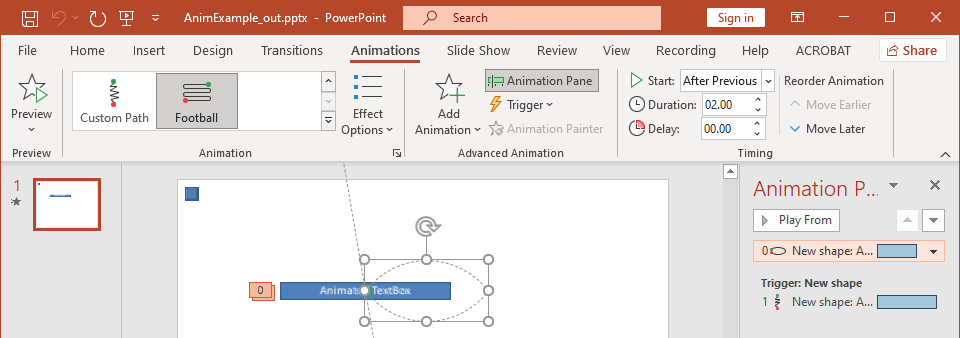
- 開始 は ITiming::set_TriggerType にマップされます。
- 期間 は ITiming::set_Duration にマップされ、秒単位です。
- 遅延 は ITiming::set_TriggerDelayTime にマップされ、秒単位です。
- 繰り返し は ITiming::set_RepeatCount、ITiming::set_RepeatUntilNextClick または ITiming::set_RepeatUntilEndSlide にマップされます。
- 再生完了後に巻き戻し は ITiming::set_Rewind にマップされます。
この独立した例はエフェクトを追加し、ISequence::AddEffect が返すオブジェクトを介してタイミングを変更し、結果を保存します。返された IEffect 参照を保持することで不要なコレクション インデックスの使用を回避します。
#include <DOM/Animation/EffectSubtype.h>
#include <DOM/Animation/EffectTriggerType.h>
#include <DOM/Animation/EffectType.h>
#include <DOM/Animation/IEffect.h>
#include <DOM/Animation/ISequence.h>
#include <DOM/Animation/ITiming.h>
#include <DOM/IAnimationTimeLine.h>
#include <DOM/IAutoShape.h>
#include <DOM/IShapeCollection.h>
#include <DOM/ISlide.h>
#include <DOM/ISlideCollection.h>
#include <DOM/ITextFrame.h>
#include <DOM/Presentation.h>
#include <DOM/ShapeType.h>
#include <Export/SaveFormat.h>

using namespace Aspose::Slides;
using namespace Aspose::Slides::Animation;
using namespace Aspose::Slides::Export;
using namespace System;

auto presentation = MakeObject<Presentation>();
auto slide = presentation->get_Slide(0);
auto shape = slide->get_Shapes()->AddAutoShape(ShapeType::Rectangle, 120.0f, 100.0f, 320.0f, 80.0f);
shape->get_TextFrame()->set_Text(u"Timed animation");

auto effect = slide->get_Timeline()->get_MainSequence()->AddEffect(shape, EffectType::Fade, EffectSubtype::None, EffectTriggerType::OnClick);
effect->get_Timing()->set_TriggerType(EffectTriggerType::OnClick);
effect->get_Timing()->set_Duration(2.0f);
effect->get_Timing()->set_TriggerDelayTime(0.5f);
effect->get_Timing()->set_RepeatUntilNextClick(false);
effect->get_Timing()->set_RepeatUntilEndSlide(false);
effect->get_Timing()->set_RepeatCount(2.0f);
effect->get_Timing()->set_Rewind(true);

presentation->Save(u"shape-animation-timing.pptx", SaveFormat::Pptx);
presentation->Dispose();
繰り返しモードは意図的に 1 つだけ使用してください。繰り返し回数と「until」フラグを組み合わせると、ビューアーによって結果が混乱する可能性があります。繰り返しモードを変更する際は、ITiming::set_RepeatUntilNextClick と ITiming::set_RepeatUntilEndSlide を ITiming::set_RepeatCount より先に呼び出してください。フラグのいずれかを設定するとアクティブな繰り返しモードも変更されます。
アニメーション サウンドの追加と抽出
アニメーション エフェクトは IEffect::set_Sound を介して埋め込みオーディオを参照できます。IEffect::set_StopPreviousSound は、以前のエフェクトで開始されたオーディオを停止させるようエフェクトに指示します。
エフェクトにサウンドを追加
以下の例はローカルのオーディオ ファイル animation-sound.wav を想定しています。2 つのエフェクトを作成し、最初のエフェクトのサウンドとしてそのファイルを埋め込み、2 番目のエフェクトでサウンドを停止するよう構成します。ISequence::AddEffect が返すオブジェクトを使用するため、シーケンス インデックスは不要です。
#include <DOM/Animation/EffectSubtype.h>
#include <DOM/Animation/EffectTriggerType.h>
#include <DOM/Animation/EffectType.h>
#include <DOM/Animation/IEffect.h>
#include <DOM/Animation/ISequence.h>
#include <DOM/IAnimationTimeLine.h>
#include <DOM/IAudio.h>
#include <DOM/IAudioCollection.h>
#include <DOM/IAutoShape.h>
#include <DOM/IShapeCollection.h>
#include <DOM/ISlide.h>
#include <DOM/ISlideCollection.h>
#include <DOM/ITextFrame.h>
#include <DOM/Presentation.h>
#include <DOM/ShapeType.h>
#include <Export/SaveFormat.h>
#include <system/io/file.h>

using namespace Aspose::Slides;
using namespace Aspose::Slides::Animation;
using namespace Aspose::Slides::Export;
using namespace System;
using namespace System::IO;

auto presentation = MakeObject<Presentation>();
auto slide = presentation->get_Slide(0);
auto firstShape = slide->get_Shapes()->AddAutoShape(ShapeType::Rectangle, 80.0f, 100.0f, 240.0f, 80.0f);
auto secondShape = slide->get_Shapes()->AddAutoShape(ShapeType::Rectangle, 400.0f, 100.0f, 240.0f, 80.0f);
firstShape->get_TextFrame()->set_Text(u"Starts sound");
secondShape->get_TextFrame()->set_Text(u"Stops sound");

auto sequence = slide->get_Timeline()->get_MainSequence();
auto firstEffect = sequence->AddEffect(firstShape, EffectType::Fade, EffectSubtype::None, EffectTriggerType::OnClick);
auto secondEffect = sequence->AddEffect(secondShape, EffectType::Fade, EffectSubtype::None, EffectTriggerType::OnClick);

auto audioData = File::ReadAllBytes(u"animation-sound.wav");
auto effectSound = presentation->get_Audios()->AddAudio(audioData);
firstEffect->set_Sound(effectSound);
secondEffect->set_StopPreviousSound(true);

presentation->Save(u"shape-animation-sound.pptx", SaveFormat::Pptx);
presentation->Dispose();
埋め込みエフェクト サウンドの抽出
以下の例はローカルのプレゼンテーション presentation-with-animation-sounds.pptx を想定しています。メイン シーケンスとインタラクティブ シーケンスの両方を走査し、埋め込まれたすべてのエフェクト サウンドを extracted-animation-sounds ディレクトリに書き出します。拡張子は IAudio::get_ContentType が公開するオーディオ MIME タイプから選択されます。
#include <DOM/Animation/IEffect.h>
#include <DOM/Animation/ISequence.h>
#include <DOM/Animation/ISequenceCollection.h>
#include <DOM/IAnimationTimeLine.h>
#include <DOM/IAudio.h>
#include <DOM/ISlide.h>
#include <DOM/ISlideCollection.h>
#include <DOM/Presentation.h>
#include <system/console.h>
#include <system/io/directory.h>
#include <system/io/file.h>
#include <system/io/path.h>
#include <system/string.h>

using namespace Aspose::Slides;
using namespace Aspose::Slides::Animation;
using namespace System;
using namespace System::IO;

auto getAudioExtension = [](const String& contentType)
{
    auto normalizedType = String::IsNullOrEmpty(contentType) ? String::Empty : contentType.ToLowerInvariant();

    if (normalizedType == u"audio/mpeg")
        return String(u".mp3");

    if (normalizedType == u"audio/mp4")
        return String(u".m4a");

    if (normalizedType == u"audio/ogg")
        return String(u".ogg");

    if (normalizedType == u"audio/wav" || normalizedType == u"audio/x-wav")
        return String(u".wav");

    return String(u".bin");
};

auto saveSounds = [&getAudioExtension](const SharedPtr<ISequence>& sequence, const String& outputDirectory, int32_t& soundIndex)
{
    for (const auto& effect : sequence)
    {
        if (effect->get_Sound() == nullptr)
            continue;

        auto extension = getAudioExtension(effect->get_Sound()->get_ContentType());
        auto outputPath = Path::Combine(outputDirectory, String::Format(u"effect-sound-{0}{1}", soundIndex, extension));
        File::WriteAllBytes(outputPath, effect->get_Sound()->get_BinaryData());
        soundIndex++;
    }
};

auto inputPath = String(u"presentation-with-animation-sounds.pptx");
auto outputDirectory = String(u"extracted-animation-sounds");

Directory::CreateDirectory_(outputDirectory);

auto presentation = MakeObject<Presentation>(inputPath);
int32_t soundIndex = 1;

for (const auto& slide : presentation->get_Slides())
{
    saveSounds(slide->get_Timeline()->get_MainSequence(), outputDirectory, soundIndex);

    for (const auto& sequence : slide->get_Timeline()->get_InteractiveSequences())
        saveSounds(sequence, outputDirectory, soundIndex);
}

Console::WriteLine(String::Format(u"Extracted {0} sound file(s) to {1}.", soundIndex - 1, Path::GetFullPath(outputDirectory)));
presentation->Dispose();
大容量のオーディオ オブジェクトの場合は、IAudio::GetStream を使用し、ストリームをファイルにコピーして全体をバイト配列に読み込むのを避けてください。
アフター アニメーション 動作の設定
After animation オプションは、エフェクトが完了した後にシェイプに何が起こるかを制御します。
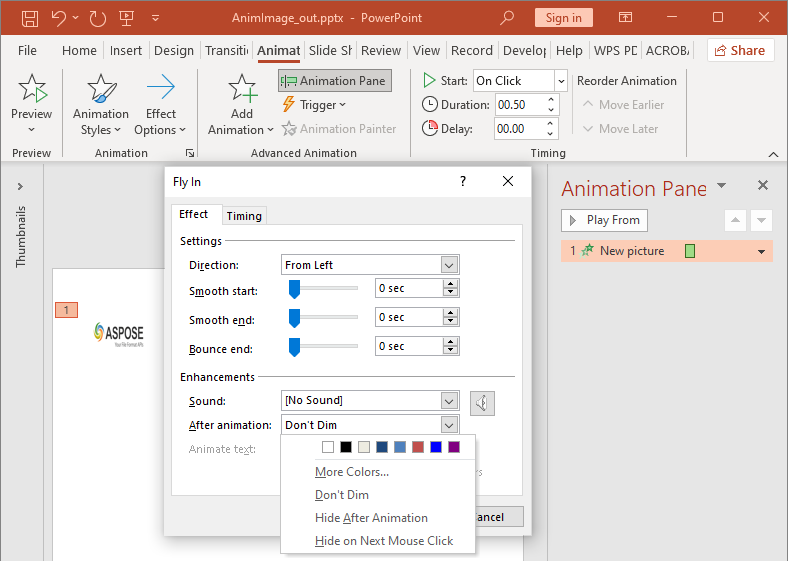
AfterAnimationType 列挙体は、シェイプを変更せずに残す、色を変更する、アニメーション後に非表示にする、次のクリックで非表示にする、という動作をサポートします。タイプが AfterAnimationType::Color の場合は、IEffect::get_AfterAnimationColor を呼び出して色も設定してください。
この独立した例はエフェクトを作成し、返されたエフェクト オブジェクトを介してアフター アニメーション 動作を設定し、結果を保存します。
#include <DOM/Animation/AfterAnimationType.h>
#include <DOM/Animation/EffectSubtype.h>
#include <DOM/Animation/EffectTriggerType.h>
#include <DOM/Animation/EffectType.h>
#include <DOM/Animation/IEffect.h>
#include <DOM/Animation/ISequence.h>
#include <DOM/IAnimationTimeLine.h>
#include <DOM/IAutoShape.h>
#include <DOM/IColorFormat.h>
#include <DOM/IShapeCollection.h>
#include <DOM/ISlide.h>
#include <DOM/ISlideCollection.h>
#include <DOM/ITextFrame.h>
#include <DOM/Presentation.h>
#include <DOM/ShapeType.h>
#include <Export/SaveFormat.h>
#include <drawing/color.h>

using namespace Aspose::Slides;
using namespace Aspose::Slides::Animation;
using namespace Aspose::Slides::Export;
using namespace System;
using namespace System::Drawing;

auto presentation = MakeObject<Presentation>();
auto slide = presentation->get_Slide(0);
auto shape = slide->get_Shapes()->AddAutoShape(ShapeType::Rectangle, 120.0f, 100.0f, 320.0f, 80.0f);
shape->get_TextFrame()->set_Text(u"Dim after animation");

auto effect = slide->get_Timeline()->get_MainSequence()->AddEffect(shape, EffectType::Fade, EffectSubtype::None, EffectTriggerType::OnClick);
effect->set_AfterAnimationType(AfterAnimationType::Color);
effect->get_AfterAnimationColor()->set_Color(Color::get_LightGray());

presentation->Save(u"shape-animation-after-effect.pptx", SaveFormat::Pptx);
presentation->Dispose();
[AfterAnimationType::Color] 以外のタイプに変更すると、アフター アニメーションの色設定はクリアされます。
テキスト アニメーション
テキスト アニメーションには 2 つの関連コントロールがあります。
- ITextAnimation::set_BuildType は段落全体を同時に表示するか、段落レベルで表示するかを制御します。
- IEffect::set_AnimateTextType はテキストを一括、単語単位、文字単位で表示するかを制御します。IEffect::set_DelayBetweenTextParts は単語や文字間の遅延を設定します。正の値はエフェクト期間のパーセンテージ、負の値は秒単位の遅延です。
以下の独立した例はテキスト ボックス内の単語をアニメーション化します。BuildType::AsOneObject を使用すると段落ごとのビルドが無効になり、単語設定がテキスト フレーム全体に適用されます。
#include <DOM/Animation/AnimateTextType.h>
#include <DOM/Animation/BuildType.h>
#include <DOM/Animation/EffectSubtype.h>
#include <DOM/Animation/EffectTriggerType.h>
#include <DOM/Animation/EffectType.h>
#include <DOM/Animation/IEffect.h>
#include <DOM/Animation/ISequence.h>
#include <DOM/Animation/ITextAnimation.h>
#include <DOM/IAnimationTimeLine.h>
#include <DOM/IAutoShape.h>
#include <DOM/IShapeCollection.h>
#include <DOM/ISlide.h>
#include <DOM/ISlideCollection.h>
#include <DOM/ITextFrame.h>
#include <DOM/Presentation.h>
#include <DOM/ShapeType.h>
#include <Export/SaveFormat.h>

using namespace Aspose::Slides;
using namespace Aspose::Slides::Animation;
using namespace Aspose::Slides::Export;
using namespace System;

auto presentation = MakeObject<Presentation>();
auto slide = presentation->get_Slide(0);
auto textBox = slide->get_Shapes()->AddAutoShape(ShapeType::Rectangle, 80.0f, 80.0f, 560.0f, 100.0f);
textBox->get_TextFrame()->set_Text(u"Aspose.Slides animates this sentence word by word.");

auto effect = slide->get_Timeline()->get_MainSequence()->AddEffect(textBox, EffectType::Fade, EffectSubtype::None, EffectTriggerType::OnClick);
effect->get_TextAnimation()->set_BuildType(BuildType::AsOneObject);
effect->set_AnimateTextType(AnimateTextType::ByWord);
effect->set_DelayBetweenTextParts(20.0f);

presentation->Save(u"animated-text.pptx", SaveFormat::Pptx);
presentation->Dispose();
段落単位でテキスト ボックスをビルドするには、BuildType::ByLevelParagraphs1 などの段落レベルを指定して ITextAnimation::set_BuildType を使用します。単一の段落に独自のエフェクトを適用したい場合は、IParagraph を受け取るオーバーロードの ISequence::AddEffect を使用してください。段落レベルの例については Animated Text を参照してください。
エクスポートと互換性に関する注意事項
- PPT または PPTX に保存するとアニメーション モデルは保持されますが、最終的な再生はプレゼンテーション ビューアが制御します。
- PDF と静止画像はアニメーションを再生しません。出力で動きを示す必要がある場合は、HTML5 エクスポート、アニメーション GIF、または ビデオ変換 を使用してください。
- HTML5 では、[Html5Options::set_AnimateShapes] を有効にし、必要に応じて [Html5Options::set_AnimateTransitions] を有効にしてください。
- ビデオレンダリングは多くの一般的な入場、強調、退出、モーション パス エフェクトをサポートしていますが、すべての PowerPoint エフェクトがサポートされているわけではありません。現在の サポートされているアニメーションとエフェクト を確認し、対象の Aspose.Slides バージョンで重要なプレゼンテーションをテストしてください。
- 高度なカスタム エフェクトや他のプレゼンテーション形式からインポートされたエフェクトはファイル内に保持される場合がありますが、PowerPoint、HTML5、またはビデオでの表示が異なることがあります。エフェクト名だけに依存せず、エクスポート結果を検証してください。
FAQ
なぜアニメーションは PowerPoint では表示されるが PDF では表示されないのですか?
PDF は静的フォーマットであるため、アニメーションやスライド遷移は再生されません。動きを保持する必要がある場合は、HTML5、アニメーション GIF、またはビデオへエクスポートしてください。
なぜエフェクトはビデオで再生が異なるのですか?
ビデオエクスポートはアニメーションをレンダリングして保存し、元の PowerPoint 動作を保持しません。一部の高度なエフェクトはサポートされていないか、近似されます。サポートされているエフェクト表を確認し、実際のプレゼンテーションをテストしてから本番で使用してください。
シェイプを前面または背面に移動するとアニメーションの順序が変わりますか?
いいえ。シェイプの Z オーダーは重なりを制御しますが、シーケンスの順序とトリガーがアニメーションの再生順序を制御します。再生順序を変更したい場合はタイムラインを調整してください。